How Much Does Mobile Surveillance Trailer Rental Cost for a Construction Site?

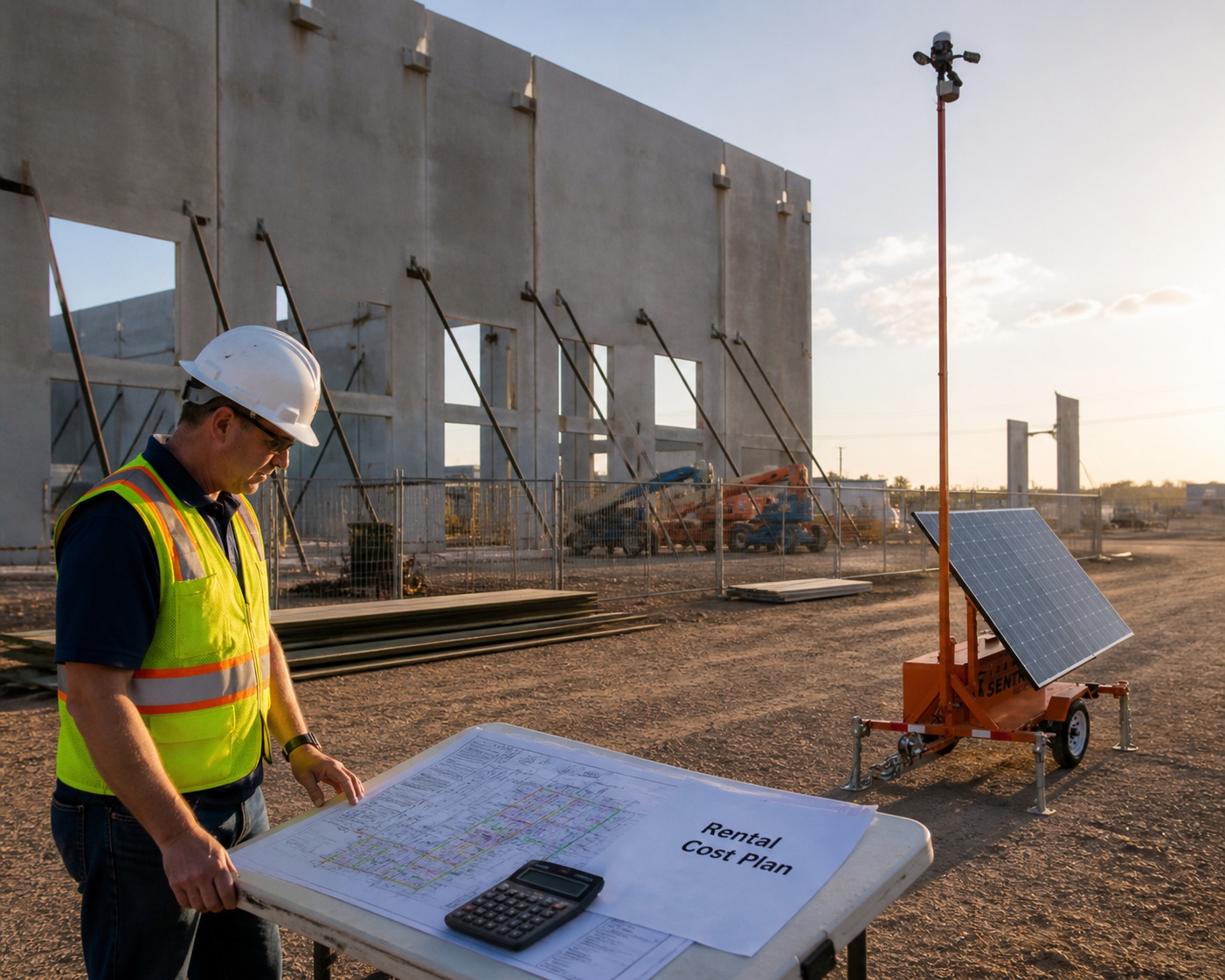
If you are pricing jobsite security, the first question is usually simple: how much does a mobile surveillance trailer rental cost?
The honest answer is that the monthly total depends on the site, the schedule, and the level of monitoring you need. A small infill project that only needs night and weekend monitoring will not price the same as a remote highway corridor, mining site, industrial yard, or large construction project with multiple entrances, laydown areas, and high-value equipment.
At Jobsite Sentry, we build security around the way your project actually operates. Our mobile surveillance trailers and camera systems combine solar power, AI detection, Starlink connectivity when needed, live human monitoring, two-way audio, mobile app access, and incident documentation. That means the quote is not just a camera rental. It is a temporary security system designed to detect, verify, deter, document, and escalate threats in real time.
This guide explains the cost factors contractors should understand before comparing quotes.
Quick Answer: What Drives Mobile Surveillance Trailer Rental Cost?
Mobile surveillance trailer rental cost is usually built from several components: the trailer or camera unit rental, the number of cameras and coverage zones, live monitoring hours, connectivity, delivery and setup, relocation needs, rental term, and any special reporting or documentation requirements.
For Jobsite Sentry customers, live video monitoring is advertised as low as $1.99 per hour. That monitoring rate is only one part of the total project quote, but it is an important line item because it lets contractors estimate how different monitoring schedules affect the monthly budget.
For example, if a site wants monitoring from 6 p.m. to 6 a.m. every night, that is 12 monitored hours per day. At $1.99 per hour, the monitoring portion would start at $23.88 per day, or $716.40 over a 30-day month. If the site only needs weekend monitoring during a shutdown, the monitoring portion would be lower. If the site needs continuous 24/7 monitoring, it would be higher.
These are simple calculations using the advertised starting monitoring rate. Final pricing should always be confirmed in a current Jobsite Sentry quote because site conditions, coverage needs, deployment logistics, and optional services can change the total.
The quote should answer more than the monthly rental price
A good quote should explain what is included, what is optional, and what could trigger added cost. Contractors should not compare providers only by the lowest monthly number. A cheaper rental may exclude live monitoring, audio deterrence, Starlink connectivity, clip export, relocation, or trained operator response.
The better question is: what level of prevention, verification, and documentation are you getting for the monthly spend?
What Is Usually Included in a Mobile Surveillance Trailer Rental Quote?
A construction site surveillance quote can be structured differently by each provider. Before you compare pricing, ask each vendor to break the quote into clear line items.
Typical quote categories include:
– Mobile surveillance trailer or camera unit rental
– Number of cameras, PTZ cameras, or fixed camera views
– AI detection and alert filtering
– Live remote video monitoring hours
– Two-way audio or speaker deterrence
– Internet, cellular, or Starlink connectivity
– Solar power package or battery capacity
– Delivery, installation, and orientation
– Mobile app access for site managers
– Video playback, clip export, and event documentation
– Relocation during different construction phases
– Removal at the end of the rental term
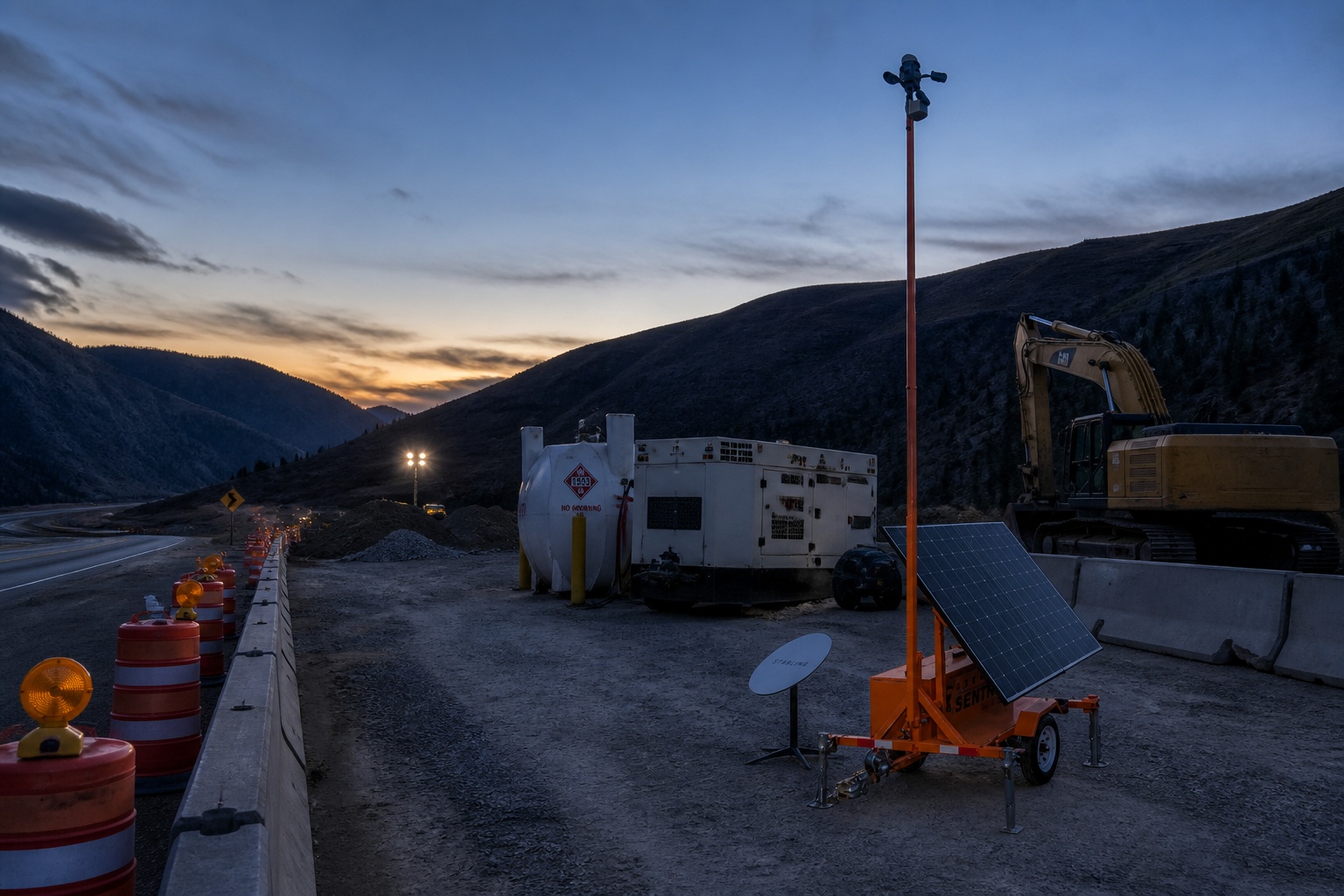
Jobsite Sentry systems are built for temporary and remote sites where permanent power, wired internet, and finished infrastructure may not exist yet. That is why our solar-powered units, Starlink-capable connectivity, AI detection, and live operator response are important cost considerations. You are not only renting a pole with cameras. You are deploying a monitored jobsite security layer that can adapt as the site changes.
Why live monitoring changes the value of the rental
Passive cameras record what happened. Live monitored security cameras can help address activity while it is happening.
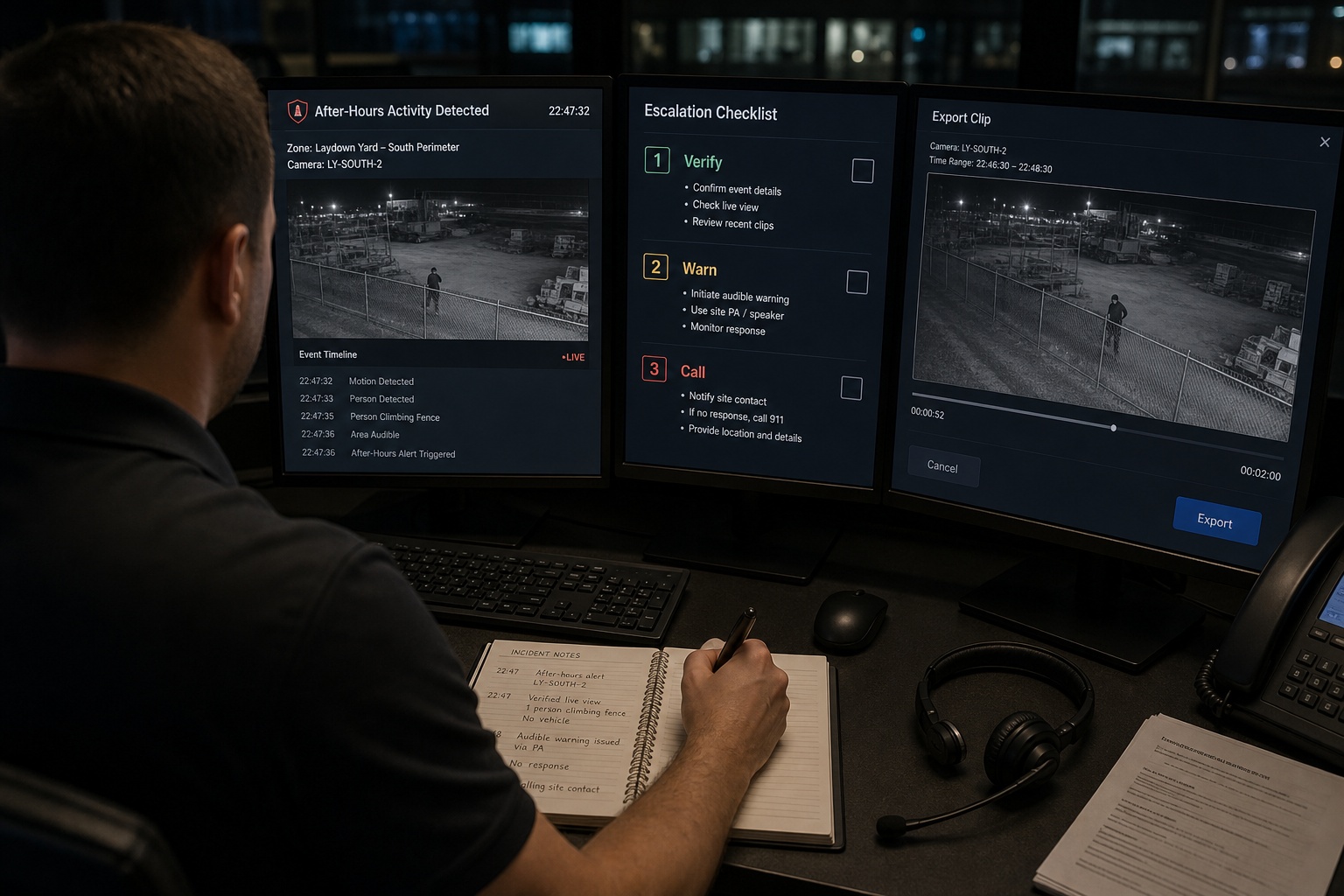
When suspicious after-hours motion, vehicle activity, or unauthorized access is detected, AI can flag the event and a trained operator can review it. If the event is verified as a threat, the operator can issue an audio warning, follow escalation procedures, contact designated site contacts, and request law enforcement response when appropriate.
That real-time verification helps reduce unnecessary false alarms while giving project teams better documentation when an incident is real.
The 7 Cost Factors That Affect Your Monthly Rental Price
Mobile surveillance trailer rental cost is not one-size-fits-all. The same trailer can provide very different value depending on where it is placed, what it is protecting, and how the monitoring schedule is configured.
1. Site size and camera coverage
A compact jobsite with one entrance and one equipment staging area may need fewer camera views than a large horizontal development, bridge project, industrial yard, or mining site.
Coverage planning should start with the highest-risk zones:
– Main gates and access points
– Equipment parking areas
– Fuel tanks and generators
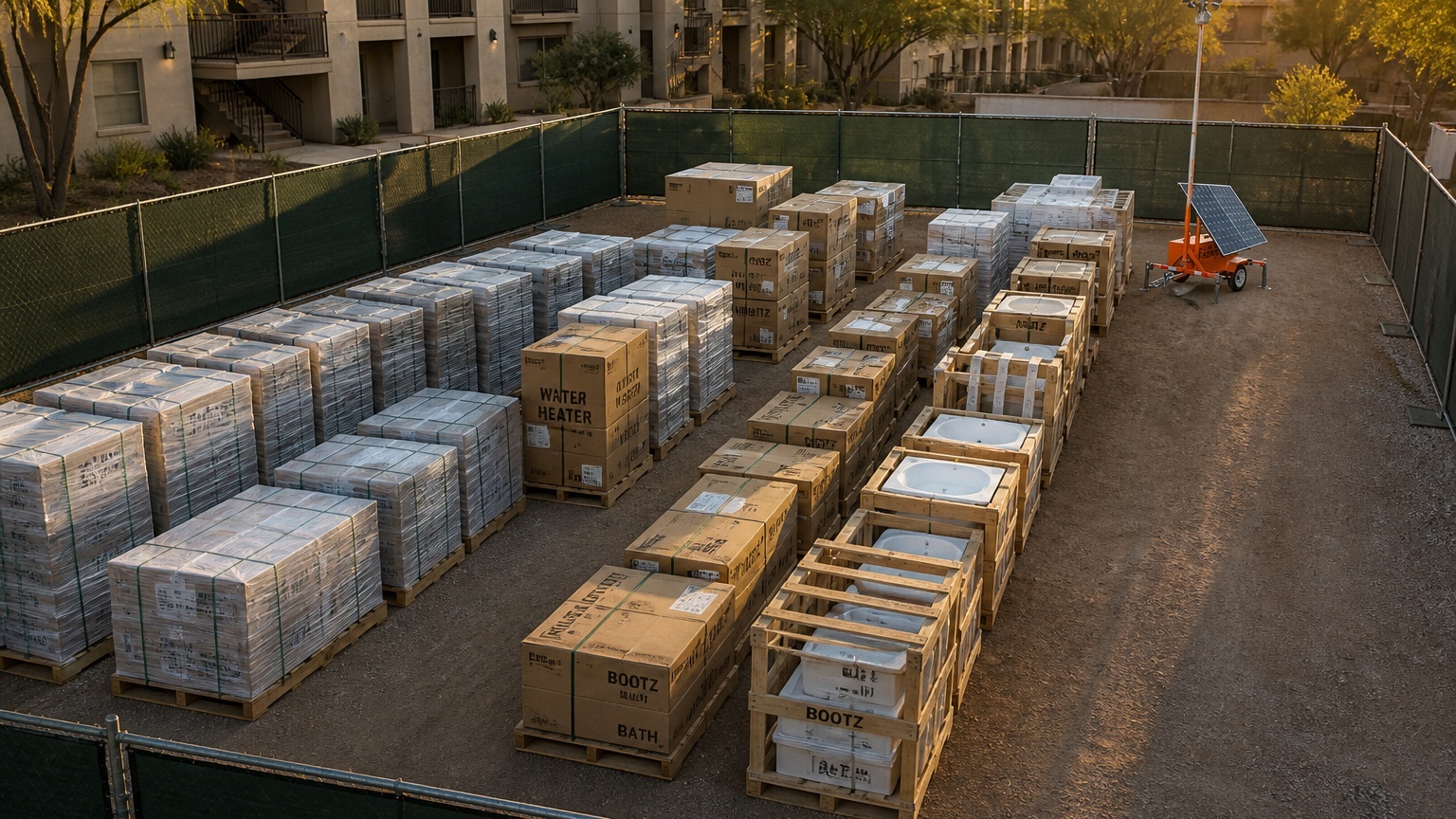
– Copper, lumber, fixtures, and high-value material storage
– Trailers, offices, and tool storage
– Blind corners along the perimeter
– Areas with repeat trespassing or vandalism concerns
The number of camera views, trailer positions, and monitoring zones can all affect the final monthly cost.
2. Monitoring schedule
Monitoring hours are one of the most controllable cost levers. A site that only needs after-hours monitoring will price differently than one that needs 24/7 remote video monitoring.
Common schedules include:
– Nights only
– Nights and weekends
– Holidays and shutdown periods
– Weather delay shutdowns
– High-risk delivery windows
– Full 24/7 monitoring
With Jobsite Sentry, monitoring can be configured around your actual risk windows rather than forcing your team into a generic plan.
3. Connectivity requirements
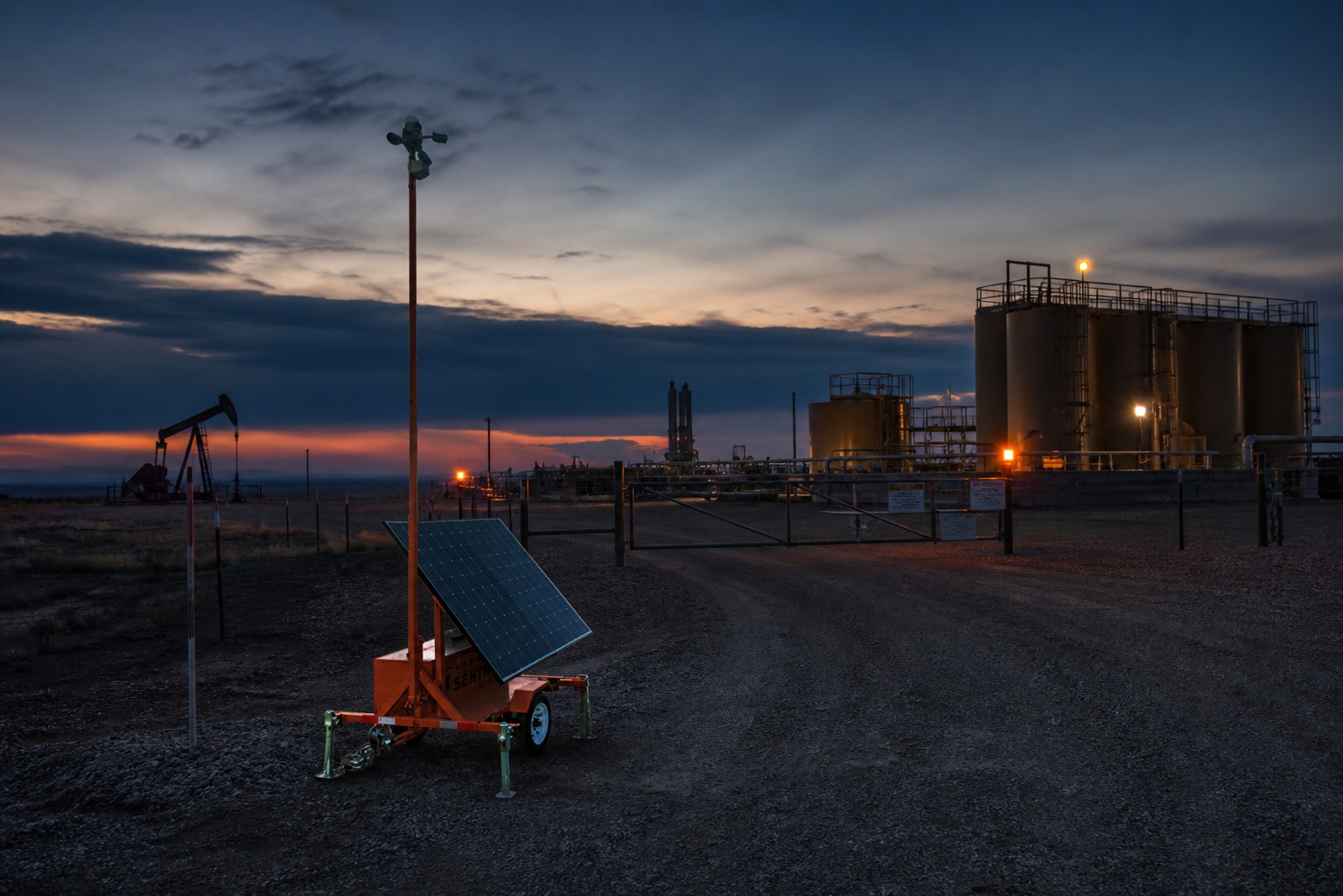
Some projects have reliable internet or cellular coverage. Others do not. Remote highway projects, mining sites, oil and gas locations, solar fields, and rural industrial yards may require satellite connectivity.
Jobsite Sentry can use Starlink connectivity for remote site security where wired internet and reliable cell service are not available. Connectivity needs can affect the quote, but they also determine whether the system can reliably transmit alerts, live views, playback, and video clips.
4. Power availability
Many temporary sites do not have finished electrical infrastructure. Running power, trenching, using generators, or coordinating with temporary power can add complexity.
Jobsite Sentry mobile surveillance units are solar powered, which helps avoid wired power requirements and supports flexible deployment. Solar power is especially useful for early-stage construction, remote assets, highway corridors, industrial yards, and sites where power is not yet available at the perimeter.
5. Deployment location and logistics
Delivery and installation logistics can affect cost. A paved commercial site near a major metro area is different from a remote industrial yard, mountain corridor, oilfield access road, or large civil project with restricted entry windows.
Ask whether the quote includes delivery, setup, removal, and any travel-related charges. Jobsite Sentry commonly promotes fast deployment, often within 24 to 48 hours depending on location and site conditions, but every project should confirm timing during the consultation.
6. Rental term and contract flexibility
Short-term rentals, long-term projects, emergency deployments, and multi-phase construction jobs may be priced differently. Some providers require long-term contracts. Others allow more flexibility.
Jobsite Sentry emphasizes no long-term contracts in its pricing language. That matters for contractors who need security during a specific phase, such as sitework, vertical construction, equipment staging, commissioning, or pre-turnover, without committing to unnecessary months.
7. Reporting, evidence, and site management tools
Some projects only need intrusion monitoring. Others need clip export, daily reports, time lapse, progress documentation, inventory support, drone analysis, or satellite imagery.
Jobsite Sentry offers tools beyond basic construction site surveillance, including mobile app access, playback, PTZ controls, two-way audio, video export, time lapse, Jobsite SentrySky satellite imagery, drone analysis, and AI inventory and object counting tools. These options can improve project visibility, but they should be scoped clearly in the quote.
How Live Monitoring Fees Are Calculated
Live monitoring fees are usually based on the number of monitored hours and the scope of operator response. The more hours you monitor, the higher the monthly monitoring portion will be.
Here is a simple way to estimate the monitoring portion using Jobsite Sentry’s advertised starting rate of $1.99 per hour:
– 8 hours per night for 30 days: 240 monitored hours x $1.99 = $477.60
– 12 hours per night for 30 days: 360 monitored hours x $1.99 = $716.40
– 24/7 for 30 days: 720 monitored hours x $1.99 = $1,432.80
These examples are for planning only and use the starting monitoring rate. They do not represent a full quote for trailer rental, setup, connectivity, optional services, or site-specific requirements.
The practical takeaway is that the monitoring schedule gives contractors a way to control the monthly cost. If the highest risk is from 5 p.m. to 6 a.m., you may not need the same monitoring schedule as a remote site with continuous public exposure.
What operators do during an alert
When suspicious activity is detected, the goal is not to generate noise for your team. The goal is to verify the event and respond appropriately.
A typical monitored event may include:
– AI detection of a person, vehicle, equipment movement, or restricted-zone activity
– Live operator review to determine whether the activity appears authorized or suspicious
– Audio warning through the unit if a deterrent is appropriate
– Escalation to site contacts based on the response plan
– Law enforcement notification when the event meets the agreed escalation criteria
– Event notes, video clips, and documentation for follow-up
This response process is a major difference between remote video monitoring construction services and cameras that only store footage for review after a loss.
Setup, Power, Internet, Relocation, and Contract Terms to Ask About
The monthly price does not tell the whole story. A quote that looks lower at first may become more expensive if it excludes setup, data, relocation, or removal.
Before approving a mobile surveillance trailer rental, ask these questions:
– Is the consultation or site survey included?
– Is installation included?
– Are delivery and removal included?
– Is Starlink or other connectivity included when needed?
– Are there data limits or overage fees?
– Can the unit be relocated as the site layout changes?
– Is relocation included or billed separately?
– Are there minimum rental terms?
– Are there long-term contract requirements?
– Are monitoring hours flexible?
– Can site managers access live view and playback from a mobile app?
– Can clips be exported for police reports, insurance claims, owner disputes, or compliance documentation?
Jobsite Sentry’s approach is designed for sites that change quickly. Units can be positioned around temporary gates, material staging areas, equipment yards, fuel storage, and other risk zones, then adjusted as the project moves into a new phase.
Why solar power and Starlink can simplify deployment
A construction site should not have to wait for permanent utilities before it can be secured.
Solar-powered camera trailers reduce dependence on wired power, generators, trenching, and finished infrastructure. Starlink connectivity can support remote site monitoring in locations where cellular coverage is weak or unavailable.
That combination is especially useful for highway construction, remote industrial sites, mining operations, oil and gas sites, large land developments, and early-stage construction where temporary conditions change week by week.
Mobile Surveillance Trailer Rental vs. On-Site Security Guard Cost
Many contractors compare mobile surveillance trailers with security guards. The right choice depends on the site, risk level, budget, and response expectations.
A guard can provide a physical presence, but guard coverage is typically tied to one person’s line of sight, patrol route, training, and schedule. A mobile surveillance trailer can monitor multiple camera views, detect activity after hours, provide recorded video evidence, issue audio warnings, and allow live operators to verify events remotely.
For many construction sites, the strongest approach is not simply guard or camera. It is a layered security plan. A monitored camera trailer can reduce the need for continuous physical guard coverage, support guards with better visibility, or provide security for sites where staffing a guard is impractical.
When comparing cost, evaluate the full scope:
– Coverage area and blind spots
– Hours of protection
– Ability to verify alerts
– Deterrence methods
– Video evidence availability
– Site manager access from a phone
– Ability to scale across multiple sites
– Deployment speed
– Safety risk of placing personnel alone after hours
The lowest line item is not always the lowest risk option.
A monitored trailer can also support project operations
Because Jobsite Sentry systems include app access, playback, clip export, PTZ control, two-way talk, time lapse, and optional project documentation tools, they can support more than theft prevention.
Project teams may use video access to confirm deliveries, review after-hours activity, document progress, verify site conditions, and support owner updates. That operational visibility should be part of the value conversation when comparing options.
How to Get an Accurate Quote for Your Construction Site
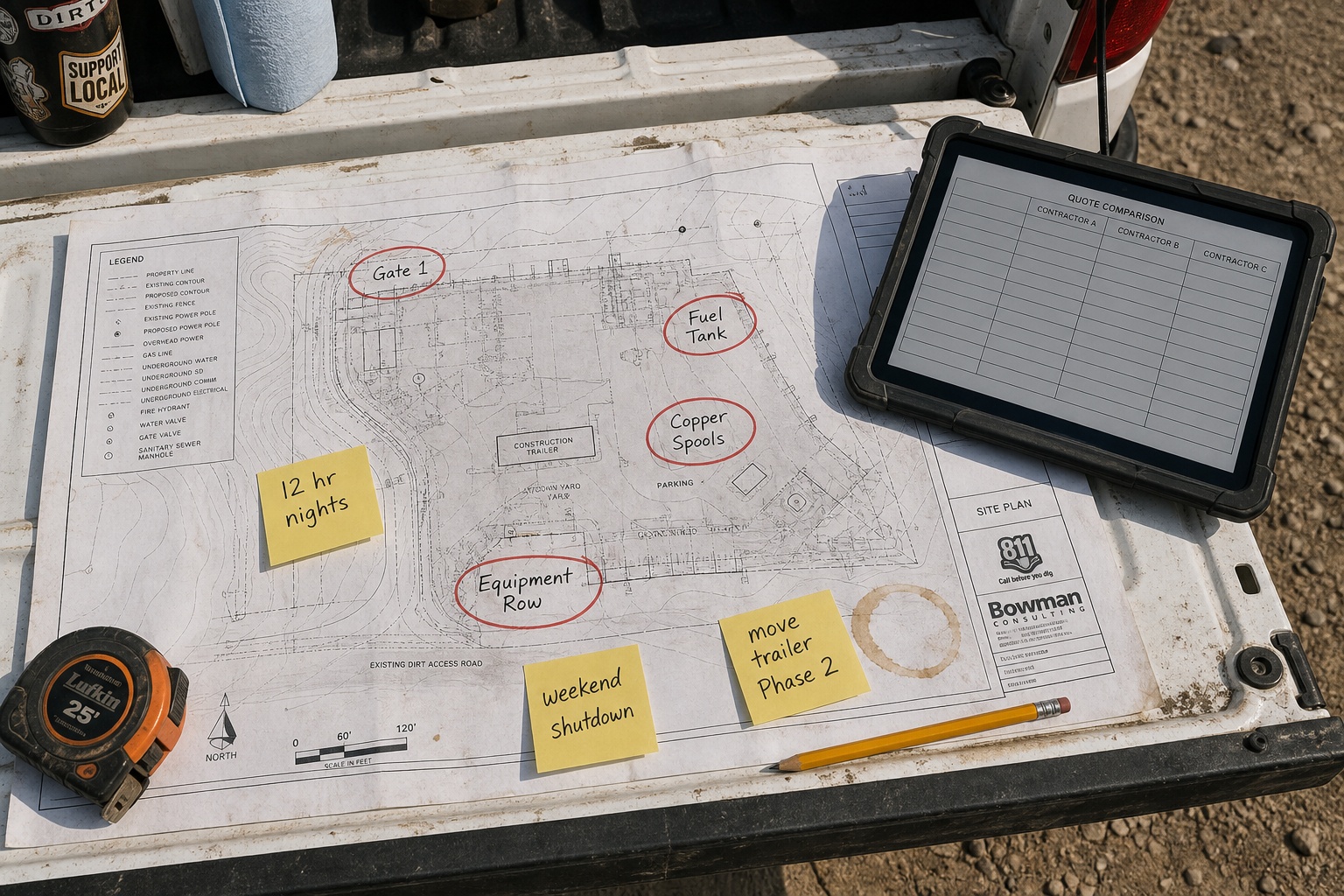
The fastest way to get accurate pricing is to provide enough site detail for a realistic coverage plan. A map and a short risk summary can prevent underquoting, overquoting, or placing the trailer in the wrong location.
Before requesting a quote, gather:
– Site address or GPS location
– Project type and current phase
– Approximate site size
– Number of gates and access points
– High-value equipment and material locations
– Fuel, copper, lumber, tool, or generator storage areas
– Known trespassing or vandalism history
– Desired monitoring hours
– Connectivity conditions, including weak cell areas
– Expected rental duration
– Whether the unit may need to move during the project
– Desired users for mobile app access
– Reporting or clip export requirements
Jobsite Sentry can use this information to recommend the right trailer placement, monitoring schedule, connectivity option, and response plan.
Best fit projects for mobile surveillance trailer rental
Mobile surveillance trailers are often a strong fit for construction sites and outdoor assets where permanent security infrastructure is not practical.
Common use cases include:
– Commercial construction sites
– Multifamily developments
– Industrial yards
– Remote storage yards
– Mining sites
– Oil and gas locations
– Highway and DOT projects
– Utility and infrastructure projects
– Vacant properties
– Sites with temporary power or no power
– Sites with weak or no cell service
If your site has valuable materials, exposed equipment, after-hours access risk, or limited visibility from the street, a monitored mobile surveillance unit is worth evaluating.
People Also Ask
Q: How much does it cost to rent a mobile surveillance trailer?
A: The cost depends on trailer count, camera coverage, monitoring hours, connectivity, setup, location, rental term, and optional services. Jobsite Sentry advertises live video monitoring as low as $1.99 per hour, with final rental pricing quoted after a site review.
Q: Do mobile surveillance trailers need power or internet?
A: Not necessarily. Jobsite Sentry mobile surveillance units are solar powered and can use Starlink connectivity, making them practical for temporary jobsites, remote industrial locations, highway corridors, mining sites, and areas without reliable wired internet or cell service.
Q: Can a mobile surveillance trailer be moved during a project?
A: Yes, mobile surveillance trailers and camera units can often be repositioned as access points, laydown yards, staging areas, and risk zones change. Contractors should confirm whether relocation is included in the quote or billed separately.
Q: Can site managers view footage from their phone?
A: Yes. Jobsite Sentry offers mobile app access for live streams, playback, PTZ controls, multi-camera views, two-way audio, and video clip export.
Q: How does remote video monitoring compare with a security guard?
A: A guard provides physical presence, while remote video monitoring provides camera coverage, AI alerts, live operator verification, audio warnings, documentation, and remote access. Many sites use monitored camera trailers as a guard alternative or as part of a layered security plan.
Use this checklist to review rental quotes, monitoring schedules, setup details, connectivity needs, contract terms, and hidden cost questions before choosing a jobsite security provider.
Frequently Asked Questions
Q: What areas of a jobsite should cameras cover first?
A: Start with the highest-risk zones: gates, equipment parking, fuel storage, generators, tool containers, copper and material storage, trailer offices, and blind perimeter areas. Camera placement should match theft risk, access routes, and the monitoring schedule.
Q: Are there long-term contracts?
A: Jobsite Sentry emphasizes no long-term contracts in its pricing language. Confirm the rental term, cancellation terms, and project phase requirements during the quote process.
Q: Can AI distinguish real threats from false alarms?
A: AI detection can help identify people, vehicles, equipment, materials, and restricted-zone activity while filtering some nuisance triggers. Live human verification adds another layer by reviewing alerts before escalation.
Q: Can footage be exported for police reports or insurance claims?
A: Yes. Jobsite Sentry’s app and command center support playback and clip export, which can help with police reports, insurance claims, owner disputes, liability documentation, and internal incident review.
Q: How fast can Jobsite Sentry deploy a mobile surveillance unit?
A: Jobsite Sentry commonly promotes deployment within 24 to 48 hours depending on location and site conditions. Confirm availability, access requirements, and installation timing during the consultation.
Conclusion
Mobile surveillance trailer rental cost depends on the level of protection your site needs. The most important variables are coverage area, monitoring hours, connectivity, setup logistics, rental term, relocation needs, and whether the system includes live operator response.
For contractors, the goal is not simply to find the lowest monthly rental. The goal is to reduce theft, vandalism, trespassing, false alarms, and after-hours uncertainty without adding unnecessary complexity to the project.
Jobsite Sentry combines solar-powered mobile surveillance units, AI detection, Starlink connectivity, live human monitoring, audio deterrence, mobile app access, and incident documentation for construction and outdoor asset security. If you are comparing options, start with a clear site survey and a quote that shows exactly what is included.
## Request a Jobsite Sentry Site Security Consultation
Need pricing for a real project, not a generic estimate? Jobsite Sentry can review your site layout, risk zones, monitoring schedule, power conditions, connectivity needs, and deployment timeline.
Request a free consultation, site survey, and custom quote for a mobile surveillance trailer rental built around your construction site.
Source References
- Jobsite Sentry website: mobile surveillance units, live monitoring, Starlink connectivity, app access, and pricing language. Verify current service details before publication: https://jobsitesentry.com/
- CISA physical security guidance for layered security planning concepts. Verify the most relevant current CISA resource before publication.
- Local law enforcement and insurance carrier requirements for incident documentation and video evidence. Requirements vary by jurisdiction and policy.