How to Protect Outdoor Material Staging Areas During Apartment Renovation Projects

Outdoor staging areas solve a real logistics problem during apartment renovations. Cabinets, appliances, flooring, plumbing fixtures, lighting packages, HVAC components, and tools need to arrive before crews are ready to install them. When there is no secure indoor storage, those materials often end up behind a fence, beside a service road, under a canopy, or in a temporary lot.
That convenience creates exposure.
Apartment renovation material theft prevention requires more than a padlock and a camera that records after the fact. The goal is to control who can reach the materials, reduce how long high-value items sit outside, detect suspicious activity in real time, warn intruders before loss occurs, and preserve clean video documentation if an incident needs to be escalated.
At Jobsite Sentry, we help multifamily owners, property managers, and contractors protect temporary outdoor assets with solar-powered surveillance units, AI detection, live human monitoring, Starlink connectivity, two-way audio, mobile app access, and incident documentation. This guide explains how to secure outdoor material staging areas without slowing down renovation work.
The Short Answer: Protect the Materials, Not Just the Property
The best approach to apartment renovation material theft prevention is to build security around the exact places where materials are stored, moved, and released to crews.
A strong staging-area plan includes:
- A material risk map that identifies high-value items and vulnerable time windows.
- Controlled receiving and release procedures.
- Fencing, lighting, locked containers, barriers, and clear signage.
- Camera coverage focused on pallets, containers, gates, pedestrian paths, and vehicle approach routes.
- AI detection and live monitoring for nights, weekends, holidays, and shutdown periods.
- Audio deterrents, escalation contacts, and exported clips for reports or claims.
- A relocation plan so camera coverage moves as the renovation phase changes.
Passive recording can help after a theft. Live monitored security can help stop an incident while it is happening.
Why Outdoor Staging Areas Become Theft Targets During Apartment Renovations
Apartment renovation projects have a different risk profile than ground-up construction. Work may happen across multiple buildings, occupied units, vacant turns, parking areas, breezeways, courtyards, and service corridors. Crews and vendors come and go. Residents, delivery drivers, maintenance teams, leasing staff, and contractors may all be present on the property during the same phase.
That movement makes outdoor material staging areas difficult to control.
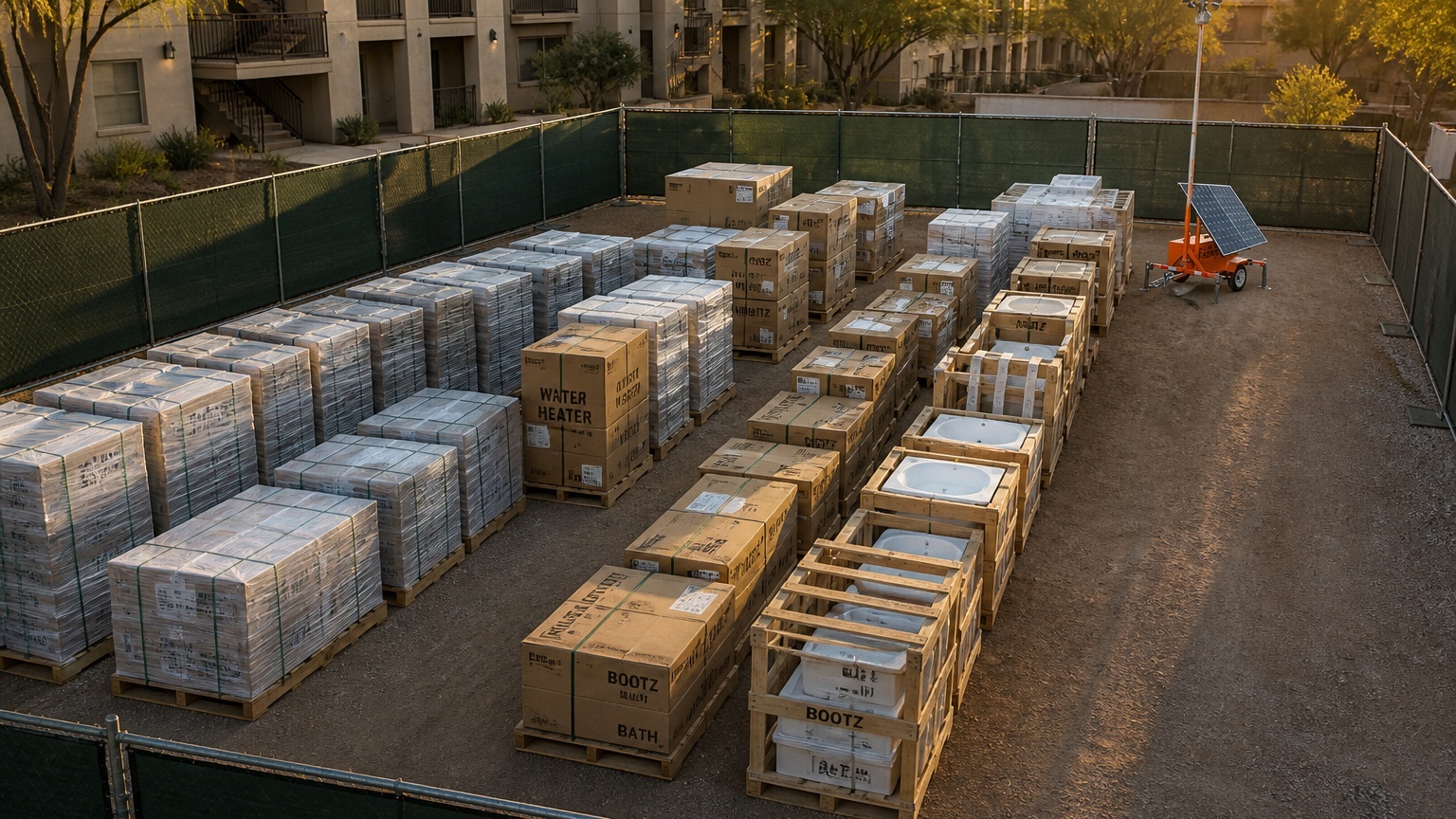
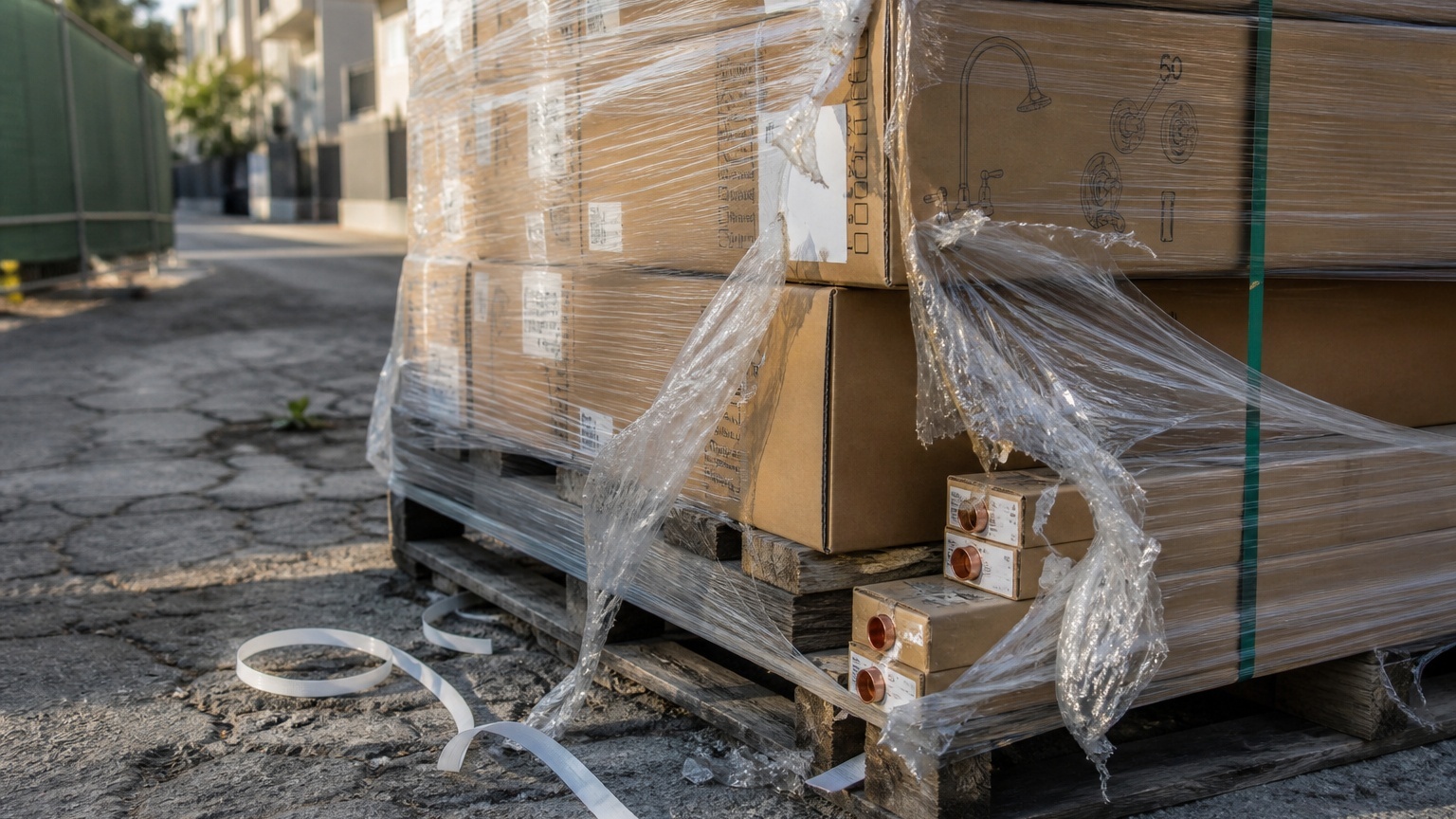
The materials are also attractive. A single outdoor staging area may hold boxed appliances, copper line sets, plumbing trim, cabinets, electrical components, flooring, lighting, door hardware, water heaters, power tools, and specialty fixtures. Some items are easy to load into a pickup. Others are difficult to identify once removed from their packaging.
The highest-risk windows are usually predictable:
- After deliveries but before installation.
- After crews leave for the day.
- During weekends and holiday shutdowns.
- During weather delays or inspection delays.
- When materials are moved closer to a building before a phase starts.
- When a project has multiple subcontractors and unclear release procedures.
The problem is not only the replacement cost. Theft can delay unit turns, disrupt resident communication, create owner disputes, increase insurance friction, and force the project team to spend time reconstructing what arrived, what was installed, and what disappeared.
Start With a Material Staging Risk Map
Before adding cameras or barriers, map the way materials actually move through the property. A staging area that looks secure on a site plan may have blind spots, informal shortcuts, or vehicle access points that become obvious only during a walkthrough.
A practical risk map should identify:
- Where deliveries arrive.
- Where materials are checked in.
- Where high-value items are stored.
- Where crews pick up materials for installation.
- Which gates, sidewalks, service roads, and parking areas lead to the staging area.
- Where residents or unauthorized pedestrians could enter the work zone.
- Where lighting is weak after dark.
- Where existing buildings, containers, trees, dumpsters, or parked vehicles block camera sightlines.
For multifamily renovations, the map should also account for phasing. Building 3 may be active this week, Building 5 next week, and clubhouse materials may arrive between both phases. If the staging area shifts but the cameras do not, coverage can fall behind the actual risk.
Jobsite Sentry can help property teams evaluate those zones during a site survey and determine where mobile surveillance trailers, solar-powered camera units, PTZ cameras, and monitoring schedules should be placed first.
Rank Materials by Theft Risk
Not every pallet needs the same level of control. Rank materials by replacement cost, resale appeal, installation urgency, portability, and whether serial numbers or delivery records exist.
High-priority categories often include appliances, HVAC components, copper, electrical materials, plumbing trim, smart-home devices, tools, door hardware, lighting, and boxed finish packages. These should be placed in the most visible, controlled, and monitored portion of the staging area.
Match Security to the Project Phase
A rough-in phase may require different coverage than a finish phase. During finish work, small boxed items can disappear quickly and may be difficult to trace. During exterior or mechanical phases, larger equipment may need vehicle-based theft prevention.
Review the staging plan at each phase change instead of treating security as a one-time setup.
Build Layers Around the Staging Area
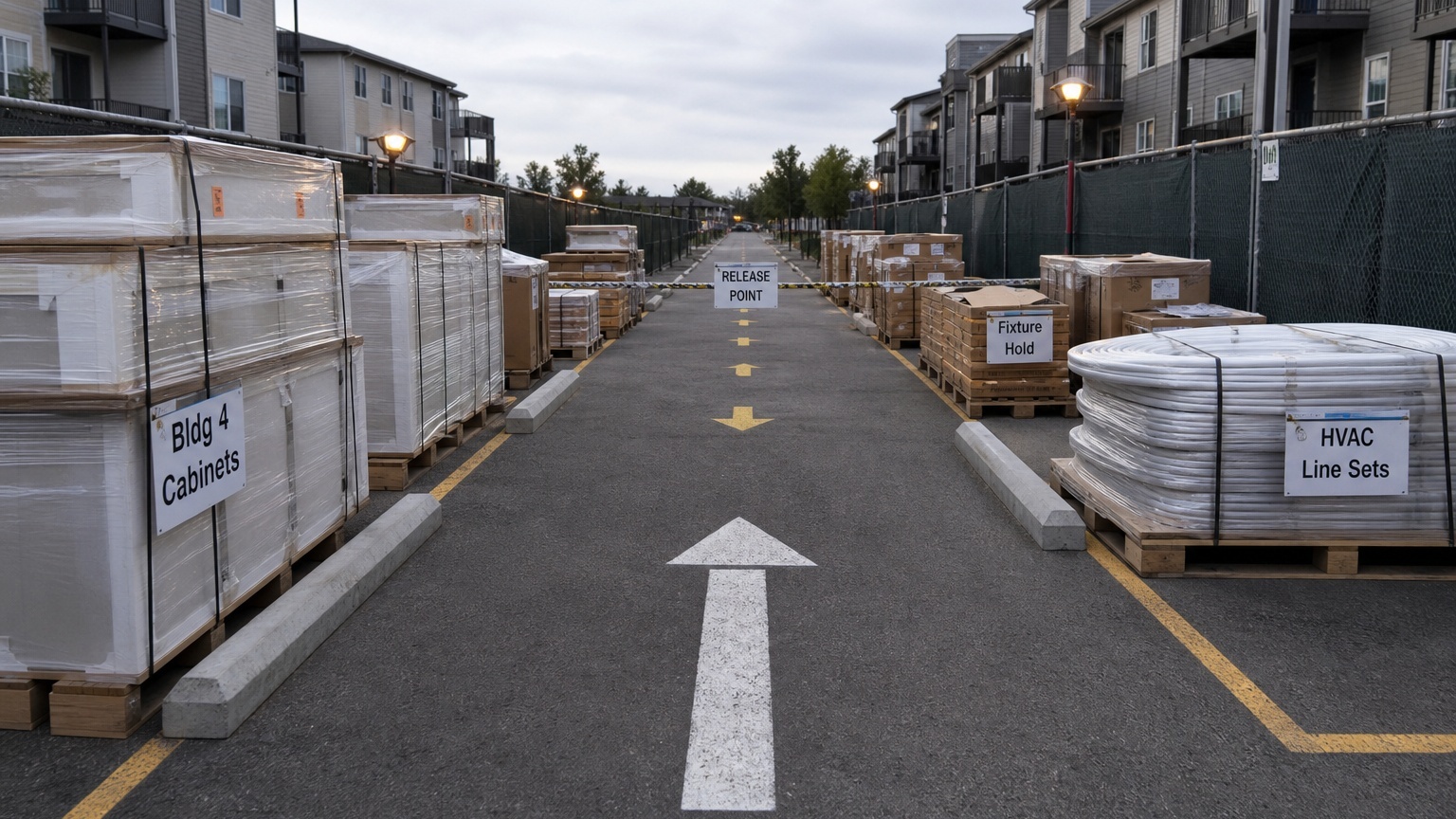
Layered security works because each control supports the next. Fencing slows access. Lighting improves visibility. Camera analytics detect movement. Live operators verify whether the activity is authorized. Audio warnings can deter trespassers before they load materials. Video clips help document what happened.
Safety context: OSHA’s General Requirements for Storage states that materials stored in tiers should be secured against sliding, falling, or collapse, and passageways should remain clear. Security barriers, lighting, and material layouts should support the site’s safety plan rather than create new access or egress hazards.
For outdoor staging areas, start with the practical basics:
- Use fencing or temporary panels to define the material zone.
- Reduce the number of access points.
- Keep gates locked outside approved work hours.
- Use lockable containers for high-value, portable materials.
- Place pallets so labels face inward, not toward public view.
- Avoid stacking materials in a way that creates hiding places.
- Keep dumpsters, parked vehicles, and storage containers from blocking camera views.
- Add lighting where cameras, gates, and material rows need clean visibility.
- Post clear monitored-security signage at approach points.
The goal is not to turn the property into a fortress. The goal is to make unauthorized access obvious, detectable, and difficult to complete without intervention.
Separate Bulk Materials From High-Value Portable Items
Large palletized materials and small high-value items should not always sit in the same exposed area. Flooring pallets, drywall, and cabinets may require broad camera coverage and vehicle approach monitoring. Plumbing trim, electrical devices, smart locks, and boxed fixtures may need locked storage, tighter release controls, and more frequent inventory checks.
Design the Area So Cameras Can See the Action
A camera cannot verify what it cannot see. Avoid placing the most valuable materials behind solid fencing, around blind corners, under deep shadows, or behind stacked pallets. If materials must be covered for weather protection, keep the approach routes, gate, container doors, and release point visible.
Use Live Monitored Cameras to Intervene After Hours
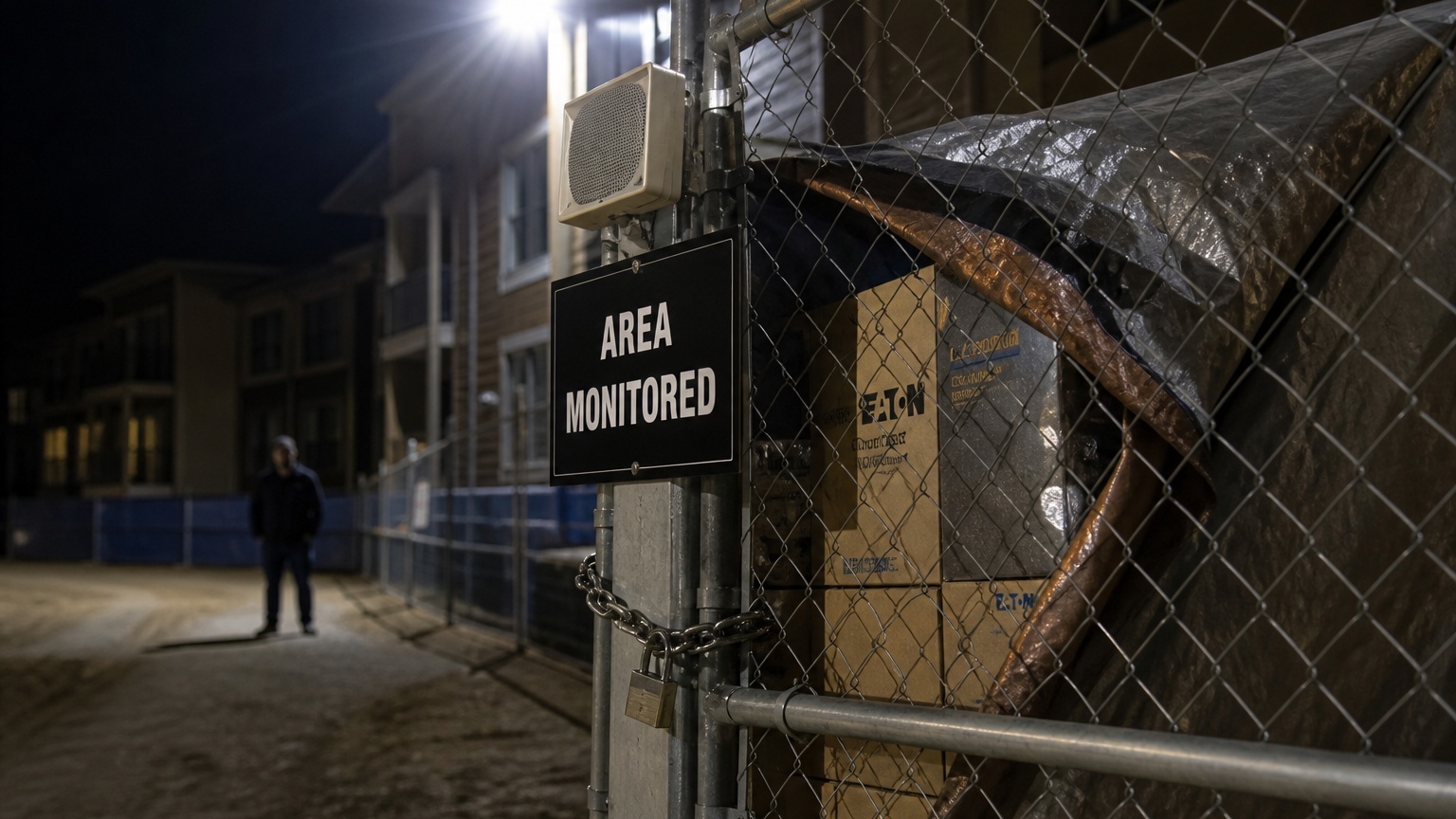
A camera that only records may help confirm that a theft happened. For apartment renovation material theft prevention, the stronger approach is detection plus response.
Jobsite Sentry combines AI-powered detection with live trained operators. When suspicious activity occurs in a monitored zone, the system can help distinguish between normal site activity and a potential threat. A live operator can verify the event, issue an audio warning when appropriate, contact designated site contacts, and escalate to law enforcement if needed.
That matters because outdoor staging theft often happens quickly. A person does not need much time to cut wrap, open boxes, load fixtures, or remove tools. Real-time verification gives the project team a chance to respond before the loss is complete.
Monitoring can also be customized around the renovation schedule. Many apartment projects do not need the same response plan at noon on a Tuesday as they do at 11:30 p.m. on a holiday weekend. Monitoring schedules can be aligned with after-hours risk, delivery days, shutdown periods, and phases when high-value materials are stored outside.
AI Detection Helps Reduce Noise
Outdoor apartment properties create normal movement: residents, animals, wind-blown debris, passing vehicles, maintenance staff, and authorized contractors. AI detection helps identify relevant activity in defined zones, such as people, vehicles, equipment, or movement near protected materials. Live human review adds judgment before escalation.
Two-Way Audio Can Deter Before Materials Leave the Site
A clear audio warning can change the outcome of an incident. When an intruder realizes the area is actively monitored and the activity has been noticed, the risk of staying increases. That deterrent value is one reason live monitored cameras are different from passive recording systems.
Create Receiving, Release, and Relocation Controls
Security gaps often appear in the handoff between delivery, storage, and installation. The project team should know exactly what arrived, where it was placed, who is allowed to remove it, and when it should move to the next building.
Use simple, repeatable controls:
- Require deliveries to be checked against purchase orders or delivery tickets.
- Photograph pallets, labels, and visible serial numbers when practical.
- Assign each material group to a building, unit range, or phase.
- Use weather-resistant labels that crews can read quickly.
- Limit who can release materials from the staging area.
- Keep a daily release log for high-value items.
- Move materials closer to installation only when crews are ready.
- Remove empty packaging that may advertise what is stored nearby.
- Export video clips when a delivery, dispute, or incident needs documentation.
The purpose is accountability without creating bottlenecks. A good process helps managers answer three questions quickly: Did it arrive? Was it stored securely? Who removed it and when?
Use Video to Support Chain-of-Custody
Video documentation can support delivery verification, release disputes, vendor questions, police reports, insurance claims, and owner communication. Jobsite Sentry’s mobile app and command center allow authorized users to view live feeds, review playback, and export clips for documentation.
Relocate Coverage as the Staging Area Moves
Apartment renovation sites change quickly. If materials shift from a central lot to a courtyard, or from Building 1 to Building 8, security coverage should shift with them. Mobile surveillance units can be repositioned as the site layout changes, subject to access, solar exposure, mounting needs, and connectivity conditions.
Camera Placement Priorities for Apartment Renovation Material Theft Prevention
Camera placement should be based on how theft would actually happen. Start with the routes someone would use to approach, load, and leave with materials.
Prioritize these views first:
- Main vehicle approach routes to the staging area.
- Pedestrian shortcuts from parking lots, alleys, sidewalks, or neighboring properties.
- Gates and fence openings.
- Container doors and lockable storage points.
- High-value pallet rows and boxed fixture zones.
- Loading and release points used by subcontractors.
- Blind corners created by buildings, dumpsters, trees, or parked vehicles.
- Temporary laydown areas that appear during phase changes.
PTZ cameras can help operators inspect activity across a larger area, while fixed views can protect specific choke points. In many apartment renovation projects, the right combination is a broad overview plus tighter views on gates, staged materials, and loading paths.
Do Not Aim Only at the Entrance
A front gate view is useful, but theft may not start there. Materials can be approached from side parking areas, open breezeways, neighboring lots, service roads, or gaps in temporary fencing. Protect the staging area itself, not only the official entrance.
Keep Resident Privacy and Site Rules in Mind
Multifamily renovations may occur near occupied units. Camera placement should focus on work zones, material areas, access points, and project assets. Property teams should review privacy expectations, resident notices, lease requirements, and local rules with counsel or internal compliance teams where appropriate.
Plan for Power, Connectivity, Deployment Speed, and Cost
Temporary apartment renovation sites often lack reliable wired power or internet in the exact place where staging-area security is needed. That is why mobile surveillance can be a practical fit.
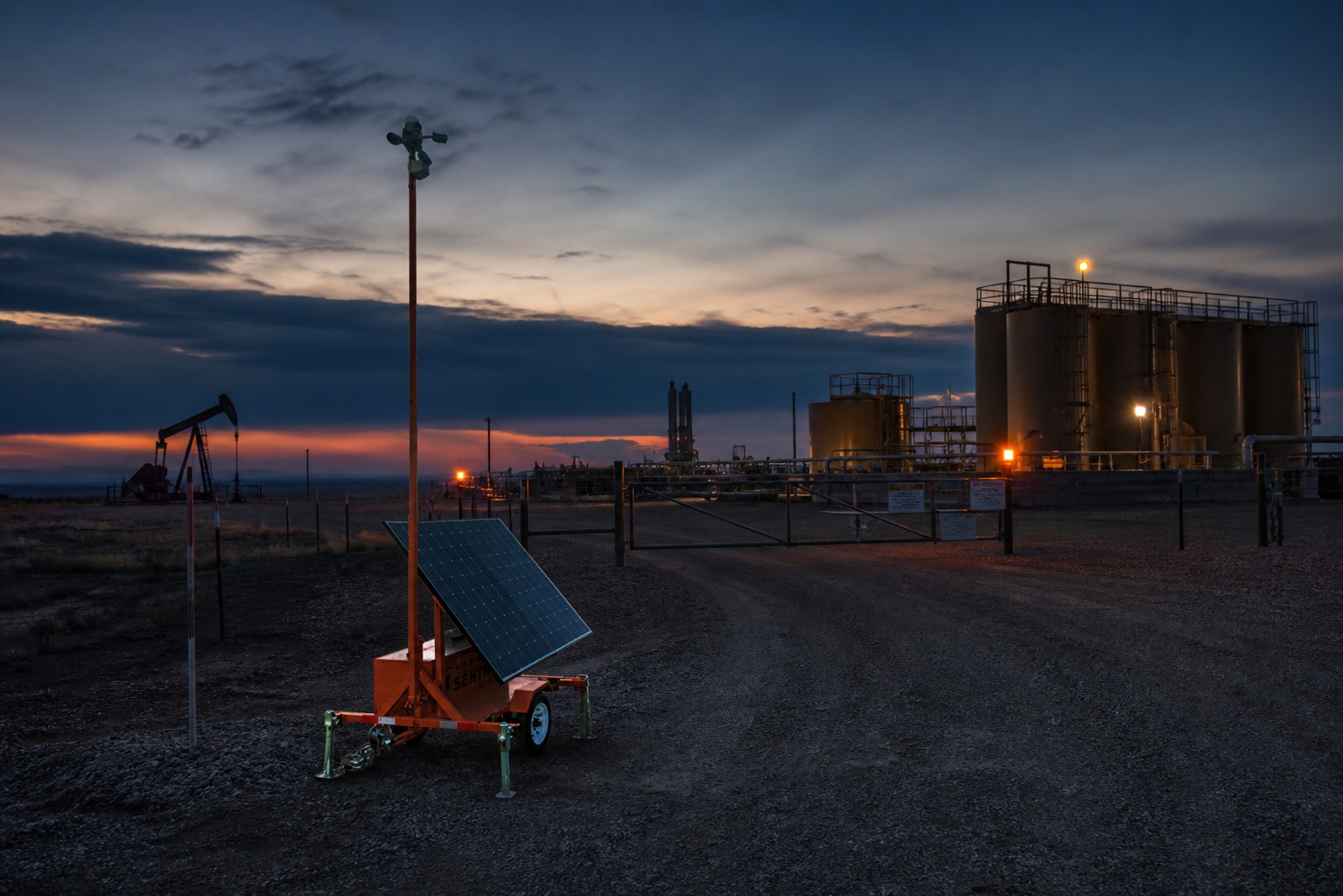
Jobsite Sentry’s solar-powered camera trailers and units are designed for temporary outdoor locations without trenching, wired internet, or generators. Starlink connectivity can support monitoring in areas with weak or unavailable cell service, subject to site conditions and sky visibility.
Deployment can often be completed within 24 to 48 hours depending on location, access, equipment availability, and site conditions. During a consultation, Jobsite Sentry can review the staging layout, monitoring windows, camera count, connectivity needs, and relocation plan.
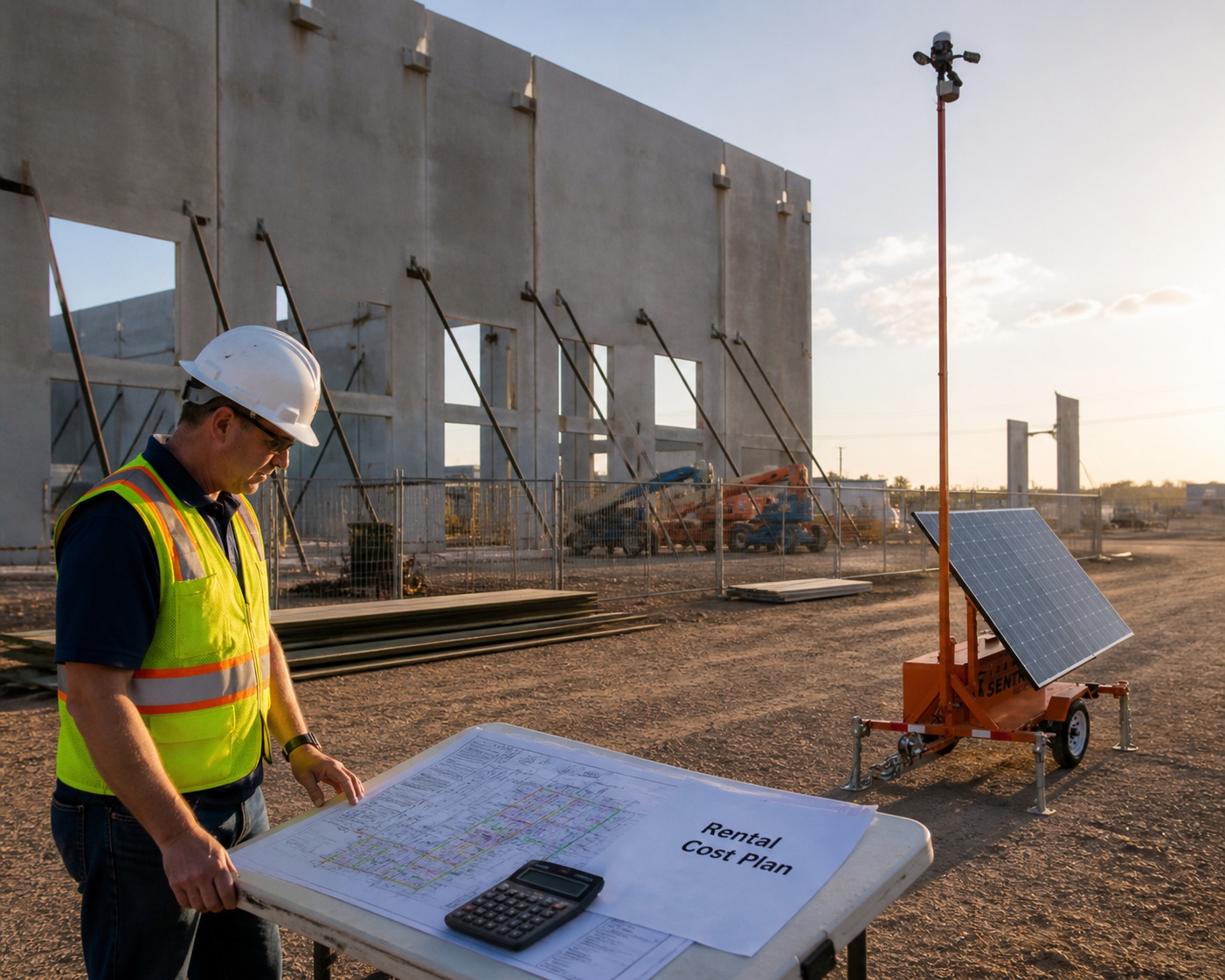
Cost depends on the size of the area, equipment configuration, monitoring schedule, connectivity needs, deployment requirements, and project duration. Jobsite Sentry promotes transparent pricing, no long-term contract messaging, and live video monitoring advertised as low as $1.99 per hour. Final pricing should be confirmed during a project-specific quote, including any setup, data, relocation, or service fees that may apply.
Remote Monitoring Versus an On-Site Guard
A security guard can provide a physical presence, but staffing every night, weekend, and holiday can become expensive and inconsistent. Remote video monitoring can cover defined zones, preserve video documentation, use audio deterrents, and escalate verified events. Some sites may use both, but many outdoor staging areas can benefit from monitored cameras as a flexible alternative or supplement.
Mobile App Access Helps Managers Stay Informed
Authorized property and project teams can use the Jobsite Sentry app and command center to view live video, review recorded footage, control PTZ views where available, use two-way talk features, and export clips. This helps regional managers and owners stay informed without being physically present at every renovation property.
What to Do Before the Next Material Delivery
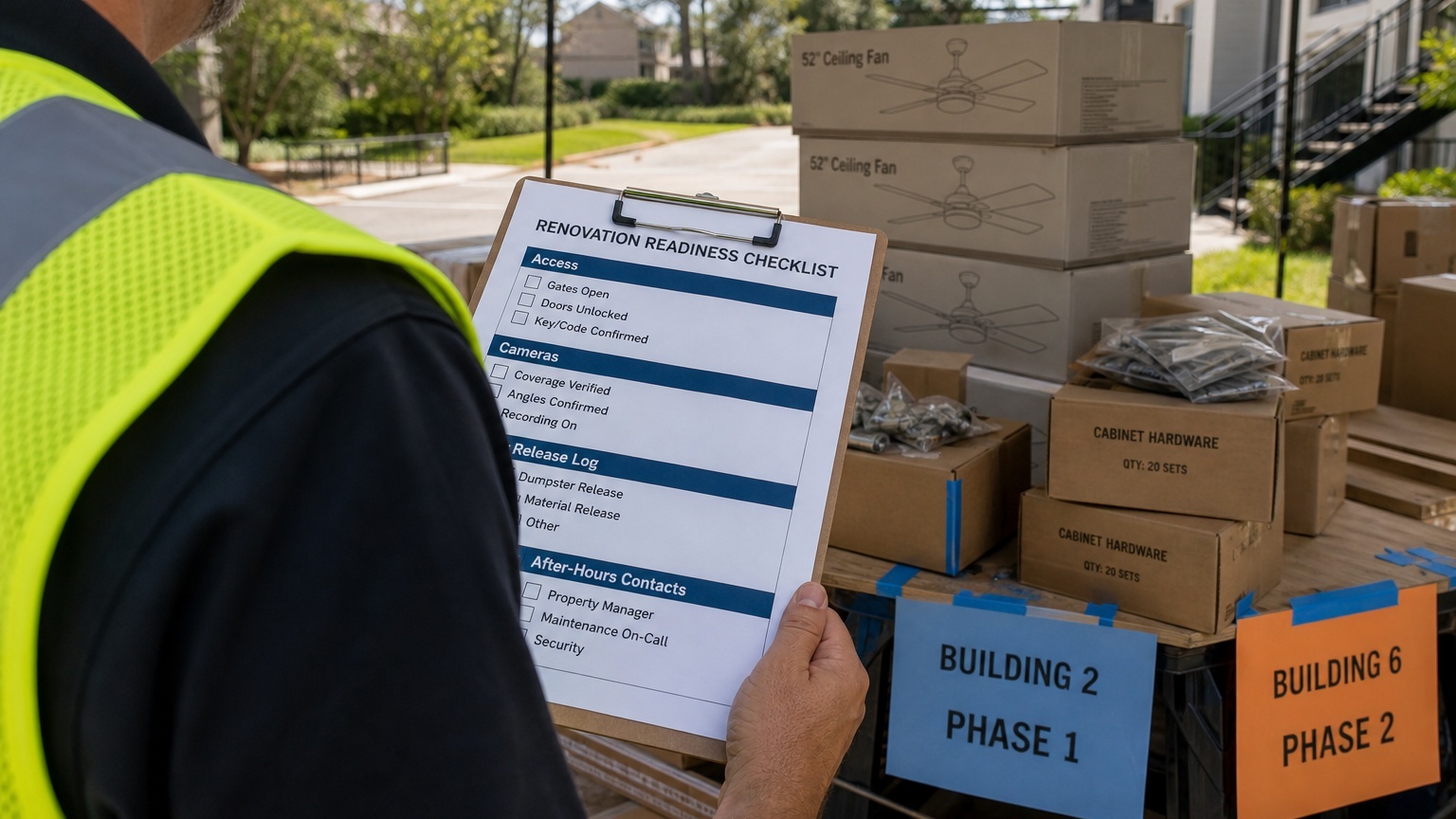
If high-value renovation materials will be stored outdoors, treat the next delivery as the deadline for your security plan. Do not wait until the first loss to decide where cameras, gates, locks, lighting, and response contacts should go.
Before materials arrive:
- Confirm the delivery date and expected contents.
- Decide where the materials will be staged.
- Clear camera sightlines and remove unnecessary obstructions.
- Assign receiving and release responsibility.
- Secure locks, fencing, lighting, and signage.
- Set monitoring hours for the first night after delivery.
- Confirm escalation contacts and after-hours call order.
- Plan when the materials will move indoors or to the installation area.
The first night after delivery is often one of the most important monitoring windows because materials are visible, newly staged, and not yet installed.
People Also Ask
Q: How do you secure building materials on an apartment renovation site?
A: Secure building materials by placing them in a controlled staging area, limiting access points, locking high-value items, documenting deliveries, improving lighting, monitoring gates and approach routes, and using live monitored cameras during nights, weekends, holidays, and other high-risk periods.
Q: What materials are most at risk during apartment renovations?
A: Common high-risk materials include appliances, copper, HVAC components, plumbing fixtures, electrical materials, lighting, smart locks, cabinets, door hardware, flooring, and power tools. Risk depends on resale value, portability, visibility, and how long the items remain outside.
Q: Can mobile surveillance trailers work without on-site power or wired internet?
A: Yes. Jobsite Sentry’s solar-powered units are designed for temporary outdoor locations and can use Starlink connectivity where wired internet or reliable cell service is not available, subject to site conditions.
Q: What happens when suspicious activity is detected after hours?
A: AI detection can alert live monitoring operators to activity in a protected zone. Operators can verify the event, issue an audio warning when appropriate, notify designated contacts, and escalate to law enforcement when needed.
Q: Can apartment managers view cameras from a phone?
A: Yes. Authorized users can access live video, playback, PTZ controls where available, two-way audio, multi-camera views, and clip export through Jobsite Sentry’s app and command center.
Download the Apartment Renovation Material Staging Security Checklist
Use this checklist to review outdoor staging zones, delivery controls, camera placement, monitoring schedules, and after-hours response steps before valuable materials arrive.
Frequently Asked Questions
Q: How fast can Jobsite Sentry deploy a mobile surveillance trailer or camera unit?
A: Deployment is commonly available within 24 to 48 hours depending on location, site access, equipment availability, and site conditions. A consultation helps confirm the best schedule for your apartment renovation project.
Q: Can monitoring be scheduled only for nights and weekends?
A: Yes. Monitoring can be customized around the property’s risk windows, including nights, weekends, holidays, shutdown periods, delivery days, and phases when valuable materials are staged outdoors.
Q: Can the camera unit be moved as the apartment renovation progresses?
A: Yes. Mobile surveillance equipment can be repositioned as the staging area, active buildings, and material storage zones change, subject to safe access, solar exposure, mounting requirements, and connectivity.
Q: Can AI tell the difference between real threats and normal activity?
A: AI can help filter activity by detecting people, vehicles, equipment, and movement in defined zones. Live human operators add verification before response, which helps reduce unnecessary escalations from normal site activity, wildlife, wind, or authorized movement.
Q: How much does mobile surveillance cost per month?
A: Monthly cost depends on equipment, camera count, monitoring schedule, connectivity, deployment, relocation needs, and project duration. Jobsite Sentry advertises live video monitoring as low as $1.99 per hour, with final pricing confirmed through a project-specific quote.
Conclusion
Outdoor material staging is often unavoidable during apartment renovations, but preventable losses do not have to become part of the project. The strongest plans combine organized staging, controlled access, visible deterrents, live monitored cameras, clear release procedures, and documentation that helps managers respond quickly.
If your next delivery includes appliances, fixtures, cabinets, HVAC components, copper, or other high-value materials, plan security before the truck arrives. Jobsite Sentry can help you protect the materials that keep your renovation schedule moving.
Schedule a Free Staging Area Security Assessment
Jobsite Sentry can review your apartment renovation site, identify high-risk material zones, recommend mobile surveillance placement, and build a monitoring plan for nights, weekends, holidays, and phase changes.
Related Jobsite Sentry Resources
- Mobile surveillance trailers
- Remote video monitoring for construction
- Solar-powered security cameras without power or internet
- Starlink remote security
- Jobsite Command Center
- Why video evidence matters after a jobsite incident
- Contact Jobsite Sentry
External References
- OSHA 1926.250 – General Requirements for Storage
- OSHA 1926 Subpart H – Materials Handling, Storage, Use, and Disposal
- OSHA 1926.200 – Accident Prevention Signs and Tags
- OSHA Work Zone Traffic Safety Fact Sheet
These external sources provide general safety context. Site-specific legal, privacy, insurance, access-control, and law-enforcement requirements should be confirmed before publication or implementation.