What Happens After a Jobsite Incident? Why Video Evidence Matters

A jobsite incident does not end when the damage is discovered. That is usually when the real questions begin.
Who entered the site? What time did it happen? Which gate was used? Was equipment moved? Did a vehicle enter the property? Was the damage caused by theft, vandalism, trespassing, a delivery issue, a subcontractor mistake, or an accident? Is there proof?
Without video evidence, contractors are often forced to rely on assumptions, incomplete reports, memory, or conflicting statements. That can lead to project delays, insurance stress, police-report challenges, subcontractor disputes, liability concerns, and repeated security gaps.
With jobsite video evidence, the conversation changes from:
“What do we think happened?”
to:
“Here is what happened.”
For modern construction sites, video evidence is not just a security feature. It is a business protection tool. It helps contractors document incidents, protect assets, improve response, reduce uncertainty, and make better decisions after something goes wrong.
Why Jobsite Video Evidence Matters
Construction sites are temporary, open, and constantly changing. Materials move. Equipment shifts. Crews rotate. Deliveries happen throughout the day. Subcontractors come and go. After hours, supervision drops, but high-value assets often remain exposed.
That creates a serious problem after an incident: uncertainty.
Jobsite video evidence helps reduce that uncertainty. It can show what happened, when it happened, where it happened, who or what was involved, and what needs to happen next.
Video evidence can support:
- Theft investigations
- Vandalism reviews
- Trespassing documentation
- Equipment damage reports
- Insurance claims
- Police reports
- Delivery disputes
- Subcontractor disputes
- Safety incident reviews
- Internal project documentation
- Future security planning
The National Equipment Register estimates that heavy equipment theft costs the industry roughly $300 million to $1 billion every year. That number does not include every indirect cost, such as downtime, replacement rentals, missed work, investigation time, project delays, or increased insurance pressure. [1]
When one incident can trigger so many business problems, clear footage becomes extremely valuable.
What Counts as a Jobsite Incident?
A jobsite incident is any event that affects site security, safety, assets, schedule, liability, or project control.
Many teams think only major theft counts as an incident. In reality, smaller events can also create major consequences.
Common jobsite incidents include:
- Equipment theft
- Tool theft
- Fuel theft
- Copper or material theft
- Vandalism
- Trespassing
- Vehicle damage
- Fence damage
- Gate damage
- Trailer break-ins
- Storage container break-ins
- Illegal dumping
- Unauthorized access
- Delivery disputes
- Subcontractor damage disputes
- Safety incidents
- Near misses
- Suspicious after-hours activity
A stolen generator can delay work. A damaged gate can expose the site to more risk. A delivery dispute can create confusion about whether materials arrived. A trespasser injury can create liability concerns. Vandalism can require cleanup, rework, and reporting.
That is why video evidence matters even when the incident seems small.
People Also Ask: Why Is Video Evidence Important After a Construction Site Incident?
Video evidence is important after a construction site incident because it gives contractors visual proof. It helps confirm the timeline, identify the affected area, document vehicle movement, support insurance and police reports, and reduce uncertainty between owners, contractors, vendors, and subcontractors.
A written report explains what someone noticed. Video footage can show what actually happened.
The Cost of Not Having Video Evidence
The cost of a jobsite incident is not limited to what was stolen or damaged.
When there is no footage, the project team may lose hours or days trying to reconstruct the event. Managers may need to interview workers, call subcontractors, review delivery records, check inventory, contact police, communicate with insurance, and explain the issue to owners or stakeholders.
Without video evidence, one incident can create:
- Delayed work
- Missed deliveries
- Equipment rental costs
- Replacement material costs
- Labor downtime
- Insurance claim complications
- Police-report limitations
- Vendor or subcontractor disputes
- Safety concerns
- Project-owner frustration
- Reputation damage
- Increased pressure to improve security
The most expensive part of a jobsite incident is often not the incident itself. It is the uncertainty that follows.
Video evidence helps reduce that uncertainty.
Real-World Example: Why Footage Changes the Response
Imagine a contractor arrives Monday morning and discovers that a skid steer is missing from the jobsite.
Without video footage, the team may only know that the equipment was there Friday evening and gone by Monday morning. That creates a long window of uncertainty. Managers may need to check gate locks, ask subcontractors, review delivery records, call team members, and file a report without knowing when the theft happened or how the equipment left the site.
With recorded jobsite footage, the response is different.
The footage may show the exact time the site was entered, which gate was used, whether a vehicle or trailer was involved, what direction the vehicle came from, and when the equipment left the property. That gives the contractor stronger documentation for police, insurance, internal reporting, and future security planning.
Instead of guessing for days, the team can act within hours.
That is the real value of jobsite video evidence. It does not just show that something happened. It helps contractors understand what happened, respond faster, and reduce the chance of the same issue happening again.
Written Reports vs. Video Evidence
| Category | Written Report | Video Evidence | Why It Matters |
| Timeline | Based on memory or discovery time | Shows when activity happened | Helps confirm sequence of events |
| Accuracy | Can be incomplete or subjective | Shows visual details | Reduces guesswork |
| Vehicle identification | Often limited | May show vehicle type, direction, or activity | Supports investigation |
| Insurance support | Helpful but limited | Stronger documentation | Helps explain damages and timing |
| Police report support | Verbal or written details | Visual evidence | Can improve reporting quality |
| Subcontractor disputes | May become one person’s word against another | Shows what occurred | Helps resolve conflict |
| Future prevention | General lessons | Clear weak spots | Improves camera and security placement |
A written report still matters, but it is stronger when supported by recorded footage.
What Video Evidence Can Prove After an Incident
Good footage helps answer the questions that matter most after a jobsite incident.
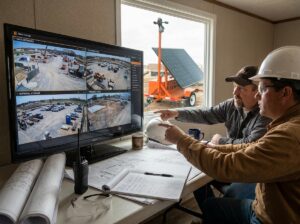
It can help show:
- Who entered the site
- What time the event occurred
- Which entrance, gate, or fence line was used
- Whether a person or vehicle was involved
- What direction the person or vehicle came from
- Which equipment, materials, or trailers were approached
- Whether the incident happened after hours
- Whether the activity was theft, vandalism, trespassing, or accidental damage
- Whether a delivery arrived as scheduled
- Whether a subcontractor was in the area
- Whether lighting or camera placement needs improvement
This kind of evidence helps contractors move from confusion to action.
People Also Ask: Can Jobsite Video Footage Help With Insurance Claims?
Yes. Jobsite video footage can help support insurance claims by documenting the event, confirming the timeline, showing affected property, and helping explain how damage or theft occurred. Insurance requirements vary, but clear footage can strengthen documentation and reduce uncertainty during the claims process.
Contractors should still follow all insurance carrier requirements, report incidents promptly, preserve evidence, and keep written documentation.
How Video Evidence Helps Police Reports
After theft, vandalism, trespassing, or illegal dumping, police may need specific information.
Useful details can include:
- Time of incident
- Entry point
- Vehicle description
- Direction of travel
- Number of people involved
- Tools or equipment used
- Damaged property
- Stolen assets
- License plate details if visible
- Photos or footage clips
Video evidence can make a police report more complete.
The FBI describes cargo theft as theft from commercial locations and situations where property is left unattended, and notes that thieves often target items that can be stolen and sold quickly. [2] Construction sites and equipment yards often contain exactly the kind of assets that are valuable, movable, and vulnerable after hours.
Video footage does not replace a police investigation, but it can help provide a clearer starting point.
How Video Evidence Helps Insurance Documentation
Insurance documentation usually requires more than “something happened.”
The project team may need to show what was stolen, when it was discovered, what area was affected, what security measures were in place, and whether the site had a reasonable response process.
Video evidence can support:
- Claim timelines
- Damage documentation
- Theft documentation
- Inventory comparison
- Police report details
- Internal incident summaries
- Site security reviews
- Recovery planning
Travelers highlights theft and vandalism as common builder’s risk exposures, along with fire and water damage. [3] That is important because construction projects are exposed to multiple types of loss, and documentation is critical when a claim or dispute follows.
How Video Evidence Helps Subcontractor and Vendor Disputes
Not every jobsite incident is caused by a thief.
Sometimes the issue is a delivery dispute. Sometimes a subcontractor damages materials. Sometimes equipment is moved without approval. Sometimes a vehicle hits a fence, gate, trailer, or stored materials. Sometimes there is disagreement over whether work was completed, materials arrived, or an area was accessed.
Video evidence can help answer:
- Did the delivery arrive?
- What time did it arrive?
- Where were the materials placed?
- Was a subcontractor in the area?
- Was equipment moved?
- Was property damaged during loading or unloading?
- Was the gate left open?
- Did the issue happen before or after a crew left?
This can reduce conflict and help teams resolve problems faster.
People Also Ask: Can Video Footage Help Resolve Contractor or Subcontractor Disputes?
Yes. Video footage can help resolve contractor, subcontractor, vendor, and delivery disputes by showing what happened on-site. It can confirm access times, material placement, equipment movement, delivery activity, and damage events.
This does not mean every dispute becomes simple, but footage gives the team a stronger factual basis.
How Video Evidence Supports Safety Reviews
Video evidence is not only useful for theft and vandalism. It can also support safety reviews.
After a safety incident or near miss, teams may need to understand:
- What task was being performed
- Where the worker was located
- Whether equipment was moving nearby
- Whether traffic control was followed
- Whether the area was marked
- Whether lighting or visibility played a role
- Whether a hazard existed before the incident
- What can be improved next time
OSHA strongly encourages employers to investigate incidents where a worker was hurt, as well as near misses where a worker could have been hurt. [4] OSHA also requires many employers with more than 10 employees to keep records of recordable work-related injuries and illnesses using OSHA forms. [5]
Video footage can help support a more accurate internal review, especially when memories differ or conditions change quickly after an event.
What Good Jobsite Video Evidence Should Capture
Not all footage is equally useful.
A camera that sees only one corner may not show the full story. A camera that is too far away may miss details. A camera without enough lighting may not capture useful footage at night.
Good jobsite video evidence should capture:
- Entry and exit points
- Gates and fence lines
- Equipment zones
- Material storage areas
- Fuel tanks
- Tool containers
- Office trailers
- Delivery areas
- Parking areas
- High-value assets
- Dark corners
- Blind spots
- Vehicle movement
- After-hours activity
The goal is not simply to record video. The goal is to record useful video.
Need Help Choosing Camera Coverage?
Not every jobsite needs the same camera placement. Gates, equipment zones, material storage areas, trailers, fuel tanks, and blind spots all carry different levels of risk.
Request a Site Assessment to understand where mobile surveillance units, lighting, and remote video monitoring should be placed for stronger coverage.
Jobsite Video Evidence Checklist
Before and after a jobsite incident, your team should know which areas to monitor and what footage to preserve. A strong video evidence plan should cover the most important access points, high-value assets, and blind spots on the site.
Key areas to capture include:
- Main gates and secondary gates
- Fence lines and access points
- Equipment zones and material storage areas
- Fuel tanks, trailers, and tool containers
- Parking areas and delivery zones
- Blind spots and lighting gaps
A camera strategy should be reviewed as the site changes. Equipment moves, materials shift, and new risk areas can appear during different project phases.
Download the Full Jobsite Video Evidence Checklist
Use this checklist to review camera placement, footage preservation, incident documentation, and response steps after theft, vandalism, equipment damage, delivery disputes, or after-hours activity.
People Also Ask: Where Should Jobsite Cameras Be Placed?
Jobsite cameras should be placed near gates, fence lines, equipment rows, material storage areas, fuel tanks, tool containers, trailers, delivery zones, parking areas, and blind spots. Placement should change as the jobsite changes.
For temporary and evolving sites, mobile surveillance units can be especially useful because they can move with the project.
Why Mobile Surveillance Units Are Useful After Incidents
A mobile surveillance unit, mobile surveillance trailer, or solar surveillance trailer can be especially valuable on construction sites because it is built for outdoor, temporary, and changing environments.
A mobile surveillance trailer may include:
- HD cameras
- Tall mast visibility
- Security lighting
- Recorded footage
- Remote video monitoring
- Live video monitoring
- Motion-based awareness
- Cellular connectivity
- Solar or battery power
- Audio warning capability
- Flexible placement
For many jobsites, this is more practical than installing fixed infrastructure in every phase of the project.
If the risk shifts from the main gate to the equipment yard, the unit can move. If materials are delivered to a new zone, the camera coverage can be adjusted. If the site expands, another unit can be added.
Great American Insurance Group notes that proper lighting is a major deterrent and that lighting also helps monitoring when surveillance or guards are in place. [6] A mobile surveillance trailer with visible cameras and lighting can help create that visible security presence where fixed cameras may not reach.
How Video Evidence Improves Response Time
After an incident, speed matters.
If equipment is missing, the team needs to know quickly. If a gate was damaged, it may need to be secured before another incident happens. If materials were stolen, replacement orders may be needed. If footage shows a vehicle, that information may need to be shared with police or insurance.
Video evidence helps managers quickly answer:
- Is the site still exposed?
- Is the incident ongoing?
- Was more than one area affected?
- Does the site need immediate repair?
- Should law enforcement be contacted?
- Should insurance be notified?
- Should camera placement be changed?
- Should access procedures be tightened?
Without footage, teams can lose valuable time trying to understand what happened.
What to Do After a Jobsite Incident
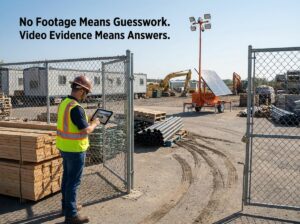
A clear process helps teams respond faster and preserve useful information.
Step 1: Secure the Site
Make sure the site is safe. Close open gates, secure damaged fencing, protect exposed materials, and prevent additional access if possible.
Step 2: Preserve the Scene
Avoid moving damaged property unless safety requires it. Take photos. Save footage. Keep notes. Do not overwrite video.
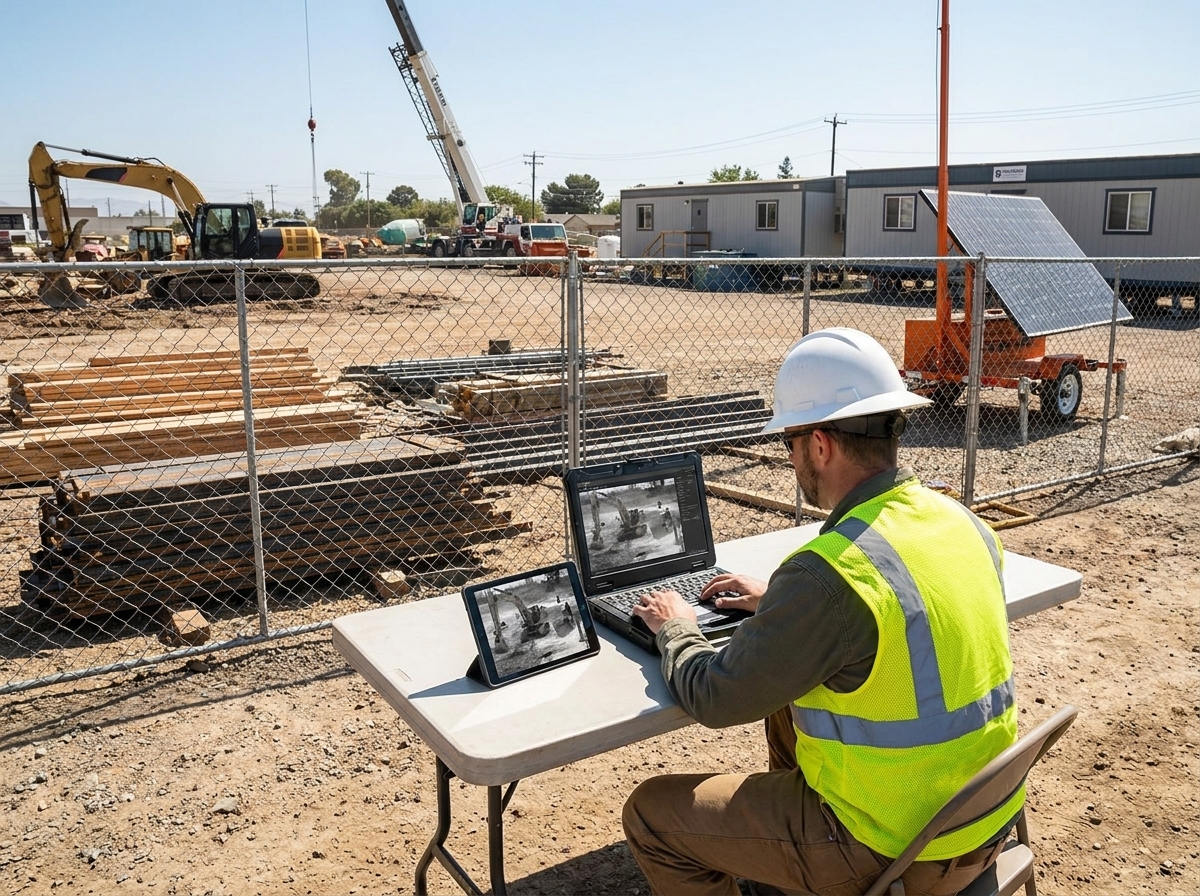
Step 3: Review Video Footage
Check footage from before, during, and after the incident. Look for entry points, vehicles, people, timing, movement, and affected areas.
Step 4: Document the Timeline
Create a clear timeline of what happened. Include date, time, location, affected assets, footage notes, and who discovered the issue.
Step 5: Notify the Right Parties
Depending on the incident, notify the project manager, owner, security provider, police, insurance carrier, subcontractors, or vendors.
Step 6: Adjust Security
After reviewing the incident, improve coverage. Move cameras, add lighting, secure materials, update access procedures, or deploy a mobile surveillance unit where needed.
People Also Ask: How Long Should Jobsite Video Footage Be Stored?
Jobsite video retention depends on the project, risk level, insurance requirements, legal needs, and storage capacity. Higher-risk jobsites may need longer retention periods, especially if theft, vandalism, delivery disputes, or safety incidents are common.
Contractors should define retention rules before an incident happens.
Jobsite Video Evidence in Phoenix, Dallas, Houston, Austin, Denver, and Other Construction Markets
Jobsite video evidence is especially important in fast-growing construction markets where commercial projects, multifamily developments, utility work, infrastructure projects, solar sites, and equipment yards are active year-round.
Contractors searching for jobsite video evidence in Phoenix, construction site incident footage in Dallas, jobsite surveillance in Houston, construction site monitoring in Austin, or jobsite security cameras in Denver often need the same thing: proof after something goes wrong.
High-growth markets such as Phoenix, Dallas, Houston, Austin, Denver, San Antonio, Atlanta, Nashville, Tampa, Orlando, Miami, Las Vegas, Charlotte, and Salt Lake City often have active jobsites, large equipment staging areas, valuable materials, and changing site layouts. That creates more need for remote video monitoring, mobile surveillance trailers, live video monitoring, and recorded footage.
A solar surveillance trailer can help protect sites where permanent power or internet is not available. A mobile surveillance trailer can be moved as the project changes. Remote video monitoring helps managers review incidents without driving to the site every time there is a concern.
Local search terms to use naturally in supporting pages include:
- Phoenix jobsite video evidence
- Dallas construction site video monitoring
- Houston jobsite surveillance footage
- Austin construction site incident documentation
- Denver mobile surveillance trailer
- San Antonio jobsite security cameras
- Nashville construction site monitoring
- Tampa jobsite video footage
- Orlando construction site security
- Miami construction video evidence
- Las Vegas jobsite surveillance
- Charlotte construction site remote monitoring
Expert Insight
“Visible surveillance, strong lighting, and clear documentation are among the most practical ways to reduce uncertainty after a jobsite incident. The best security systems do not just deter activity, they help teams understand what happened and what to fix next.”
Why Jobsite Sentry?
Jobsite Sentry helps contractors see what is happening on-site, even when no one is physically there.
Our mobile surveillance solutions help protect:
- Construction sites
- Equipment yards
- Storage yards
- Material yards
- Laydown yards
- Commercial lots
- Fenced properties
- Utility sites
- Solar sites
- Parking areas
- Vacant outdoor assets
With Jobsite Sentry, teams do not have to rely on guesswork after an incident. They can review footage, understand the event, document what happened, and take action with better information.
Whether your site is in Phoenix, Dallas, Houston, Austin, Denver, Nashville, Tampa, Charlotte, or another active construction market, Jobsite Sentry helps provide the visibility, deterrence, and video evidence needed to protect valuable outdoor assets.
Always Remember
A jobsite incident can create stress, delays, unexpected costs, and serious uncertainty.
But clear video evidence helps contractors respond faster, document the situation, support claims, resolve disputes, and improve security moving forward.
Written reports are useful. Witness statements can help. But video evidence gives the project team something stronger: visual proof.
When something happens on-site, proof matters.
Do not wait until after an incident to wish you had footage.
See what happened. Protect what matters. Stay in control with Jobsite Sentry.
Get Mobile Surveillance
FAQ: Jobsite Video Evidence
1. Why is jobsite video evidence important?
Jobsite video evidence is important because it helps contractors understand what happened after theft, vandalism, trespassing, equipment damage, delivery disputes, or safety concerns. It reduces guesswork and supports better decisions.
2. Can construction site video footage help with insurance claims?
Yes. Construction site video footage can support insurance claims by documenting the timeline, affected assets, damage, vehicle movement, and site conditions before or after an incident.
3. Can video footage help police after jobsite theft?
Yes. Video footage can help police by showing entry points, timing, vehicle movement, suspect activity, damaged property, and stolen assets. It can make reports more complete.
4. What jobsite incidents should be documented with video?
Video can help document theft, vandalism, trespassing, fuel theft, material theft, trailer break-ins, equipment damage, delivery disputes, subcontractor disputes, safety incidents, and unauthorized access.
5. Where should jobsite cameras be placed?
Jobsite cameras should cover gates, fence lines, equipment areas, material storage, fuel tanks, trailers, office areas, tool containers, delivery zones, parking areas, and blind spots.
6. Can video evidence help resolve subcontractor disputes?
Yes. Video footage can help confirm when subcontractors arrived, where they worked, whether equipment was moved, whether materials were damaged, and whether a disputed activity occurred.
7. How does video evidence improve incident response?
Video evidence helps teams understand what happened faster. It can show whether the site is still exposed, what areas were affected, whether police should be contacted, and what needs to be fixed.
8. How long should jobsite footage be stored?
Retention depends on the project, risk level, insurance requirements, legal needs, and storage capacity. Contractors should set footage-retention rules before incidents happen.
9. Are mobile surveillance trailers useful for jobsite video evidence?
Yes. Mobile surveillance trailers are useful because they can provide recorded footage, remote video monitoring, visible deterrence, lighting, flexible placement, and coverage for temporary or changing jobsites.
10. Can solar surveillance trailers work on sites without power?
Many solar surveillance trailers are designed for sites without permanent power or internet. They may use solar panels, battery support, and cellular connectivity depending on the system.
11. What should contractors do after a jobsite incident?
Contractors should secure the site, preserve the scene, save footage, document the timeline, notify the right parties, file reports where needed, and adjust security based on what the footage shows.
12. What is the best way to prevent future jobsite incidents?
The best approach is layered security. Use fencing, lighting, access control, mobile surveillance units, remote monitoring, recorded footage, inventory controls, and a clear incident response plan.
Sources and Authority References
[1] National Equipment Register, Theft Prevention & Recovery Solutions
Used for heavy equipment theft loss estimate and construction equipment theft context.
https://www.ner.net/solutions/
[2] Federal Bureau of Investigation, Cargo Theft
Used for theft-risk context involving unattended commercial property, commercial locations, and quick-resale targets.
https://www.fbi.gov/investigate/transnational-organized-crime/cargo-theft
[3] Travelers, Protecting Your Construction Site from Fire, Water and Theft
Used for builder’s risk, theft, vandalism, fire, water damage, and construction site loss-prevention context.
https://www.travelers.com/resources/business-industries/construction/protecting-your-construction-site-from-fire-water-and-theft
[4] OSHA, Incident Investigation Overview
Used for incident and near-miss investigation guidance.
https://www.osha.gov/incident-investigation
[5] OSHA, Recordkeeping Requirements
Used for workplace injury and illness recordkeeping context.
https://www.osha.gov/recordkeeping
[6] OSHA, Injury & Illness Recordkeeping Forms 300, 300A, 301
Used for OSHA recordkeeping forms and documentation context.
https://www.osha.gov/recordkeeping/forms
[7] Great American Insurance Group, Effective Strategies to Help Prevent Theft on Your Construction Site
Used for lighting, visibility, construction theft prevention, surveillance, and after-hours security context.
https://www.greatamericaninsurancegroup.com/content-hub/loss-control/details/effective-strategies-to-help-prevent-theft-on-your-construction-site
[8] Sarpy County Sheriff’s Office, Construction Site Theft Prevention
Used for construction site theft prevention, equipment records, police-report support, and site security tips.
https://www.sarpy.gov/DocumentCenter/View/4017
[9] Canton Public Safety, Construction Site Crime Prevention
Used for reporting vandalism/theft, equipment records, serial numbers, and construction site crime-prevention guidance.
https://www.cantonmi.gov/DocumentCenter/View/503/Construction-Site-Theft-Prevention-PDF
[10] Fairfax County Police Department, Construction Site Theft Prevention Tips
Used for construction site theft prevention, securing materials, equipment marking, and recovery support.
https://fcpdnews.org/2024/05/10/cement-your-safety-construction-site-theft-prevention-tips/