How to Secure Equipment Yards, Storage Yards, and Outdoor Assets After Hours

After hours, your equipment yard becomes one of the most vulnerable parts of your operation.
Heavy equipment, trailers, vehicles, fuel tanks, tools, containers, copper, materials, attachments, generators, and outdoor assets may be sitting in a large open space with only a fence, a gate, or a lock protecting them. During the day, the yard may feel active and controlled. At night, over the weekend, or during holidays, that same yard can become an easy target.
The best way to secure an equipment yard is not to rely on one solution. A fence alone is not enough. A lock alone is not enough. A camera in the wrong place is not enough. A security plan works best when it uses multiple layers: physical barriers, lighting, cameras, mobile surveillance trailers, remote video monitoring, recorded footage, access control, and a response process.
For equipment yards, storage yards, laydown yards, material yards, commercial lots, and vacant outdoor properties, security is about more than preventing theft. It is about protecting operations, reducing downtime, documenting incidents, supporting police reports and insurance claims, and giving managers visibility when no one is physically on-site.
In simple terms:
A secure yard should be hard to enter, easy to monitor, and able to prove what happened if something goes wrong.
Why Equipment Yards and Storage Yards Are High-Risk
Equipment yards are high-risk because they combine three things thieves look for: valuable assets, open space, and predictable low-activity hours.
A yard may contain machinery, tools, trailers, material stacks, fuel, batteries, attachments, parts, and vehicles. Many of these items are expensive, movable, and difficult to trace after they leave the property. Some can be resold quickly. Others can create immediate operational disruption if they disappear.
The National Equipment Register estimates that approximately $300 million to $1 billion in heavy equipment is stolen every year. That estimate does not include every indirect cost, such as downtime, rental replacement, project delays, police reports, internal reviews, or increased insurance pressure. [1]
Outdoor yards are often vulnerable because they may have:
- Large open areas
- Multiple gates or access points
- Long fence lines
- Dark corners
- Limited after-hours staff
- No permanent power in some areas
- No permanent internet in some areas
- Valuable equipment stored in predictable locations
- Materials staged near entrances
- Fuel tanks exposed after hours
- Containers and trailers that are hard to monitor from one point
The risk is not only theft. Storage yards can also face vandalism, trespassing, illegal dumping, trailer break-ins, vehicle damage, fuel theft, and unauthorized use of equipment.
A small incident can create a large operational problem. A stolen attachment can delay work. Missing fuel can stop a crew in the morning. A damaged gate can expose the yard to repeated entry. A container break-in can create insurance paperwork, police reporting, and lost productivity.
That is why yard security needs to be proactive, not reactive.
People Also Ask: What Is the Best Way to Secure an Equipment Yard?
The best way to secure an equipment yard is to use layered security. Start with fencing, locked gates, access control, lighting, and organized asset placement. Then add mobile surveillance trailers, recorded video footage, remote video monitoring, clear signage, and a response plan for suspicious activity or incidents.
A strong equipment yard security plan should answer four questions:
- Can unauthorized people easily enter?
- Can managers see what is happening after hours?
- Can the system deter theft before it happens?
- Can footage prove what happened after an incident?
If the answer is no, the yard needs stronger security coverage.
What Assets Need the Most Protection?
Not every area of a yard carries the same risk. The highest-value and easiest-to-move assets usually deserve the strongest protection.
High-risk assets often include:
- Heavy equipment
- Skid steers, loaders, lifts, and excavators
- Trucks and fleet vehicles
- Trailers
- Generators
- Fuel tanks
- Copper and wiring
- Tools and small equipment
- Attachments and parts
- Material stacks
- Storage containers
- Job boxes
- Batteries
- Construction signs and traffic-control equipment
- Solar site equipment
- Utility site equipment
- Commercial outdoor assets
The key is to think like a trespasser. What is valuable? What is easy to move? What is closest to an exit? What is hidden from the road? What is poorly lit? What would be hard to prove without video?
Those are the areas that need priority coverage.
Common After-Hours Risks in Equipment Yards
Equipment yards, storage yards, and outdoor lots can experience several types of after-hours incidents.
| Risk | Why It Matters | What Helps Reduce It |
| Equipment theft | High replacement cost and project disruption | Locked gates, GPS, surveillance, lighting, inventory records |
| Fuel theft | Can stop work and create recurring losses | Fuel-area lighting, cameras, locked caps, monitoring |
| Tool theft | Smaller items are easier to remove and resell | Locked containers, job boxes, cameras, access control |
| Trailer break-ins | Trailers often store tools, parts, and documents | Visible cameras, lighting, locks, perimeter monitoring |
| Material theft | Copper, lumber, pipe, and supplies can be targeted | Material placement, recorded footage, lighting |
| Vandalism | Creates cleanup costs and operational delays | Visible deterrence, signage, surveillance |
| Illegal dumping | Adds cleanup costs and site-management issues | Cameras near entrances and perimeter access points |
| Unauthorized access | Creates liability and security concerns | Access control, fencing, signage, remote monitoring |
| Vehicle damage | Can affect fleet availability and insurance claims | Parking-area cameras and lighting |
| Trespassing | Can create safety and liability issues | Clear signs, fencing, lighting, monitoring |
A good security plan should not only reduce these risks. It should also document them clearly if they happen.
The Cost of One Yard Incident
One after-hours incident can cost far more than the stolen item.
If a piece of equipment, trailer, fuel supply, or material load disappears, the business may face immediate and indirect costs.
One incident may involve:
- Replacement costs
- Rental equipment costs
- Crew downtime
- Delayed work
- Missed deliveries
- Emergency repairs
- Police reporting
- Insurance claim paperwork
- Lost management time
- Customer or project-owner frustration
- Higher security pressure
- Reputation damage
- Increased insurance concerns
A storage yard incident can also expose weak points. If thieves entered through a dark corner or damaged gate once, they may return if nothing changes.
This is why prevention is usually cheaper than reaction. A visible mobile surveillance trailer, lighting, recorded footage, and remote video monitoring can help deter activity before it happens and reduce confusion after an incident.
Real-World Example: How One Missing Trailer Can Expose a Bigger Security Gap?
Imagine a yard manager arrives Monday morning and notices that a storage trailer has been broken into and several tools are missing.
Without video footage, the team may only know that the trailer was locked on Friday and damaged by Monday morning. That creates a long window of uncertainty. Managers may need to check locks, call employees, ask vendors, review access logs, file a police report, and contact insurance without knowing exactly when the break-in happened or how someone entered the yard.
With recorded footage, the response becomes much clearer.
The video may show the exact time the yard was entered, which gate or fence line was used, whether a vehicle was involved, how long the person stayed on the property, and which trailer or equipment zone was targeted.
That gives the business better documentation for police, insurance, internal reporting, and future security planning.
Instead of guessing what happened, the team can quickly identify the weak point and make changes such as moving a mobile surveillance trailer, improving lighting, locking down trailer areas, or adjusting camera coverage.
That is why equipment yard security is not just about preventing theft. It is about proving what happened and closing the gap before the next incident.
People Also Ask: Why Are Equipment Yards Common Theft Targets?
Equipment yards are common theft targets because they often contain expensive machinery, tools, trailers, fuel, parts, and materials in open outdoor spaces. After hours, supervision is lower, and large yards may have blind spots, dark corners, and multiple access points.
The more predictable the yard looks, the easier it becomes to target. Strong visibility, clear deterrence, and recorded evidence make the property harder to approach unnoticed.
Start With a Yard Security Risk Assessment
Before adding new technology, walk the yard and identify the weak spots.
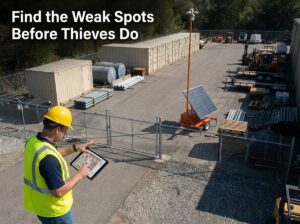
Look at the property from the outside first. Then walk it from the inside. Ask where someone would enter, where they would hide, what they would target, and how quickly they could leave.
Review these areas:
- Main gate
- Secondary gates
- Fence corners
- Back fence line
- Fuel tanks
- Equipment rows
- Trailer parking
- Storage containers
- Material stacks
- Tool storage
- Dark corners
- Dumpster areas
- Loading zones
- Adjacent properties
- Areas blocked by vehicles or containers
- Areas hidden from the road
A risk assessment helps you place security where it matters most. It also helps avoid wasting cameras, lights, and monitoring resources on low-risk areas.
Layered Security: The Best Equipment Yard Security Strategy
The strongest yard security is layered. No single measure protects everything.
A layered approach uses several protections together:
- Physical barriers to slow or block access
- Lighting to improve visibility
- Cameras to document activity
- Mobile surveillance trailers for flexible coverage
- Remote monitoring for off-site awareness
- Clear signage for deterrence
- Access procedures for control
- Incident response plans for action
Great American Insurance Group recommends theft-prevention programs that include security measures such as fencing, access control, lighting, equipment identification, maintenance, and automatic video surveillance systems for off-hours monitoring. [2]
The goal is not just to catch someone after an incident. The goal is to make the yard look difficult to target before anyone enters.
Security Layers Compared
| Security Layer | What It Does Well | Limitation | Best Use |
| Fence | Creates physical boundary | Does not record activity | Perimeter control |
| Gate lock | Controls entry points | Can be cut, bypassed, or left open | Main access control |
| Lighting | Improves visibility and deterrence | Does not document incidents alone | Gates, equipment, fuel, containers |
| Fixed camera | Records a specific area | Limited if yard layout changes | Permanent buildings or fixed entry points |
| Security guard | Human response and patrol | Can be expensive and limited by line of sight | High-risk periods or access control |
| Mobile surveillance trailer | Flexible cameras, lighting, remote monitoring, visible deterrence | Needs good placement and management | Outdoor yards, changing sites, after-hours security |
| Remote monitoring | Helps managers stay informed | Requires response plan | Multi-site operators and after-hours review |
| Response procedures | Turns alerts and footage into action | Requires team discipline | Incident response and prevention |
The strongest plan combines several layers instead of depending on only one.
Use Strong Fencing and Controlled Access
Fencing is the first line of defense for an equipment yard.
A fence does not stop every trespasser, but it creates a boundary, slows entry, and helps define where access should happen. A damaged fence, open gap, or weak gate can invite problems.
A strong fencing plan should include:
- Secure perimeter fencing
- Locked gates
- Limited access points
- Gate checks after closing
- Clear entry and exit procedures
- No large gaps near corners
- No easy climbing points near stored materials
- Regular fence inspections
- Warning signs where appropriate
Travelers recommends securing construction-site access with fencing to reduce vandalism and other losses. [3]
Controlled access matters because many incidents are not dramatic break-ins. Sometimes gates are left open. Sometimes keys are not managed. Sometimes vendors or subcontractors enter areas they should not access. A good yard security plan limits who can enter, when they can enter, and how access is documented.
People Also Ask: Are Fences Enough to Secure an Equipment Yard?
No. Fences are important, but they are not enough by themselves. A fence can slow access, but it cannot watch the yard, record footage, identify vehicles, detect blind spots, or prove what happened after an incident. Fencing works best when combined with lighting, cameras, mobile surveillance trailers, remote monitoring, and response procedures.
Add Lighting Around High-Risk Areas
Lighting is one of the simplest and most important security layers.
Darkness gives trespassers cover. Poor lighting also makes camera footage less useful. A camera pointed at a dark gate or equipment row may capture movement but not enough detail to support a report or claim.
Focus lighting around:
- Main gates
- Secondary gates
- Fuel tanks
- Storage containers
- Tool areas
- Equipment rows
- Trailer parking
- Material storage
- Loading zones
- Fence corners
- Blind spots
- Dumpster areas
- Outdoor parking areas
Good lighting helps security teams, camera systems, and managers see what is happening. It also sends a message: this yard is active, watched, and protected.
Great American Insurance Group notes that lighting and visibility are key parts of construction theft prevention, especially around storage areas and access points. [2]
Use Mobile Surveillance Trailers for Flexible Coverage
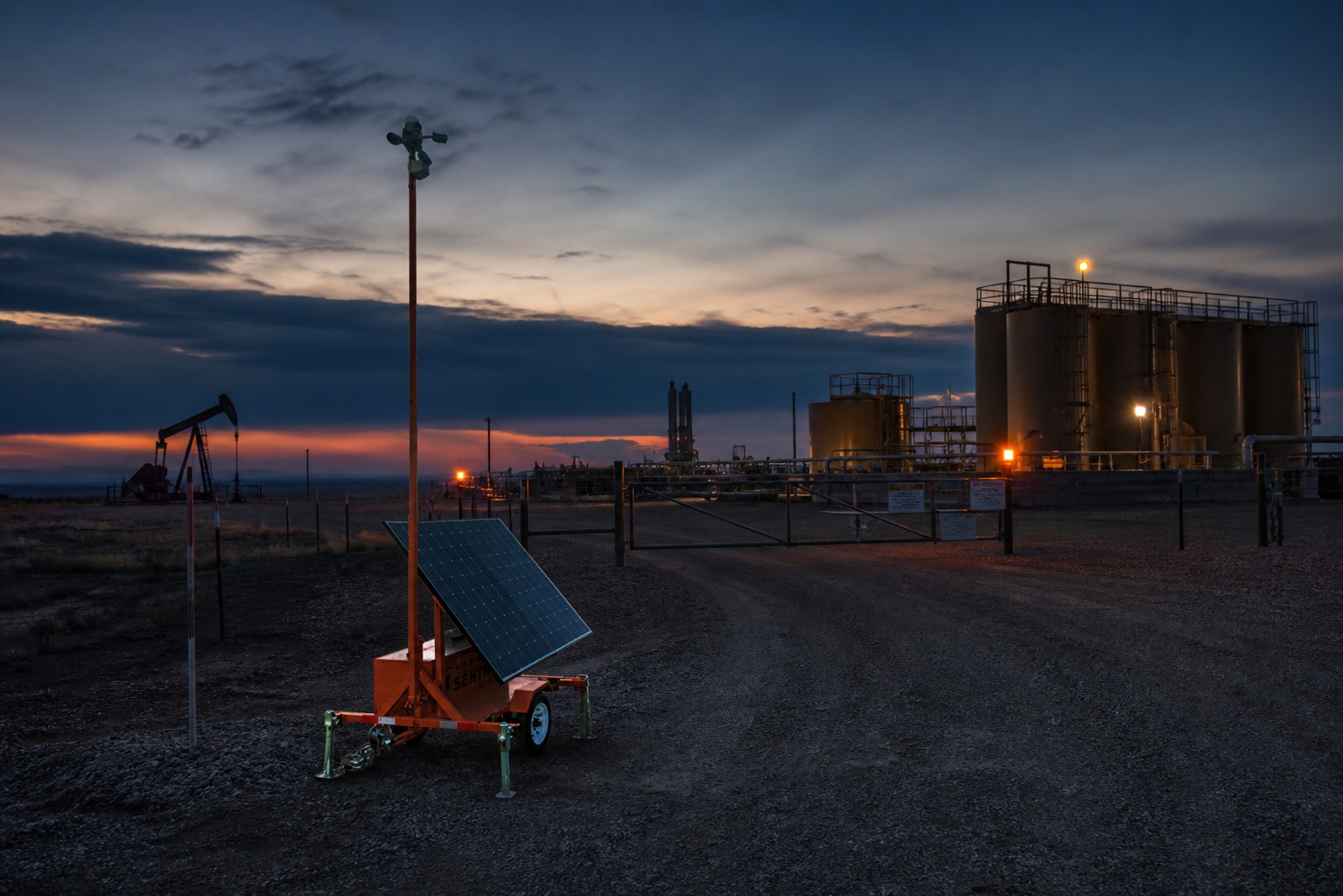
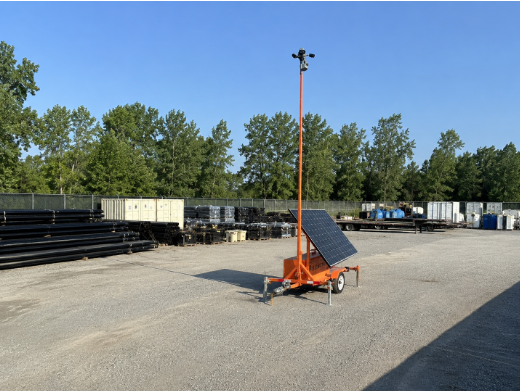
A mobile surveillance trailer, solar surveillance trailer, or mobile surveillance unit is one of the strongest tools for equipment yard security because it is designed for outdoor environments.
Unlike fixed cameras, mobile surveillance trailers can be placed where the risk is highest and moved as the yard changes. If materials are delivered to a new area, the unit can move. If equipment is staged near a different gate, coverage can shift. If theft activity starts near a back corner, the unit can be repositioned.
A mobile surveillance trailer may include:
- HD cameras
- Tall mast visibility
- Bright security lights
- Recorded video footage
- Remote video monitoring
- Live video monitoring
- Motion-based awareness
- Cellular connectivity
- Solar or battery power
- Audio warning capability
- Flexible placement
- Temporary deployment
This makes mobile surveillance especially useful for:
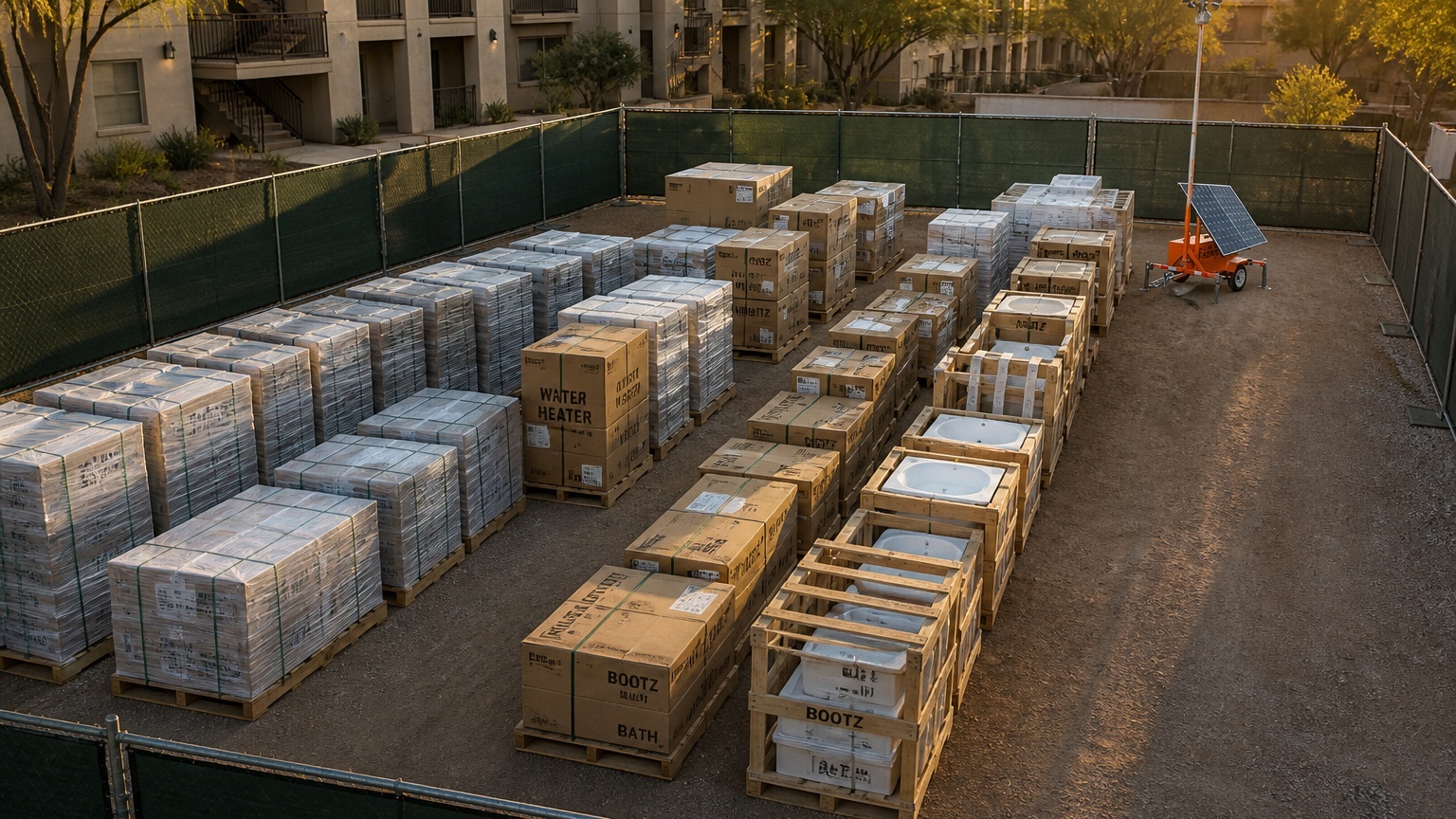
- Equipment yards
- Storage yards
- Material yards
- Laydown yards
- Fleet lots
- Utility sites
- Solar sites
- Commercial lots
- Vacant outdoor assets
- Temporary storage areas
A visible mobile surveillance trailer can help deter theft because it clearly shows that the yard is being watched.
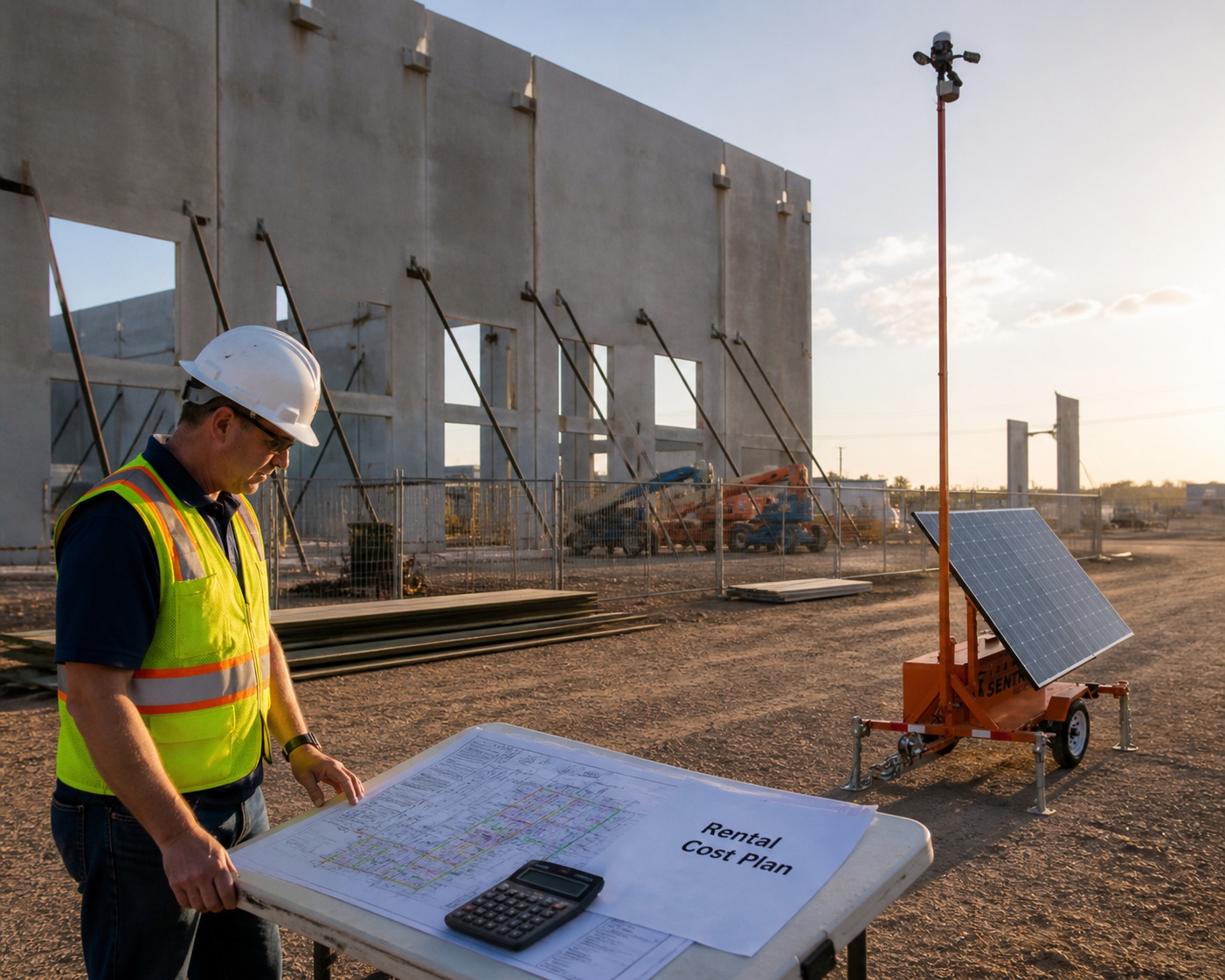
Need Help Calculating Yard Coverage?
Not every equipment yard needs the same camera setup. Gates, fuel tanks, storage containers, equipment rows, trailer parking, loading zones, and blind spots all carry different risk levels.
Request a Site Assessment to understand where mobile surveillance trailers, lighting, and remote video monitoring should be placed for stronger after-hours coverage.
People Also Ask: Are Mobile Surveillance Trailers Good for Storage Yards?
Yes. Mobile surveillance trailers are useful for storage yards because they provide visible deterrence, flexible camera placement, recorded footage, remote video monitoring, lighting, and coverage for temporary or changing outdoor spaces. They are especially helpful where permanent power, internet, or fixed cameras are limited.
Record Video Evidence After Hours
After a yard incident, guessing is not enough.
A manager may need to know:
- Who entered the yard
- What time it happened
- Which gate or fence line was used
- Whether a vehicle was involved
- Which equipment or materials were targeted
- Whether a trailer, container, or fuel tank was accessed
- Whether the issue was theft, vandalism, illegal dumping, or accidental damage
- Whether footage can support a police report or insurance claim
Recorded footage helps answer these questions.
The FBI notes that cargo thieves often target items they can steal and sell quickly and that theft can occur in places where property is left unattended, including parking lots, drop lots, rail yards, and similar environments. [4] Equipment yards and storage yards share many of these same risk characteristics: valuable property, outdoor storage, and periods of low supervision.
Video evidence helps turn uncertainty into documentation.
Manage Yard Security Remotely
Many owners and managers cannot physically check every yard, every night.
This is especially true for companies managing multiple properties, equipment yards, storage yards, commercial lots, or vacant outdoor assets across different cities.
Remote video monitoring helps teams:
- Check yard conditions after hours
- Review suspicious activity
- Confirm whether gates are closed
- Monitor equipment zones
- Check fuel and container areas
- Review footage after incidents
- Support police or insurance documentation
- Manage multiple sites from one location
Remote visibility does not replace physical security, but it gives managers better control. Instead of waiting until the next morning to discover a problem, the team can review activity and respond faster.
Where Should Cameras Be Placed in an Equipment Yard?
Camera placement should be based on risk, not convenience.
The most important areas to monitor include:
| Area to Monitor | Why It Matters |
| Main gate | Shows primary entry and exit |
| Secondary gate | Covers alternate access |
| Fence line | Helps identify trespassing or breaches |
| Fuel tanks | Helps monitor fuel theft or tampering |
| Equipment rows | Protects high-value machinery |
| Trailer parking | Documents trailer movement or break-ins |
| Storage containers | Protects tools, parts, and materials |
| Material stacks | Documents theft or movement |
| Loading zones | Confirms deliveries and pickups |
| Parking areas | Shows vehicles and after-hours movement |
| Dark corners | Reduces hidden activity |
| Blind spots | Helps close security gaps |
| Illegal dumping areas | Documents unauthorized dumping |
| Adjacent access points | Covers risk from neighboring properties |
A camera strategy should be reviewed regularly because yards change. Equipment moves. Materials shift. New blind spots appear. A good security plan moves with the risk.
Download the Equipment Yard Security Checklist
Want a quick version your team can save, print, or use during a yard walkthrough?
Download the free Equipment Yard Security Checklist to review gates, fencing, lighting, camera placement, storage containers, fuel areas, trailers, high-value assets, and after-hours response steps.
People Also Ask: Where Should Security Cameras Be Placed in an Equipment Yard?
Security cameras should be placed near main gates, secondary gates, fence lines, equipment rows, fuel tanks, storage containers, material stacks, trailer parking, loading zones, parking areas, dark corners, and blind spots. Mobile surveillance trailers are useful because they can be moved as risk areas change.
Make the Yard Look Watched
A yard that looks forgotten becomes an easier target.
Visible cameras, bright lighting, locked gates, clean fencing, warning signs, and organized asset placement all help create a stronger security presence. Even before someone enters, the property should look monitored.
Simple improvements can make a big difference:
- Keep entry points well-lit
- Lock containers and trailers
- Keep valuable assets away from easy exits
- Remove unnecessary hiding places
- Keep equipment organized
- Clear blocked sightlines
- Check fencing regularly
- Use visible surveillance
- Place signs where appropriate
- Keep high-value items in monitored zones
The goal is to make thieves and trespassers think twice before they enter.
What Does One Yard Incident Cost?
One equipment yard incident can create several layers of cost.
A stolen machine, broken gate, damaged trailer, missing fuel supply, or container break-in may create direct costs and indirect operational costs.
Possible costs include:
- Replacement equipment
- Rental equipment
- Tool replacement
- Fuel replacement
- Repair bills
- Delivery delays
- Crew downtime
- Police reports
- Insurance claims
- Administrative time
- Project delays
- Customer frustration
- Security upgrades after the fact
This is why prevention often costs less than reaction.
A mobile surveillance trailer, recorded footage, lighting, and remote video monitoring can help reduce the chance of an incident and improve documentation when something does happen.
Equipment Yard Security in Phoenix, Dallas, Houston, Austin, Denver, and Other Major Markets
Equipment yard security is especially important in fast-growing construction and commercial markets where equipment, materials, trailers, vehicles, and outdoor assets move constantly.
Contractors and property managers searching for Phoenix equipment yard security, Dallas storage yard security, Houston outdoor asset security, Austin mobile surveillance trailers, or Denver equipment yard cameras often need the same thing: after-hours visibility, deterrence, recorded footage, and flexible coverage.
High-growth markets such as Phoenix, Dallas, Houston, Austin, Denver, San Antonio, Atlanta, Nashville, Tampa, Orlando, Miami, Las Vegas, Charlotte, and Salt Lake City often have active construction, commercial development, utility work, solar projects, fleet yards, and outdoor storage needs.
A mobile surveillance trailer or solar surveillance trailer can help protect yards where permanent power or internet is not available. Remote video monitoring can help owners and managers review activity without driving to the site. Recorded footage can help document incidents, support reports, and improve future security placement.
Local keyword opportunities include:
- Phoenix equipment yard security
- Dallas storage yard security
- Houston outdoor asset protection
- Austin mobile surveillance trailer
- Denver equipment yard cameras
- San Antonio storage yard surveillance
- Nashville equipment theft prevention
- Tampa commercial lot security
- Orlando outdoor asset security
- Miami storage yard cameras
- Las Vegas equipment yard monitoring
- Charlotte remote video monitoring
These local terms can be used in supporting pages, service-area pages, and internal links.
Expert Insight
“The strongest equipment yard security plans do not rely on one barrier. They combine visibility, lighting, controlled access, recorded footage, and response procedures so managers can deter activity, document incidents, and improve coverage over time.”
Best After-Hours Security Setup for Equipment Yards
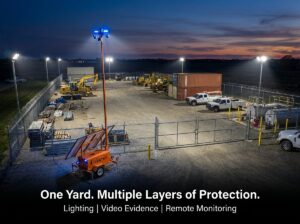
The strongest after-hours yard security strategy uses multiple layers.
Start with locked gates and secure fencing. Add lighting around high-risk areas. Place cameras where they can capture useful footage. Use mobile surveillance trailers to monitor changing risk areas. Make sure footage is recorded and easy to review. Add remote video monitoring so managers can stay informed. Then create a response plan so the team knows what to do when something happens.
A strong after-hours setup should include:
- Locked gates
- Secure fencing
- Controlled access
- Bright lighting
- Visible security cameras
- Mobile surveillance trailers
- Recorded footage
- Remote video monitoring
- Warning signs
- Organized asset placement
- Regular site checks
- Equipment records
- Incident response procedures
- Police reporting process
- Insurance documentation process
Security is strongest when every layer supports the next one.
Why Jobsite Sentry?
Jobsite Sentry helps protect more than construction sites.
Our mobile surveillance solutions are built for outdoor spaces where visibility, deterrence, and video evidence matter.
Jobsite Sentry can help protect:
- Equipment yards
- Storage yards
- Laydown yards
- Material yards
- Commercial lots
- Fenced properties
- Utility sites
- Solar sites
- Parking areas
- Vacant outdoor assets
- Construction sites
- Outdoor equipment and materials
After hours, you should not have to wonder what is happening on your property.
With Jobsite Sentry, you can see more, protect more, review footage, monitor high-risk areas, and stay in control from anywhere.
Whether your yard is in Phoenix, Dallas, Houston, Austin, Denver, Nashville, Tampa, Charlotte, or another active market, Jobsite Sentry helps provide the visibility and recorded evidence needed to protect valuable outdoor assets.
Final Takeaway
Equipment yards, storage yards, and outdoor assets are too valuable to leave unprotected after hours.
Fences, locks, and gates matter, but they are not enough by themselves. The best protection comes from layered security: controlled access, lighting, visible cameras, mobile surveillance trailers, recorded footage, remote video monitoring, and clear response procedures.
A strong yard security plan helps deter theft, document incidents, support reports, reduce downtime, and give managers better control.
When your yard is closed, your security should still be working.
Do not wait until after an incident to wish you had footage.
Secure your yard. Watch your assets. Stay in control after hours with Jobsite Sentry.
Get Mobile Surveillance
FAQ: Equipment Yard Security
1. What is the best way to secure an equipment yard?
The best way to secure an equipment yard is to use layered security, including fencing, locked gates, controlled access, lighting, mobile surveillance trailers, recorded footage, remote video monitoring, and a response plan.
2. Why are equipment yards common theft targets?
Equipment yards are common targets because they contain valuable equipment, trailers, fuel, tools, vehicles, materials, and outdoor assets in large open spaces with limited after-hours supervision.
3. Are mobile surveillance trailers good for equipment yards?
Yes. Mobile surveillance trailers are useful for equipment yards because they provide visible deterrence, flexible camera placement, recorded footage, lighting, remote video monitoring, and coverage for changing outdoor layouts.
4. How can storage yards prevent theft after hours?
Storage yards can prevent theft after hours by using locked gates, secure fencing, strong lighting, visible cameras, mobile surveillance units, remote monitoring, organized storage, and clear response procedures.
5. Where should cameras be placed in an equipment yard?
Cameras should cover gates, fence lines, equipment rows, fuel tanks, storage containers, trailers, material stacks, loading zones, parking areas, dark corners, and blind spots.
6. Can video footage help after an equipment yard incident?
Yes. Video footage can help show who entered the yard, what time it happened, which area was targeted, whether a vehicle was involved, and what damage or theft occurred.
7. How does lighting improve equipment yard security?
Lighting improves visibility, helps cameras capture clearer footage, makes suspicious activity easier to notice, and makes the property look active and protected.
8. Is fencing enough to protect an equipment yard?
No. Fencing is important, but it should be combined with lighting, cameras, mobile surveillance trailers, recorded footage, access control, and response procedures.
9. What assets should be protected first in a storage yard?
High-priority assets include heavy equipment, trailers, tools, fuel tanks, generators, copper, materials, storage containers, vehicles, parts, and anything easy to move or resell.
10. Can solar surveillance trailers work without permanent power?
Many solar surveillance trailers are designed for sites without permanent power or internet. Depending on the system, they may use solar panels, batteries, and cellular connectivity.
11. What should managers do after a yard theft or break-in?
Managers should secure the site, preserve evidence, review footage, document the timeline, notify police or insurance if needed, repair weak points, and adjust security placement.
12. What is the best after-hours security setup for outdoor assets?
The best setup combines locked gates, secure fencing, bright lighting, visible cameras, mobile surveillance trailers, recorded footage, remote video monitoring, warning signs, and a clear response plan.
Sources and Authority References
[1] National Equipment Register, Theft Prevention & Recovery Solutions
Used for heavy equipment theft loss estimate and equipment theft context.
https://www.ner.net/solutions/
[2] Great American Insurance Group, Construction Site Theft Prevention Safety Talk
Used for storage, fencing, lighting, access control, surveillance, and off-hours monitoring guidance.
https://www.greatamericaninsurancegroup.com/docs/default-source/loss-prevention/construction-site-theft-prevention-safety-talk-032526.pdf
[3] Travelers, Protecting Your Construction Site from Fire, Water and Theft
Used for construction site access control, fencing, vandalism prevention, and loss-prevention context.
https://www.travelers.com/resources/business-industries/construction/protecting-your-construction-site-from-fire-water-and-theft
[4] Federal Bureau of Investigation, Cargo Theft
Used for theft-risk context involving unattended commercial property and quick-resale targets.
https://www.fbi.gov/investigate/transnational-organized-crime/cargo-theft
[5] Sarpy County Sheriff’s Office, Construction Site Theft Prevention
Used for construction site theft prevention, equipment storage, purchase records, and police-report support.
https://www.sarpy.gov/DocumentCenter/View/4017
[6] Canton Public Safety, Construction Site Crime Prevention
Used for reporting vandalism and theft, maintaining equipment records, serial numbers, and site crime-prevention guidance.
https://www.cantonmi.gov/DocumentCenter/View/503/Construction-Site-Theft-Prevention-PDF
[7] National Insurance Crime Bureau, Commercial Heavy Equipment Theft
Used for commercial heavy equipment theft prevention and NER registration context.
https://www.nicb.org/sites/files/2017-10/CommercialHE.pdf
[8] Ascot Group, Protecting Your Construction Site from Theft
Used for fencing, gates, perimeter control, and construction site theft-prevention guidance.
https://www.ascotgroup.com/wp-content/uploads/PROTECTING-YOUR-CONSTRUCTION-SITE-FROM-THEFT.pdf