Mobile Surveillance Trailers for Vacant Properties: When Do They Make Sense?

Vacant properties are rarely as quiet as they look. Empty buildings, inactive lots, stalled construction sites, vacant multifamily assets, and redevelopment properties can attract trespassing, vandalism, illegal dumping, copper theft, equipment theft, and liability problems.
The challenge is that many vacant properties are not ready for permanent security infrastructure. Power may be shut off. Internet may not exist. Fencing may be incomplete. The layout may change as crews move in and out. Hiring a guard may be expensive for a property that is supposed to be temporary, inactive, or in transition.
That is where mobile surveillance trailers can make sense.
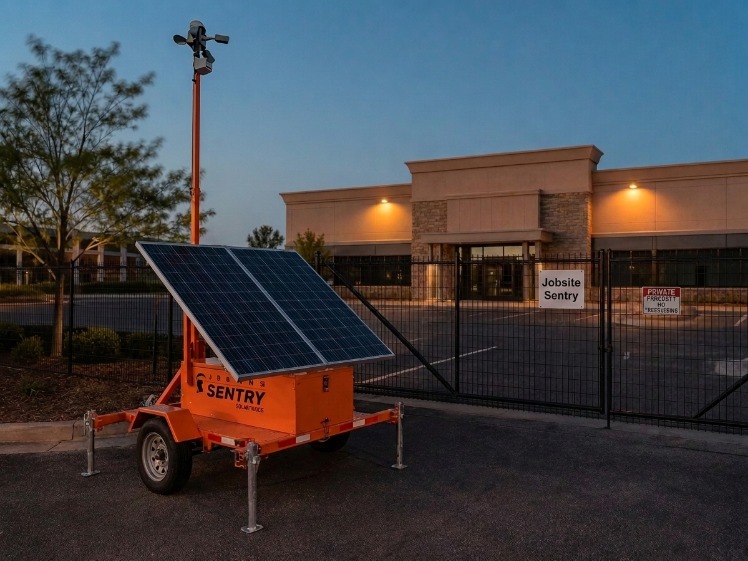
A mobile surveillance trailer gives property owners and site managers a fast-deploying, visible, live-monitored security presence without trenching, wired internet, or permanent installation. For the right property, it can help deter activity before it becomes a loss and document events when escalation is needed.
The key is knowing when a trailer is justified, where it should be placed, and what level of monitoring the property actually needs.
What Counts as a Vacant Property for Security Planning?
For security planning, a vacant property is any site with limited daily occupancy, reduced oversight, or assets that remain exposed after people leave. It does not have to be abandoned.
Common examples include:
– Vacant commercial buildings awaiting sale, lease, or renovation
– Stalled or paused construction projects
– Redevelopment lots with stored materials or equipment
– Vacant multifamily buildings during tenant turnover or repositioning
– Bank-owned, receiver-managed, or insurance-controlled properties
– Industrial yards with inactive areas or seasonal assets
– Remote land parcels with equipment, fuel, containers, fencing, or utilities
– Properties shut down for weekends, holidays, inspections, or permitting delays
From a security standpoint, vacancy creates opportunity. If there are long gaps between site visits, limited lighting, poor visibility from the street, or no one available to challenge unauthorized activity, risk increases.
The main security problem is not just recording the incident
A passive camera may help show what happened after the fact. That can be useful for insurance, police reports, owner disputes, or internal documentation.
But vacant property security usually requires more than footage. The larger goal is to detect suspicious activity early, verify whether it is a real threat, issue a deterrent when appropriate, and escalate quickly if the activity continues.
That is the difference between a camera that records and a live-monitored mobile surveillance trailer designed to support response.
When Mobile Surveillance Trailers Make Sense for Vacant Properties
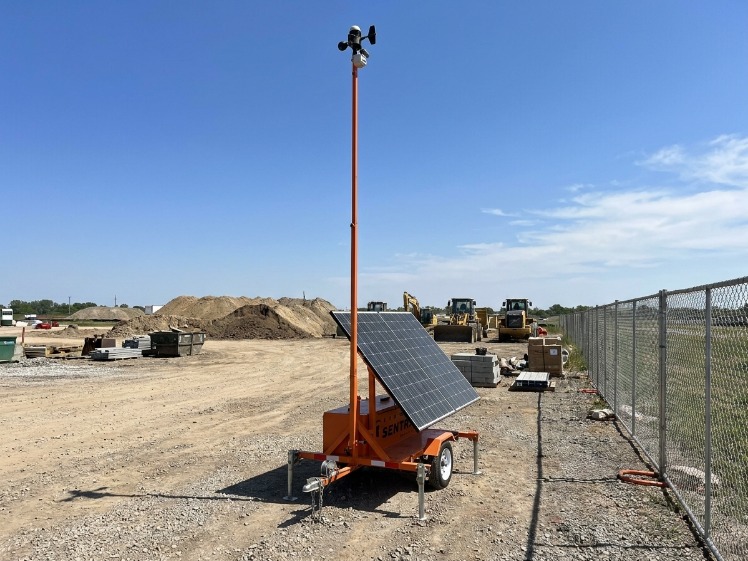
A mobile surveillance trailer is not necessary for every empty lot or unoccupied building. It makes the most sense when the property has a combination of risk, exposure, and limited infrastructure.
The more of the following factors apply, the stronger the case for a trailer.
1. The property has valuable materials, equipment, or utilities exposed
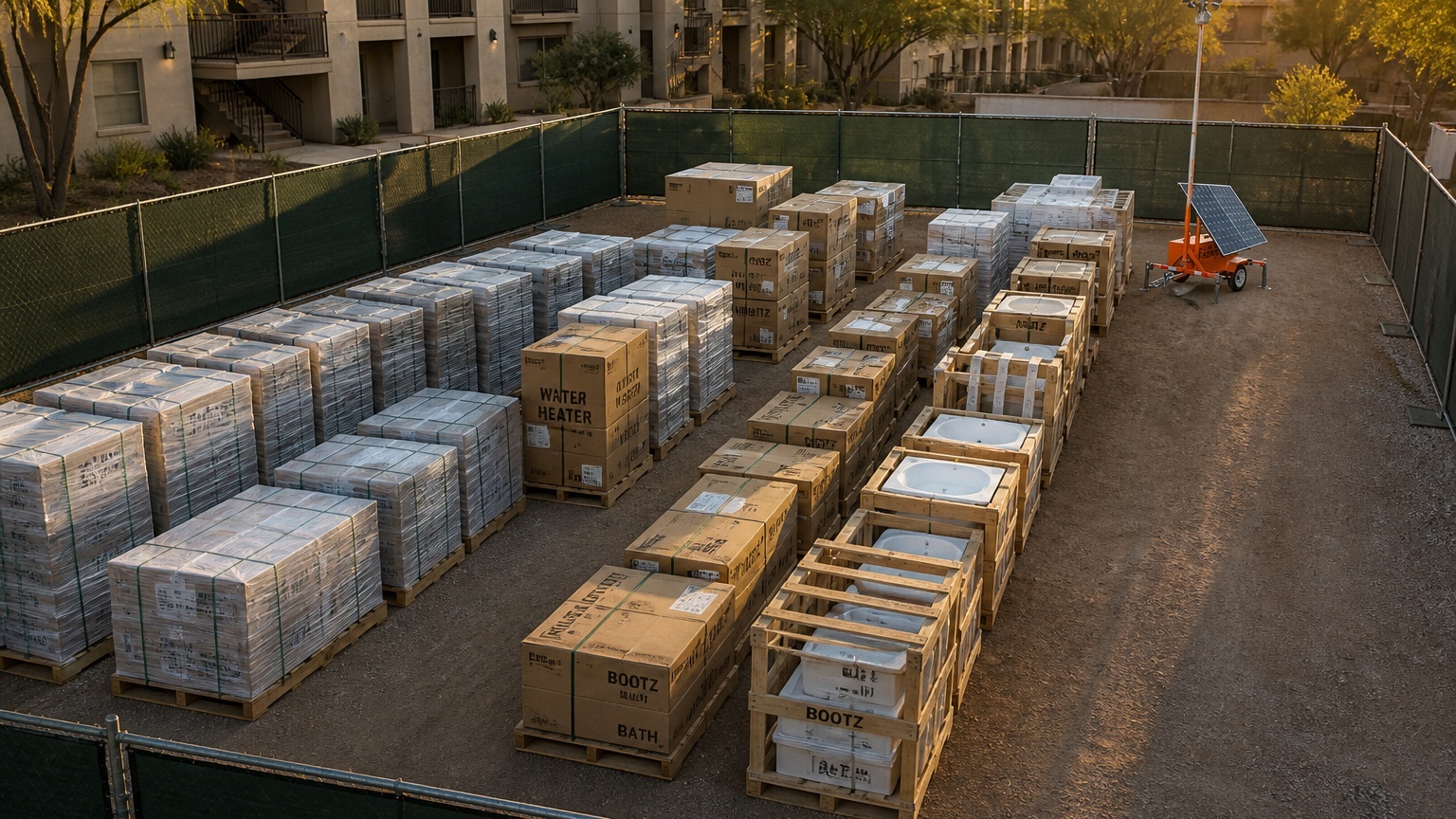
Vacant does not mean empty. A property may still contain copper, HVAC units, electrical panels, fuel, lumber, tools, appliances, fencing, containers, vehicles, or heavy equipment.
If removing, replacing, or repairing those assets would disrupt the project or create a meaningful claim, a mobile surveillance trailer deserves consideration. This is especially true for properties where thieves can access the site after hours with a vehicle.
2. There is no reliable power or wired internet
Many vacant properties are not ready for traditional security cameras. Power may be disconnected. Internet service may not be installed. A temporary electrical setup may be too costly or impractical.
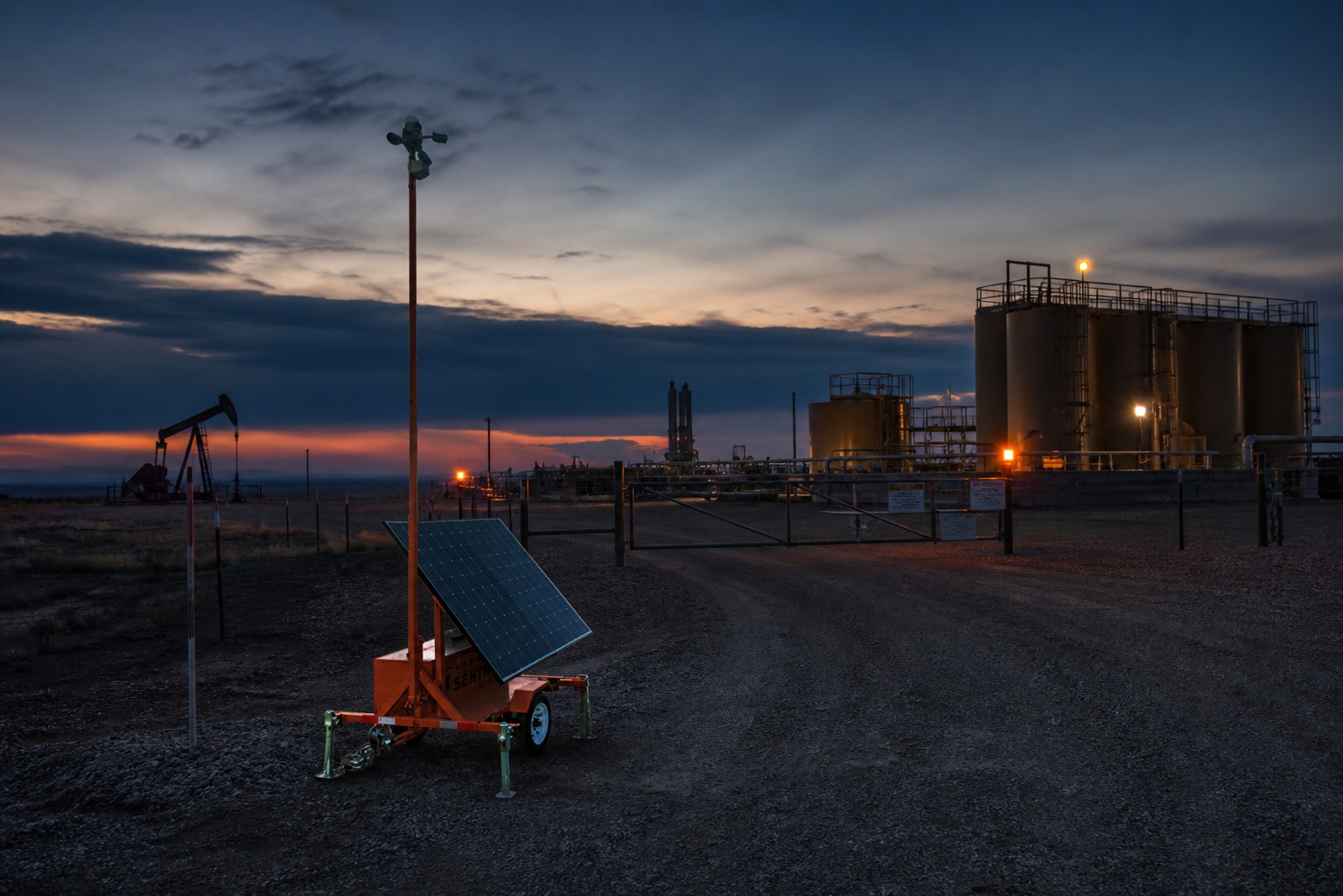
Jobsite Sentry mobile surveillance trailers and camera units are solar powered, which helps avoid generators, trenching, and hardwired power. For remote sites or locations with unreliable cellular service, Starlink connectivity can support monitoring where traditional internet options are limited.
3. Trespassing, vandalism, or dumping has already happened
Prior incidents are one of the clearest signs that a property needs more active security. Graffiti, broken windows, cut fencing, dumped materials, unauthorized camping, stripped wiring, and repeated after-hours activity often indicate that the property is visible to the wrong people.
Once a site becomes known as unmonitored, problems can repeat. A visible surveillance trailer with live monitoring, lights, cameras, and audio deterrence can change the risk profile by making the property harder to approach unnoticed.
4. The property is between phases
Properties are often most vulnerable during transition. A building may be vacant before demolition. A construction site may be paused while waiting on inspections. A multifamily asset may be between tenants and renovation crews. An industrial yard may be inactive until the next project mobilizes.
These gaps are exactly where temporary site security makes sense. A trailer can be deployed during the vulnerable window and removed or relocated when the property changes phase.
5. The site layout is changing
Permanent cameras are not always practical when gates move, materials shift, access roads change, or the property is being prepared for construction. A mobile surveillance trailer can be repositioned as the risk area changes.
This flexibility is important for redevelopment sites, vacant land, highway work zones, utility corridors, and phased multifamily projects.
6. You need documentation for owners, insurers, law enforcement, or stakeholders
Vacant property incidents can create disputes. Owners may need to know when damage occurred. Insurers may ask for supporting documentation. Police may need video evidence. Project teams may need to show that a site was being actively monitored.
With Jobsite Sentry, footage can be reviewed and exported to support incident documentation, insurance claims, police reports, compliance files, or owner updates.
When a Mobile Surveillance Trailer May Not Be the Right Fit
The right security approach should match the actual risk. A mobile surveillance trailer may not be necessary if the property has low exposure, strong physical controls, reliable on-site staff, and minimal asset value.
For example, a small vacant parcel in a low-risk area with no stored materials, no structures, no utilities, and frequent owner visits may not justify a full trailer setup. In some cases, better locks, lighting, signage, fencing repair, or a smaller camera unit may be enough.
A trailer may also need careful planning if the site has extreme shade, limited solar exposure, unusual terrain, restricted placement options, or camera sightline obstructions. These issues do not automatically rule out deployment, but they should be reviewed before installation.
The goal is not to overspend on security. The goal is to match the level of monitoring to the value at risk, the likelihood of unauthorized activity, and the consequences if something goes wrong.
A good site survey prevents overbuilding the solution
Before recommending a trailer, Jobsite Sentry evaluates the property layout, access points, likely intrusion routes, existing lighting, camera lines of sight, connectivity needs, monitoring schedule, and escalation requirements.
That helps determine whether the property needs one trailer, multiple units, a smaller solar-powered camera solution, or a phased approach.
What Areas Should a Vacant Property Surveillance Trailer Cover First?
Camera placement matters more than camera count. A mobile surveillance trailer should be positioned where it can detect activity early and capture usable evidence.
For vacant properties, the first coverage priorities are usually access, assets, and liability areas.
Primary entrances and vehicle access points
Gates, driveways, curb cuts, service roads, and loading areas should be reviewed first. If unauthorized vehicles can enter, remove materials, dump debris, or hide behind structures, those areas need visibility.
A camera trailer with PTZ capabilities can help operators observe wide areas and zoom in when activity is detected.
Building doors, roll-up doors, windows, and roof access
Vacant buildings are vulnerable at common entry points. Cameras should cover doors, broken or accessible windows, roll-up doors, ladders, stairwells, roof access points, and areas where people may try to force entry.
Utility and mechanical areas
Electrical panels, copper runs, HVAC units, water infrastructure, fuel tanks, generators, and telecom equipment can attract theft and tampering. If these areas are visible from a trailer position, they should be included in the coverage plan.
Stored materials, containers, and equipment
Vacant redevelopment and construction-adjacent sites often have materials that are easy to remove and costly to replace. Lumber, appliances, fixtures, tools, fencing, trailers, containers, and machinery should be monitored based on value and accessibility.
Blind spots and nuisance areas
Illegal dumping, loitering, vandalism, and unauthorized camping often happen in low-visibility areas. A site survey should identify fence gaps, dark corners, rear alleys, vacant parking lots, drainage areas, and concealed zones behind buildings.
How Live Monitoring Works After Hours
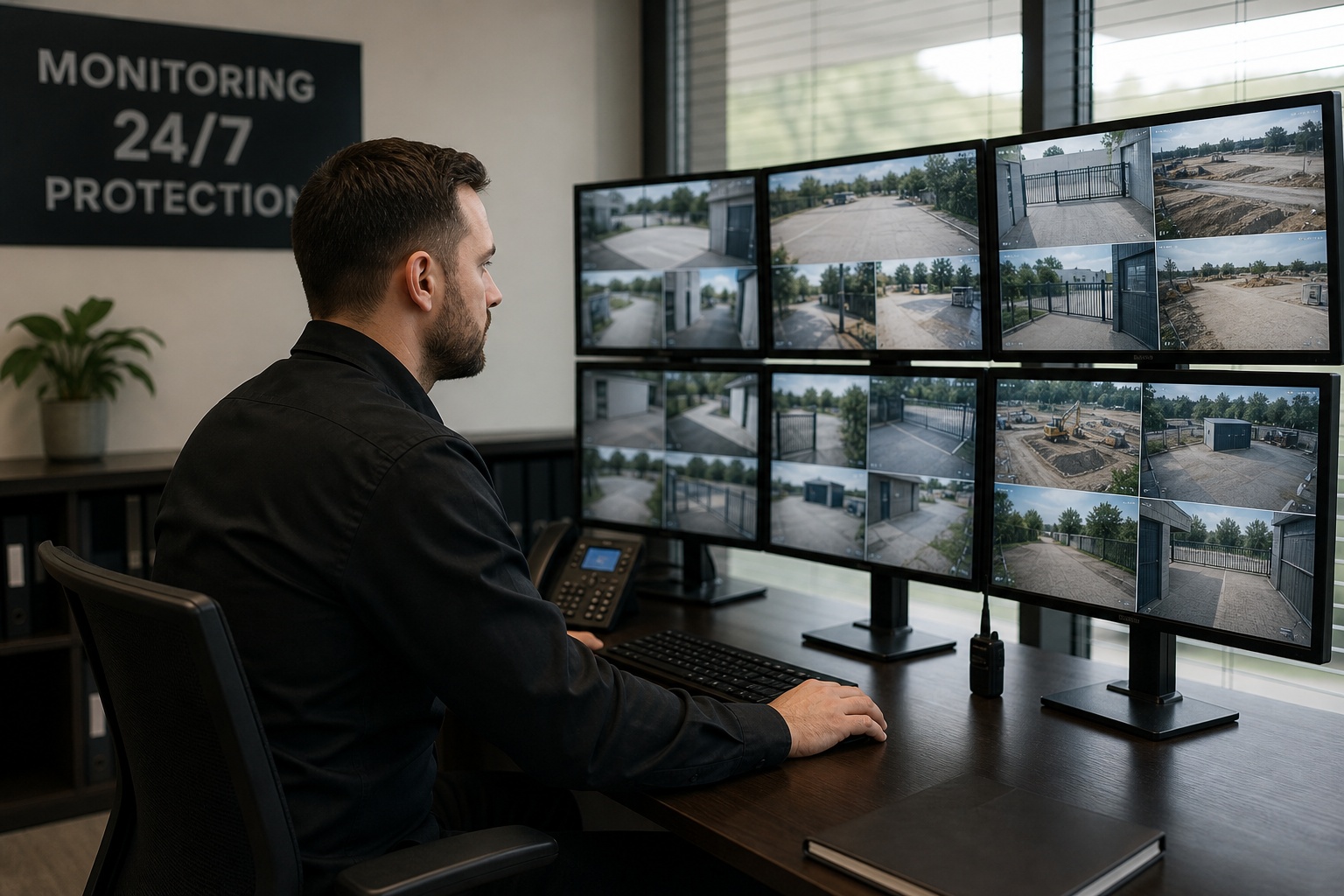 The value of a monitored trailer is the combination of AI detection and trained human review. Jobsite Sentry does not rely only on passive recording.
When activity is detected after hours, the system can flag the event for review. Live operators verify what is happening, determine whether it appears suspicious, and follow the property’s escalation plan.
AI helps identify activity, operators verify the threat
AI detection can help identify people, vehicles, equipment movement, and activity in monitored zones. This helps reduce reliance on constant manual review and supports faster event triage.
Human verification is important because vacant properties can create false alarm triggers. Wildlife, blowing debris, headlights, weather, shadows, and authorized maintenance visits can all create motion. A trained operator can review context before escalation.
Audio warnings can deter activity before damage occurs
When suspicious activity is verified, operators can issue live audio warnings through the system. A clear warning can let trespassers know they are being watched and that the incident is being documented.
In many cases, the ability to intervene in real time is more valuable than simply recording a clip for later review.
Escalation can be customized to the property
Every vacant property has different instructions. Some owners want a property manager called first. Others want after-hours contacts notified only after a verified threat. Some situations may require law enforcement escalation based on the activity and local response protocol.
Jobsite Sentry works with customers to define monitoring hours, authorized users, escalation contacts, reporting needs, and incident documentation expectations.
Power, Internet, Deployment, Relocation, and Mobile App Access
Vacant properties often lack the basic infrastructure needed for traditional camera systems. That is one reason mobile surveillance trailers are practical for temporary and transitional sites.
Jobsite Sentry designs mobile surveillance units for outdoor assets and locations where permanent infrastructure is unavailable or not worth installing.
Do trailers need on-site power?
No wired power is typically required for Jobsite Sentry solar-powered camera trailers and units. Solar power reduces the need for generators, trenching, temporary electrical work, and permanent installation.
Site conditions still matter. Shade, placement, camera load, weather, and monitoring requirements should be considered during setup.
Do trailers need wired internet or cell service?
Wired internet is not required in many deployments. Where cellular service is unreliable or unavailable, Starlink connectivity can support remote site security for vacant land, industrial properties, mining sites, oilfields, highway corridors, and other hard-to-connect locations.
Connectivity should be reviewed during the site consultation so the system is matched to the property.
How fast can a trailer be deployed?
Jobsite Sentry commonly promotes deployment within 24 to 48 hours depending on location, site conditions, equipment availability, access, and project requirements.
Urgent situations, such as a recent break-in or an upcoming shutdown period, should be discussed directly so the team can prioritize the right deployment plan.
Can the trailer be moved as the site changes?
Yes. One of the main advantages of a mobile surveillance trailer is that it can be relocated as risk areas change. If a gate moves, a building phase starts, materials shift, or a new access route opens, the trailer can be repositioned to improve coverage.
Can managers view footage from a phone?
Yes. Jobsite Sentry provides mobile app access for live view, camera playback, PTZ control, two-way talk, multi-camera viewing, video export, and remote site management. This helps owners, project managers, and property teams stay informed without driving to the site for every concern.
Mobile Surveillance Trailer vs. Security Guard for a Vacant Property
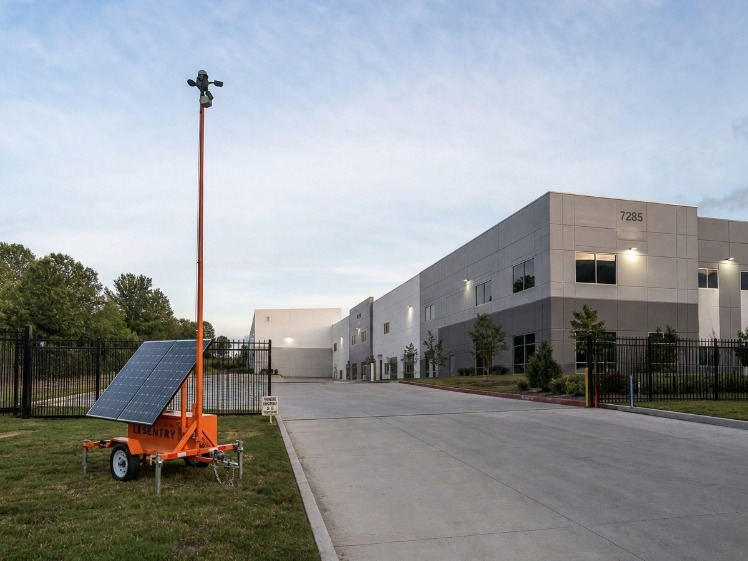
Security guards and mobile surveillance trailers solve different problems. A guard provides a physical presence and can perform patrols, access control, and on-site reporting. A trailer provides elevated visibility, recorded evidence, AI detection, live operator review, audio deterrence, and remote access.
For many vacant properties, a trailer is considered because the site needs after-hours visibility and deterrence without the cost and logistics of staffing a guard post every night.
When a trailer may be a better fit
A mobile surveillance trailer may be a better fit when the property needs wide-area camera coverage, night and weekend monitoring, evidence capture, audio deterrence, fast deployment, and flexible relocation.
It is also useful when the property does not justify a full-time guard but still has enough risk to require active monitoring.
When a guard may still be needed
A guard may still be appropriate when the site requires in-person access control, frequent physical patrols inside buildings, visitor screening, gate operation, escort services, or immediate on-site intervention.
Some higher-risk properties use both. A trailer can watch wide exterior areas while guards focus on physical patrols or controlled access points.
How cost should be evaluated
Monthly cost depends on the property size, number of units, camera requirements, monitoring schedule, connectivity needs, deployment location, and escalation expectations.
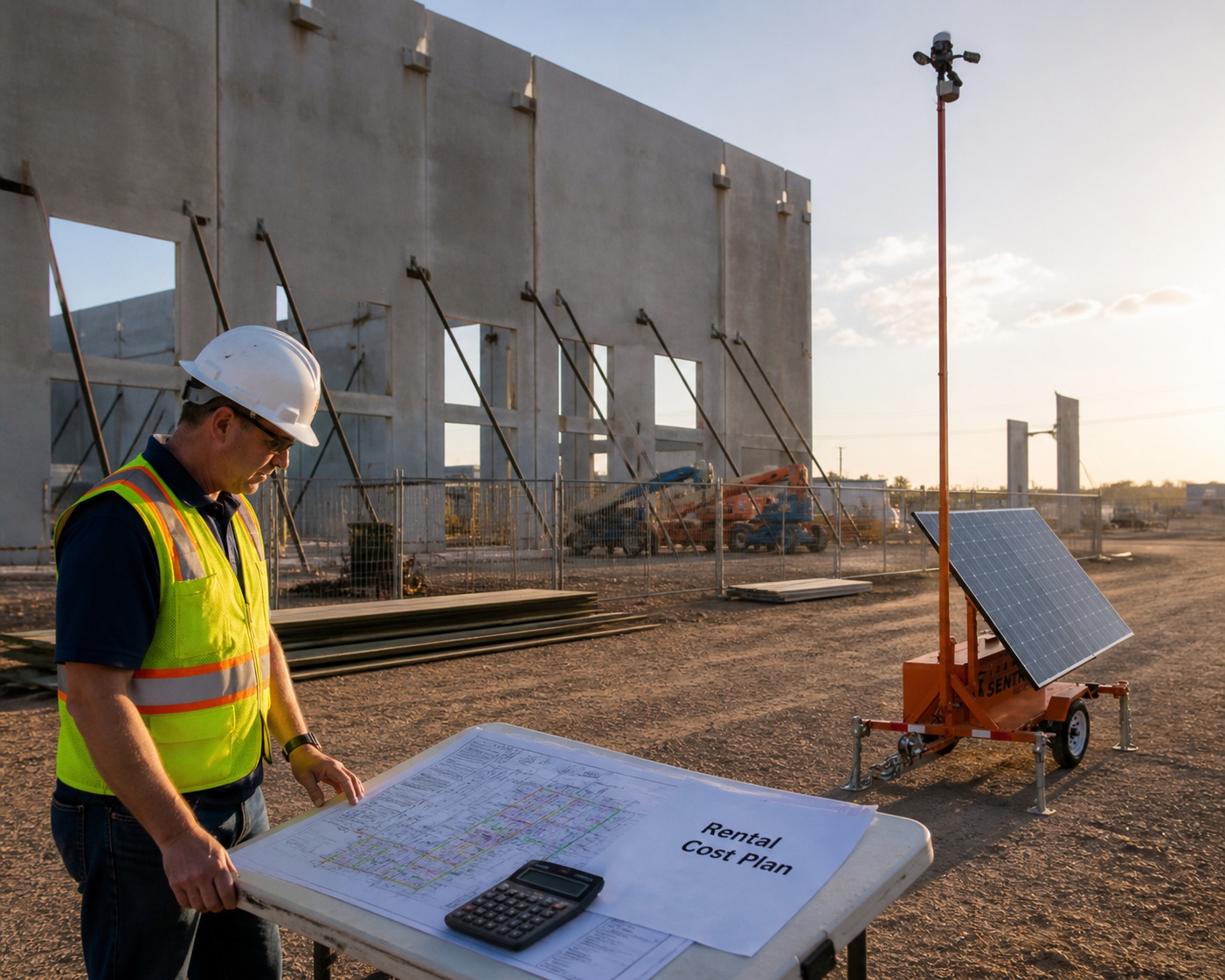
Jobsite Sentry advertises live video monitoring as low as $1.99 per hour. For an accurate comparison, evaluate the total cost of security against the property’s actual exposure, including theft replacement, vandalism repair, project delays, liability events, illegal dumping cleanup, insurance documentation, and management time.
Ask about setup fees, data fees, relocation fees, monitoring hours, cancellation terms, and whether a long-term contract is required before choosing any provider.
A Simple Decision Framework: Does Your Vacant Property Need a Trailer?
Use this quick framework before renting a mobile surveillance trailer.
A trailer is likely worth evaluating if you answer yes to three or more of these questions:
– Is the property vacant overnight, on weekends, or for extended periods?
– Has there been trespassing, vandalism, dumping, theft, or attempted entry?
– Are copper, HVAC units, equipment, tools, fuel, appliances, or materials exposed?
– Is there limited lighting, fencing, or street visibility?
– Would an incident create a meaningful repair cost, delay, claim, or liability concern?
– Is the property missing reliable power, wired internet, or cell service?
– Does the layout change enough to make permanent cameras impractical?
– Do owners, insurers, lenders, or stakeholders need documented monitoring?
– Would a guard be too expensive or difficult to staff consistently?
– Do you need monitoring only during certain risk windows, such as nights, weekends, holidays, or shutdowns?
If you answer no to most of these, a smaller solution may be sufficient. If you answer yes to several, a mobile surveillance trailer can be a practical next step.
What to Ask Before Renting a Mobile Surveillance Trailer
Not all mobile surveillance trailer rental options provide the same level of protection. Before choosing a provider, ask direct questions about monitoring, connectivity, evidence access, and contract terms.
Important questions include:
– Is the system actively monitored by trained live operators or does it only record?
– Can operators issue live audio warnings?
– What happens when suspicious activity is detected?
– Can law enforcement or property contacts be notified according to a written protocol?
– Does the system use AI detection to help identify people, vehicles, or activity zones?
– Can AI settings be adjusted to reduce false alarms from wildlife, wind, headlights, or normal activity?
– Does the trailer require power, wired internet, or a strong cell signal?
– Is Starlink available for remote or low-signal properties?
– How quickly can the unit be deployed?
– Can the trailer be moved if the property layout changes?
– Can managers view live and recorded video from a mobile app?
– Can clips be exported for police reports, insurance claims, or owner updates?
– What are the setup, data, relocation, monitoring, and cancellation terms?
– Are there long-term contract requirements?
The answers will tell you whether you are getting a passive camera setup or a monitored security service built for real-world vacant property risk.
People Also Ask
Q: How do you secure a vacant property?
A: Start with physical controls such as locks, fencing, lighting, signage, and secured utilities. Then add monitored camera coverage for entrances, building access points, stored assets, utility areas, and blind spots. For properties without power or internet, a solar-powered mobile surveillance trailer with live monitoring can provide temporary security without permanent infrastructure.
Q: Are mobile surveillance trailers worth it?
A: They can be worth it when a vacant property has valuable assets, repeated trespassing, vandalism risk, illegal dumping, limited infrastructure, or liability exposure. They may not be necessary for very low-risk properties with no assets, strong physical barriers, and frequent staff presence.
Q: Can security cameras work on a property with no power?
A: Yes. Solar-powered security camera trailers can operate without wired site power. Jobsite Sentry units are built for temporary and remote locations where trenching, generators, and permanent electrical work are not practical.
Q: What happens when a monitored camera detects trespassing?
A: AI detection flags the activity, then live operators verify the event. If the activity appears suspicious, operators can issue audio warnings, notify approved contacts, document the incident, and escalate based on the customer’s protocol.
Q: How fast can a mobile surveillance trailer be deployed?
A: Jobsite Sentry commonly promotes deployment within 24 to 48 hours depending on location, site access, conditions, and equipment availability. Urgent needs should be reviewed during the consultation.
## Download the Vacant Property Mobile Surveillance Readiness Checklist
Use this checklist to review your property’s access points, exposed assets, utilities, monitoring needs, and deployment requirements before renting a mobile surveillance trailer.
[BUTTON: Download Checklist PDF]
Frequently Asked Questions
Q: Can monitoring hours be customized for vacant properties?
A: Yes. Monitoring can be scheduled for nights, weekends, holidays, shutdowns, tenant turnover periods, or any risk window that matches the property’s needs.
Q: Can a surveillance trailer help with illegal dumping?
A: Yes. A trailer can monitor vehicle access points, dumping-prone areas, rear alleys, and low-visibility zones. Live monitoring and recorded footage can help deter dumping and document incidents when they occur.
Q: Can mobile trailers monitor remote vacant land?
A: Yes. Jobsite Sentry can support remote sites using solar-powered units and Starlink connectivity where wired internet or reliable cell service is not available.
Q: Do vacant multifamily properties need mobile surveillance?
A: They may need it during construction pauses, tenant turnover, renovation, lease-up, ownership transition, or periods of repeated trespassing and vandalism. Coverage should prioritize entrances, parking areas, building access points, mechanical areas, and stored materials.
Q: Can the system reduce false alarms?
A: AI detection and human verification help reduce unnecessary escalation by reviewing context before action is taken. Settings can be adjusted based on activity zones, schedules, site conditions, and normal property activity.
Q: Is there a long-term contract?
A: Jobsite Sentry promotes no long-term contracts and transparent pricing language. Terms should be confirmed during consultation based on the site, deployment scope, and service plan.
Conclusion
Mobile surveillance trailers make the most sense when a vacant property has real exposure and limited infrastructure. If the site has valuable assets, repeated trespassing, weak power or internet options, changing layouts, or after-hours risk, a solar-powered, live-monitored trailer can provide a fast and flexible layer of protection.
The best results come from matching the system to the property. That means placing cameras where they can see the right access points, using AI detection and live operators to verify threats, setting clear escalation rules, and choosing a monitoring schedule that fits the actual risk window.
Jobsite Sentry helps property owners, developers, contractors, and asset managers protect vacant properties with mobile surveillance trailers, solar-powered camera units, Starlink connectivity, live human monitoring, mobile app access, and exportable video documentation.
## Request a Free Vacant Property Security Consultation
Not sure whether your vacant property needs a mobile surveillance trailer, a smaller camera unit, or a different monitoring plan? Jobsite Sentry can review your layout, risk areas, power and connectivity limitations, monitoring schedule, and escalation needs.
Request a free consultation and site survey to get a practical recommendation for your property.
Source References
- Jobsite Sentry official website and service information: https://jobsitesentry.com/
- FBI Crime Data Explorer for property crime context, if statistics are added during editorial review: https://cde.ucr.cjis.gov/
- Local police department guidance for trespassing, vandalism, and non-emergency reporting should be verified based on the property jurisdiction.
- Insurance carrier risk control guidance should be verified for any carrier-specific vacant property requirements before publishing.