Oilfield Security Cameras: How to Protect Remote Well Pads, Tanks, and Equipment After Hours

Remote oilfield sites are built for production, not easy security. A well pad may sit miles from the nearest office. Tank batteries may be accessed by multiple crews, haulers, contractors, and vendors. Equipment yards often hold high-value machinery, fuel, copper, pipe, tools, and vehicles in open outdoor areas.
After hours, that exposure creates a problem. If a camera only records, your team may not know about a trespasser, fuel theft, vandalism, or gate breach until the next morning. By then, the truck is gone, the damage is done, and the footage becomes evidence instead of prevention.
Oilfield security cameras work best when they are active, live-monitored, and built for remote environments. Jobsite Sentry provides mobile, solar-powered camera units with AI detection, Starlink connectivity, trained live operators, audio deterrents, video documentation, and mobile app access for remote oil and gas assets across the United States.
This guide explains how to use oilfield security cameras to protect remote well pads, tanks, lease roads, and equipment after hours, especially when there is no wired power, no fixed internet, and limited cell coverage.
Why Remote Oilfield Sites Are Hard to Secure After Hours
Oil and gas locations have a different security profile than a fenced commercial property or a staffed industrial facility. They are often isolated, spread across large acreage, and accessed by different people at different times.
That makes them vulnerable to theft, vandalism, illegal dumping, unauthorized entry, and unsafe activity around equipment. Remote locations can also delay response because the nearest manager, lease operator, or law enforcement agency may not be close by.
The biggest issue is visibility. A gate may be locked, but a locked gate does not tell you when someone cuts a chain. A recorded camera may capture a truck entering a lease road, but it does not challenge the driver in real time. A patrol may check the site once or twice a night, but activity can happen between visits.
Oilfield security cameras close that gap when they are connected to live monitoring. Instead of relying only on morning discovery, operators can receive verified alerts, audio intervention, event notes, and exported clips when suspicious activity is happening.
Common after-hours risks on oil and gas sites
Remote well pads and tank batteries commonly need protection from unauthorized vehicles, trespassers, fuel theft, copper theft, vandalism, damage to gates or fencing, illegal dumping, and tampering around tanks or equipment.
Equipment yards may also need monitoring for trailers, generators, compressors, pumps, tools, pipe, valves, batteries, and parked machinery. The goal is not only to record what happened. The goal is to detect activity early enough to deter it.
Why passive recording is not enough
A passive camera can be useful for investigation, but it does not actively protect a site after hours. If no one is watching, a camera becomes a witness rather than a deterrent.
Live monitored security cameras add a response layer. AI detection identifies motion or objects in a restricted area, a trained operator verifies the activity, and the system can trigger an audio warning or escalation based on your protocol.
What Oilfield Security Cameras Need to Protect
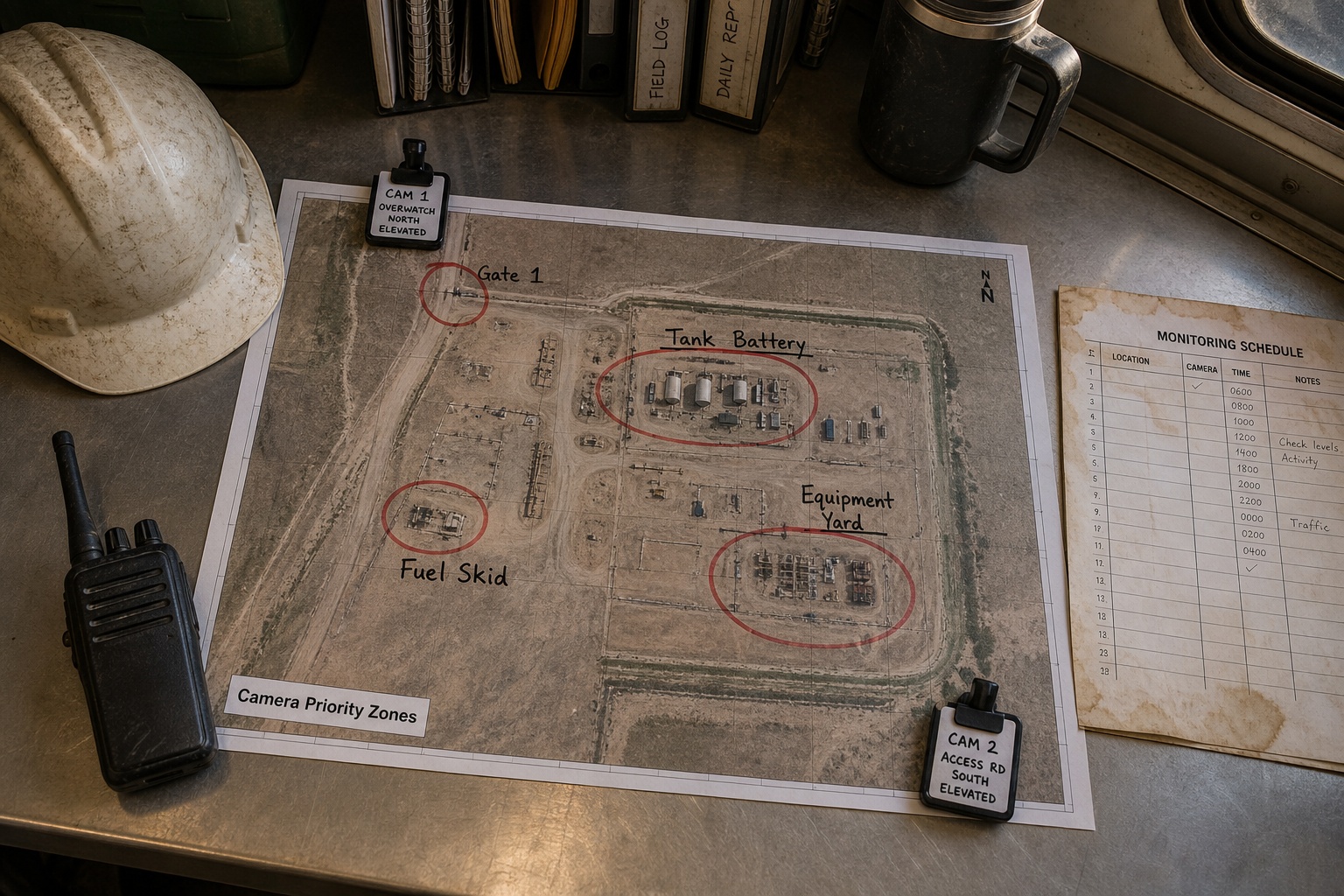
A good oilfield camera plan starts with the assets and access points that create the highest risk. Not every acre needs the same level of coverage. The priority is to monitor the places where unauthorized activity is most likely to enter, hide, or cause loss.
For most oil and gas operators, the first camera positions should focus on controlled access, valuable assets, and blind spots that are difficult for personnel to check at night.
Well pads
Well pads should be monitored for unauthorized people, vehicles, and activity near operating equipment. Cameras can be positioned to cover the approach road, entrance, key equipment, and any areas where vehicles can park out of view.
On active pads, monitoring schedules can be configured to account for normal crew activity so alerts are focused on after-hours access or restricted periods.
Tank batteries and containment areas
Tank batteries are a common security priority because they may be remote, valuable, and potentially sensitive from a safety and environmental standpoint. Cameras should watch access points, ladder areas, containment perimeters, valves, loading areas, and any nearby vehicle approach routes.
Live monitoring is especially valuable at tank batteries because suspicious activity can be reviewed in real time instead of waiting for a routine site visit.
Lease roads, gates, and entrances
A lease road camera can identify vehicles before they reach the highest-value assets. Gate and entrance coverage helps document license plates where visibility allows, vehicle type, direction of travel, time of entry, and whether the access appears authorized.
This is often one of the most important camera locations because it gives operators earlier warning.
Equipment yards and material staging areas
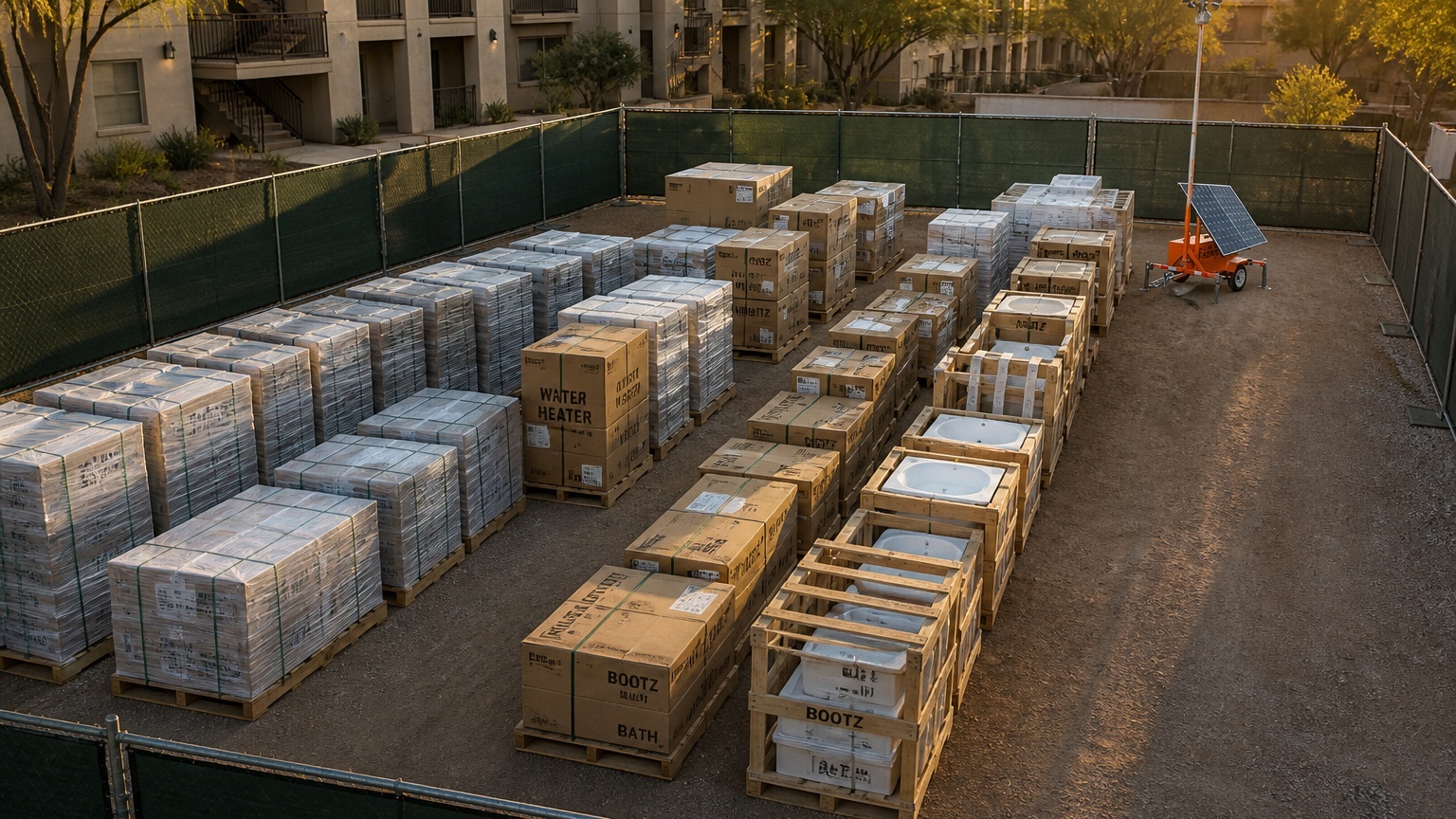
Equipment yards should be covered with a combination of wide views and targeted views on high-value inventory. Priority areas include parked heavy equipment, fuel storage, trailers, copper, pipe, pumps, generators, tool containers, and loading zones.
Jobsite Sentry can also support remote site management through app access, playback, clip export, and documentation tools that help teams understand what happened without driving to the site for every question.
How Live Monitored Oilfield Security Cameras Work
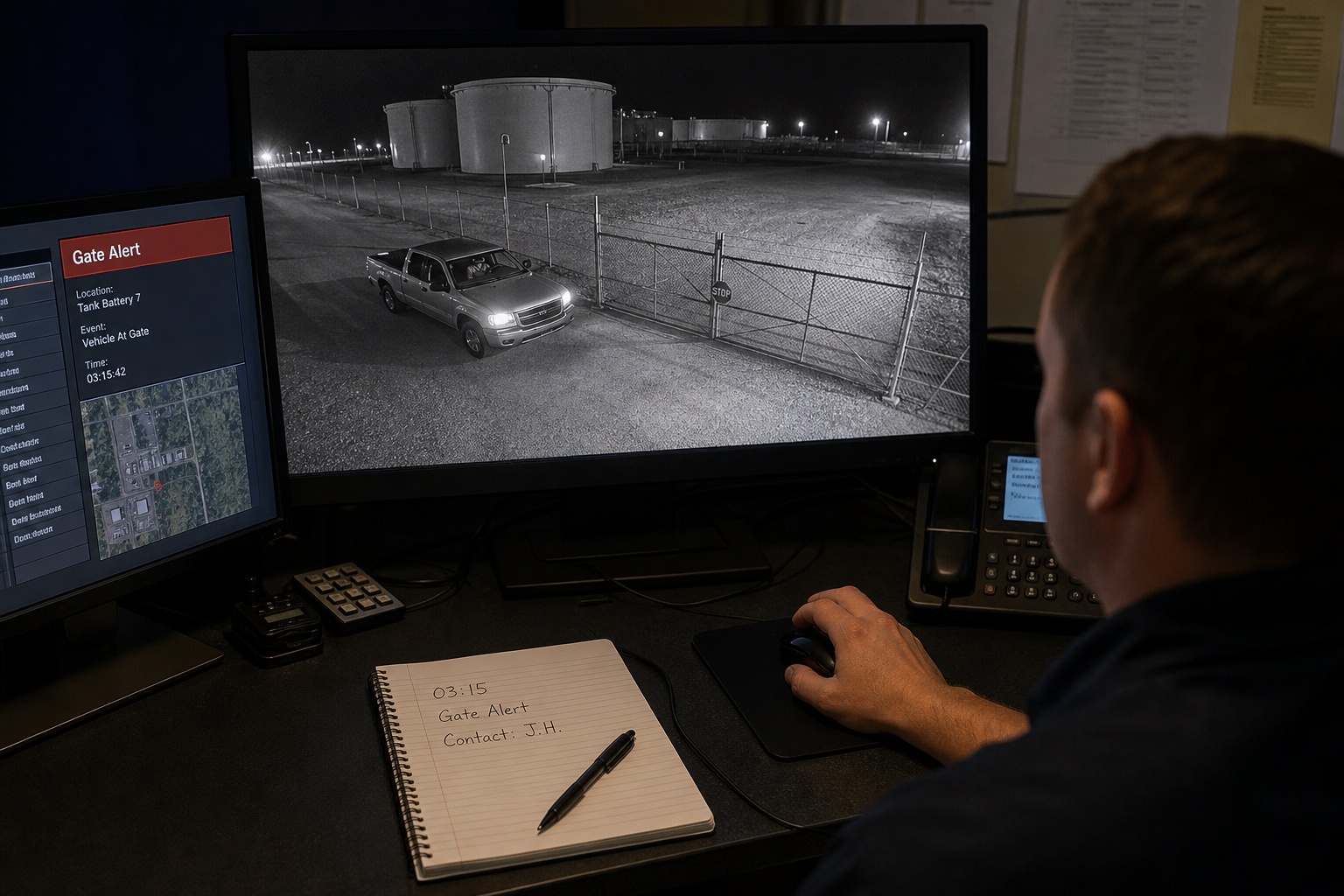
The strongest oilfield security camera systems do more than collect footage. They detect, verify, deter, document, and escalate.
Jobsite Sentry combines AI-powered detection with live trained operators. AI helps identify people, vehicles, equipment movement, and activity in monitored areas. When an alert occurs during scheduled monitoring hours, a live operator reviews the event and determines whether it looks like a real threat or normal activity.
If intervention is appropriate, operators can issue live audio warnings through two-way audio. A clear voice-down message can let a trespasser know the site is under live surveillance and that authorities or site contacts may be notified.
Step 1: AI detects activity in a restricted area
AI detection helps separate meaningful activity from routine motion. For example, the system may identify a vehicle entering a lease road after monitoring hours, a person walking near a tank battery, or movement around parked equipment.
AI is not a replacement for human judgment. It is a filter that helps bring relevant events to live operators quickly.
Step 2: A trained operator verifies the alert
A live operator reviews the camera view and context. The operator can evaluate whether the event appears to be an authorized worker, wildlife, weather movement, passing headlights, or a potential threat.
This verification step helps reduce unnecessary calls and false alarm fatigue.
Step 3: Audio deterrence is issued when appropriate
When suspicious activity is verified, a live audio warning can be issued through the system. This direct intervention can stop some incidents before they become theft, vandalism, or trespassing.
The message can be aligned with your site protocol. For example, a warning may state that the property is under live video monitoring and that law enforcement or site management is being contacted.
Step 4: The event is documented and escalated
Operators can document the event, save relevant clips, and escalate according to your instructions. Escalation may include notifying designated contacts, contacting law enforcement when warranted, or preserving footage for police reports, insurance claims, internal review, owner disputes, or compliance records.
This matters for remote oilfield sites because decision-makers are often not physically present when incidents occur.
Power and Connectivity: The Remote Oilfield Security Challenge
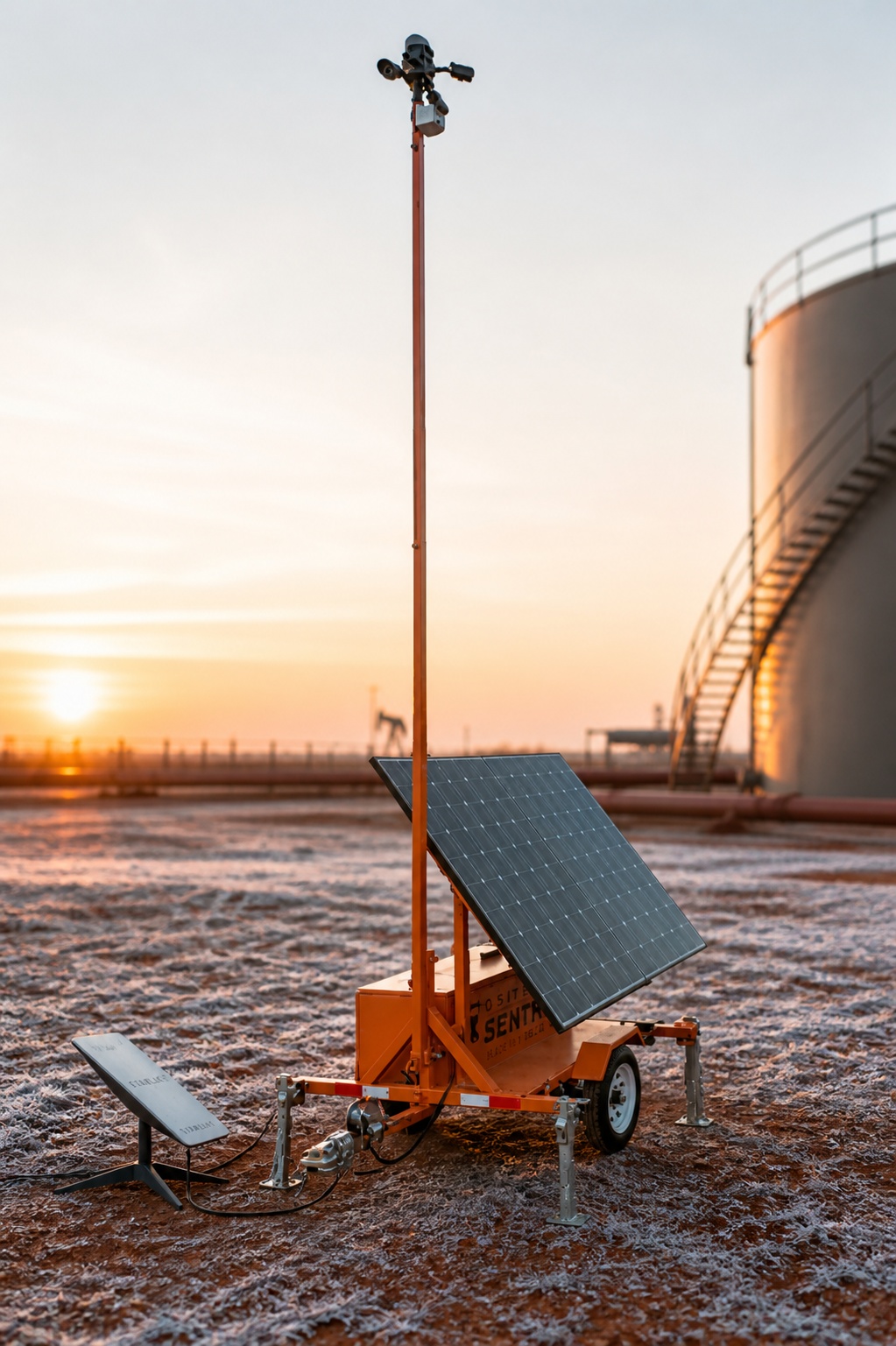
Many well pads and lease roads do not have the infrastructure that conventional security systems expect. There may be no building, no outlet, no wired internet, no trenching plan, and no dependable cell signal.
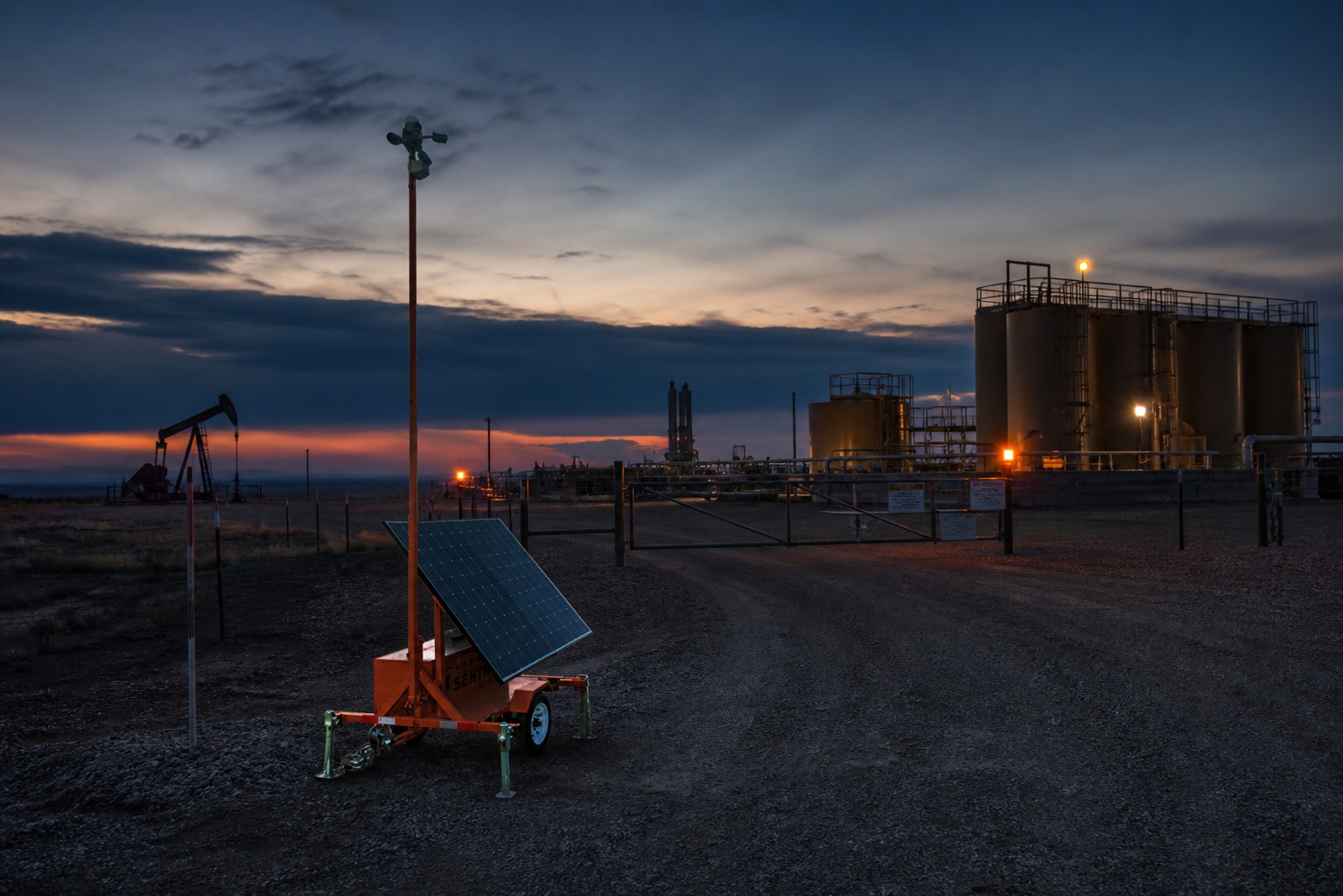
That is why Jobsite Sentry uses mobile, solar-powered surveillance units and camera systems designed for outdoor, temporary, and remote assets. Solar power reduces dependency on generators, wired power, and permanent installation. Starlink connectivity supports monitoring in remote areas where cell service is weak or unavailable.
For oilfield security cameras, this combination is often the difference between a workable system and a system that cannot stay online consistently.
Solar-powered security cameras for sites without utilities
Solar-powered camera units are designed for outdoor locations where permanent power is not available or practical. This can help operators avoid trenching, generator management, and electrical work for temporary or remote deployments.
A solar-powered system is especially useful for well pads, tank batteries, equipment staging areas, pipeline-related work zones, and lease roads that may shift as operations change.
Starlink security cameras for weak or no cell service
Remote video monitoring depends on connectivity. If a site has poor cell coverage, alerts and live video can become unreliable.
Jobsite Sentry offers Starlink-connected security monitoring for remote jobsites, mining sites, oilfields, highway corridors, and other locations where traditional internet or cellular service may not support consistent monitoring.
Mobile units that can move as the site changes
Oilfield operations are not static. Workovers, staging areas, temporary laydown yards, road access, and equipment locations can change over time.
Mobile surveillance trailers and camera units can be relocated as risk areas shift. This flexibility is important when the goal is to protect the current highest-risk assets rather than maintain coverage on yesterday’s layout.
Where to Place Oilfield Security Cameras First
Camera placement should be based on risk, line of sight, access behavior, and the type of response you want. A well-designed system watches where people and vehicles must pass, not just where equipment looks important on a map.
Start with the entry points and assets that would create the biggest operational, financial, or safety impact if accessed after hours.
Priority 1: Main access road and gate
The first priority is usually the main access route. A camera here helps capture vehicle approach, entry, exit, and after-hours traffic patterns. Where possible, lighting and camera angle should support vehicle identification and clear event documentation.
Priority 2: Tank battery and loading areas
Tank batteries, containment zones, valves, ladders, and loading areas should be monitored closely. These areas can create both security and operational concerns if unauthorized people enter.
Priority 3: High-value equipment and fuel
Parked machinery, compressors, generators, fuel tanks, copper, pipe, and tools should be covered with clear camera views. A wide overview can show movement across the yard, while targeted views can focus on the highest-value items.
Priority 4: Blind spots and secondary access paths
Unauthorized access does not always happen through the front gate. Secondary tracks, cut fence lines, dry washes, service roads, and informal pull-off areas should be considered during the site survey.
Priority 5: Areas with repeated incidents
If a site has a history of trespassing, theft, dumping, or vandalism, place coverage where those events occurred. Past incident patterns can help determine where live monitoring will have the most impact.
Oilfield Security Cameras vs. On-Site Security Guards
Security guards can be useful in certain situations, especially when a physical presence is required. But many remote oilfield sites are difficult and expensive to staff continuously, particularly across multiple locations.
Live monitored oilfield security cameras give operators a different model. Instead of paying for a person to sit at each site, cameras can monitor remote assets after hours and escalate verified activity when needed.
The best choice depends on the site, risk level, response expectations, and budget. In many cases, remote video monitoring can either replace some guard coverage or help guards focus on verified activity instead of routine patrols.
Advantages of live monitored cameras
Live monitored cameras provide continuous visibility during scheduled monitoring hours, video documentation, remote access, audio deterrence, and the ability to cover sites where staffing is impractical.
They are also easier to scale across multiple locations. A production supervisor or security manager can view live feeds, review clips, and manage footage from a phone or desktop instead of waiting for reports from separate field visits.
When guards may still be appropriate
Some sites may still require guards due to owner requirements, high-risk events, labor concerns, public access conditions, or specific operating procedures. In those cases, cameras can support the guard team with wider visibility, recorded evidence, and remote operator backup.
How Much Do Oilfield Security Cameras Cost?
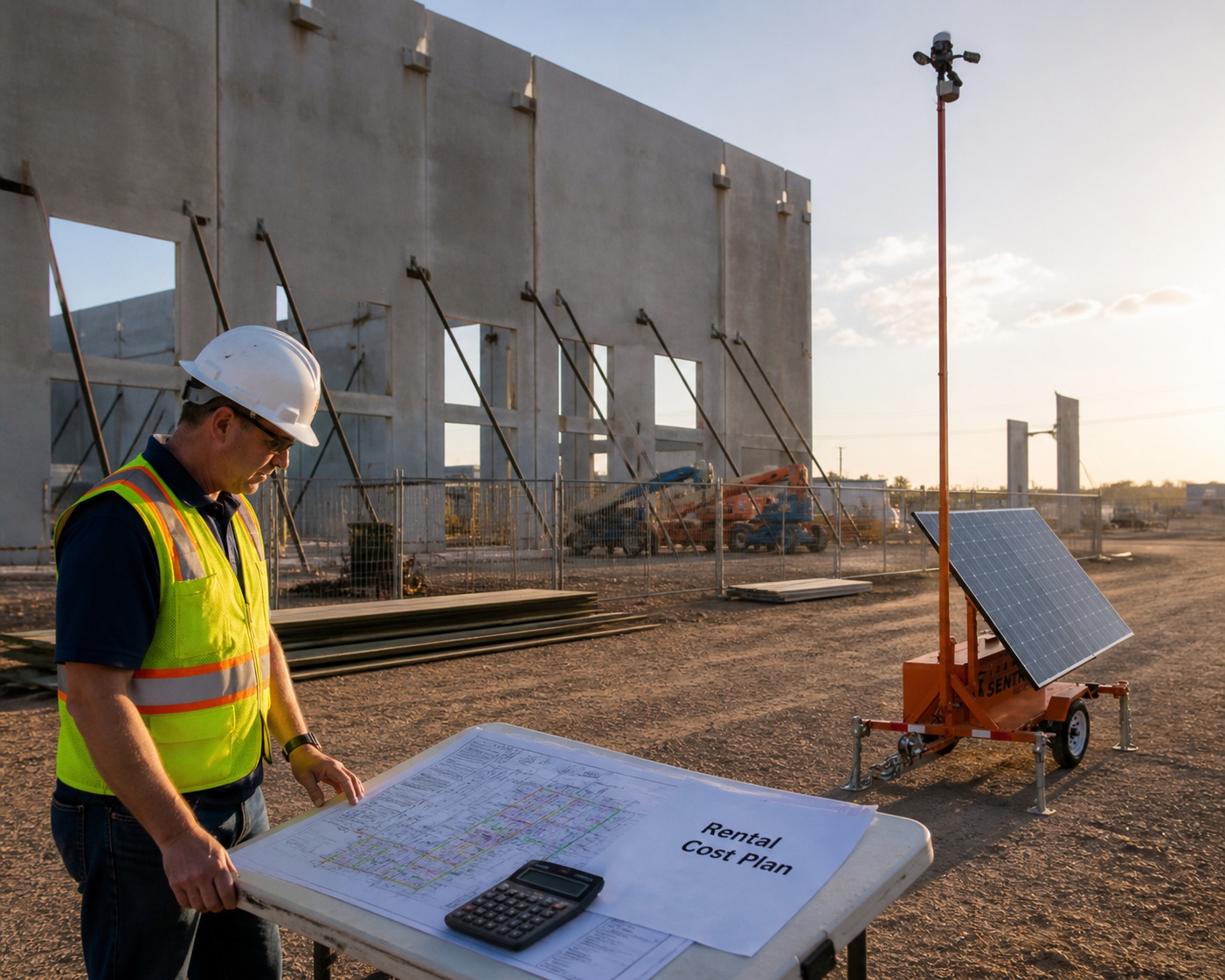
Oilfield security camera pricing depends on the site layout, number of cameras, monitoring schedule, connectivity requirements, equipment type, travel distance, installation conditions, and whether the unit may need to be moved during the project or operation.
A small single-pad deployment will be different from a multi-site program covering several well pads, tank batteries, and equipment yards. Monitoring nights only will price differently than broader schedules that include weekends, holidays, and shutdown periods.
Jobsite Sentry promotes transparent pricing, no long-term contracts, free consultation and site survey messaging, and live video monitoring advertised as low as $1.99 per hour. Because deployment details change by location and site conditions, operators should confirm current setup fees, data fees, relocation fees, monitoring scope, and monthly costs during the quote process.
Cost factors to review before requesting a quote
Before requesting pricing, gather the number of locations, access point details, approximate acreage or pad layout, high-value assets, monitoring hours, known incident history, preferred escalation contacts, connectivity concerns, and any safety or access restrictions.
This information helps the Jobsite Sentry team recommend the right camera count, placement strategy, connectivity approach, and monitoring plan.
How fast can deployment happen?
Jobsite Sentry commonly promotes fast deployment, often within 24 to 48 hours depending on location, site conditions, equipment availability, access requirements, and scheduling. For remote oilfield locations, the site survey should confirm road access, safe placement, sun exposure for solar performance, camera line of sight, and connectivity needs.
What to Include in an Oilfield Camera Monitoring Protocol
Technology is only part of the security plan. Every monitored site should have a clear protocol so operators know what to do when activity is detected.
A strong protocol reduces confusion, speeds up escalation, and helps live monitoring teams distinguish normal work from suspicious activity.
Define normal and restricted activity
List normal work hours, authorized vendors, haul schedules, expected vehicle types, approved access points, and any recurring after-hours operations. Then define what should be treated as suspicious, such as unknown vehicles, people on foot, activity near tanks, gate tampering, or equipment movement.
Set monitoring schedules
Monitoring can be customized for nights, weekends, holidays, weather delays, shutdown periods, and other times when the site is most exposed. Different sites can also have different schedules based on production activity and risk.
Create an escalation list
Decide who should be contacted first, when law enforcement should be called, and what information should be documented. Escalation contacts should be current, reachable, and authorized to make decisions after hours.
Plan for footage retention and export
Determine who can access footage, who can export clips, and how evidence should be saved for police reports, insurance claims, internal investigations, owner questions, or compliance documentation.
People Also Ask
Q: How do you secure a remote oilfield site?
A: Secure a remote oilfield site by controlling access points, locking gates and equipment, improving lighting where practical, placing cameras at lease roads and high-value assets, using live monitored video after hours, and creating a clear escalation protocol for verified activity.
Q: Can security cameras work without power or internet?
A: Yes. Remote security cameras can work without wired power or fixed internet when they use solar power and satellite connectivity. Jobsite Sentry offers solar-powered camera units with Starlink connectivity for remote sites where power and cell service are limited.
Q: What happens when a monitored camera detects trespassing?
A: When a monitored camera detects trespassing, AI flags the activity, a live operator verifies the event, an audio warning can be issued, and the incident can be escalated to site contacts or law enforcement based on the agreed protocol.
Q: Are solar camera trailers useful for oilfield security?
A: Solar camera trailers and mobile camera units are useful for oilfield security because they can be deployed at remote well pads, tank batteries, lease roads, and equipment yards without permanent power or wired internet.
Q: Can AI security cameras tell the difference between people, vehicles, wildlife, and weather?
A: AI detection can help classify activity such as people and vehicles and reduce nuisance alerts from environmental movement. Human verification is still important, which is why Jobsite Sentry combines AI with trained live operators.
## Download the Remote Oilfield Camera Coverage Checklist
Use this checklist to review well pad access points, tank battery risks, lease road visibility, equipment yard priorities, monitoring schedules, and escalation contacts before deploying oilfield security cameras.
Frequently Asked Questions
Q: What are oilfield security cameras?
A: Oilfield security cameras are outdoor surveillance systems designed to monitor well pads, tank batteries, lease roads, equipment yards, and other remote oil and gas assets. The most effective systems include live monitoring, AI detection, reliable connectivity, deterrence tools, and exportable footage.
Q: Do oilfield security cameras need on-site power?
A: Not necessarily. Jobsite Sentry offers solar-powered surveillance units that can operate at remote outdoor sites without wired power, generators, trenching, or permanent infrastructure.
Q: Can oilfield cameras work where there is no cell signal?
A: Yes, depending on site conditions. Jobsite Sentry offers Starlink-connected camera monitoring for remote oilfields and other industrial sites where traditional cell service or wired internet is not reliable.
Q: Can live operators contact law enforcement?
A: Live operators can escalate verified incidents according to the protocol established for the site. That may include contacting designated site contacts or law enforcement when appropriate.
Q: Can oilfield security cameras be moved?
A: Yes. Mobile surveillance trailers and camera units can often be repositioned as site layouts, access roads, staging areas, or equipment locations change.
Q: Can footage be exported?
A: Yes. Authorized users can review footage and export clips for incident documentation, police reports, insurance claims, internal investigations, owner disputes, or compliance records.
Conclusion
Remote oilfield security is not solved by recording footage alone. The sites that need protection most are often the same sites that lack power, internet, nearby personnel, and fast visibility after hours.
Oilfield security cameras should be placed around access points, tanks, equipment, fuel, and blind spots. They should be powered for remote conditions, connected reliably, monitored by trained operators, and supported by a clear escalation plan.
Jobsite Sentry helps oil and gas operators protect remote assets with mobile, solar-powered surveillance units, Starlink connectivity, AI detection, live human monitoring, two-way audio deterrence, mobile app access, and video documentation. If your team is responsible for well pads, tank batteries, lease roads, or equipment yards, a live-monitored camera plan can help you move from after-the-fact review to real-time response.
## Schedule a Free Oilfield Security Consultation
Need to protect a remote well pad, tank battery, lease road, or equipment yard after hours? Jobsite Sentry can help you plan a live-monitored, solar-powered camera deployment with AI detection, Starlink connectivity, mobile app access, audio deterrence, and incident documentation.
Request a free consultation and site survey to identify your highest-risk areas and build a monitoring plan around your operating schedule.
Source References
- Cybersecurity and Infrastructure Security Agency, Critical Infrastructure Security and Resilience resources
- S. Department of Energy, Energy infrastructure and resilience resources
- Occupational Safety and Health Administration, guidance relevant to site access control and worker safety
- Jobsite Sentry service information from https://jobsitesentry.com/